How the War on Terror Was Fought at Home
Rozina Ali on America’s overlooked history of anti-Muslim sentiment
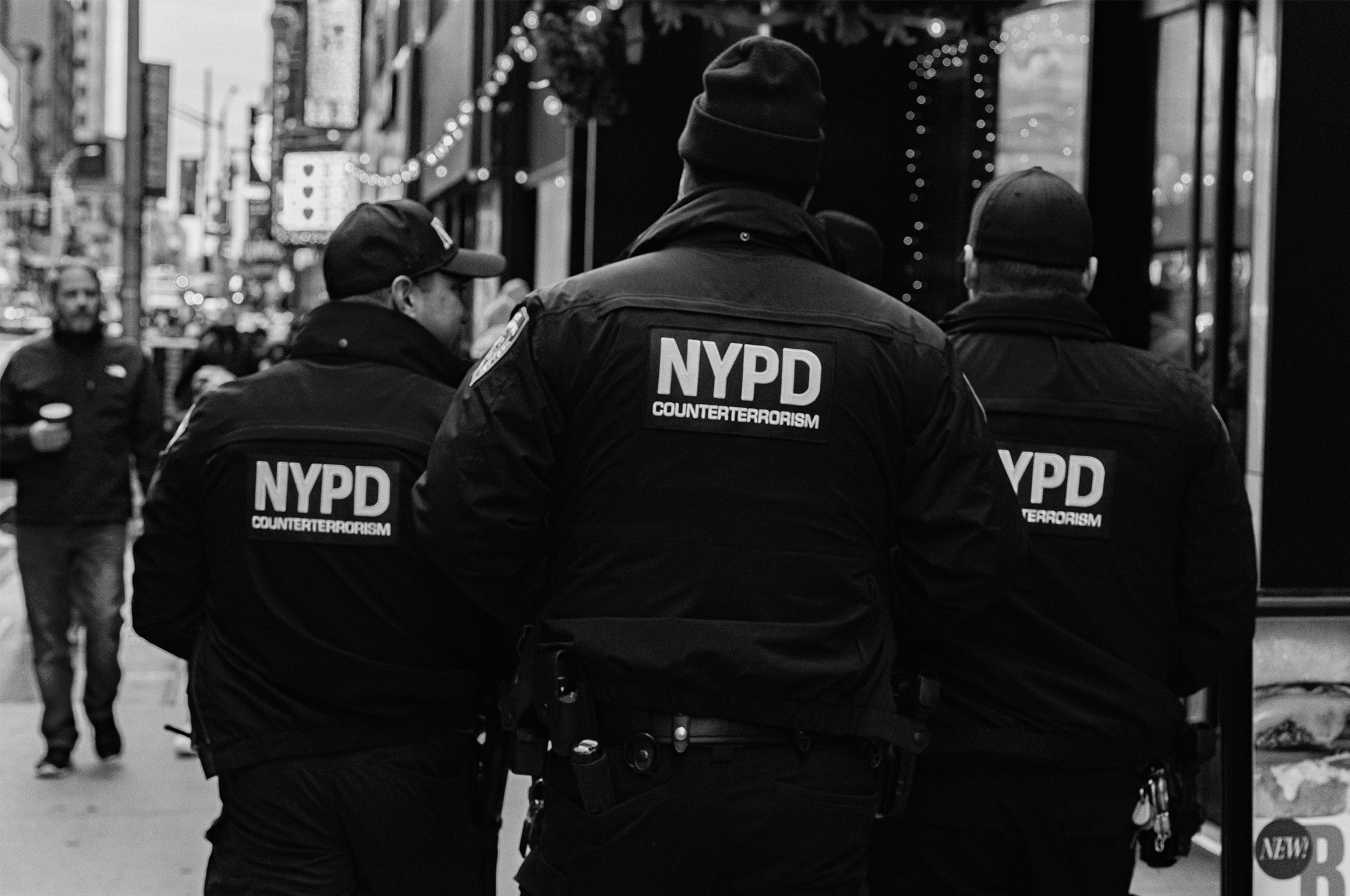
Twenty-five years after the September 11 attacks, the United States is still mired in the Middle East. But the story of how the war on terror was fought at home is far less told, and America’s history of anti-Muslim sentiment is one we have yet to fully contend with.
In this episode, the Institute for Global Affairs’ Jonathan Guyer is joined by journalist Rozina Ali, a New York Times Magazine contributor and author of the new book Seasons of Fury: Four Families and the Rise of Islamophobia in America. They discuss the mass surveillance of Muslims and immigrant communities after 9/11, how media narratives warped Americans’ perception of their Muslim neighbors, and what accountability looks like when the war on terror never really ended.
Listen Here: Apple Podcasts | Google Play | Libsyn | Radio Public | Soundcloud | Spotify | TuneIn | RSS
Rozina Ali is an award-winning journalist, contributing writer to New York Times Magazine, and a fellow at Type Media Center. She was previously a 2023-24 fellow at New America and a senior editor at The Cairo Review of Global Affairs. She writes primarily about the War on Terror, Islamophobia, the Middle East, and South Asia, and her work has appeared in The New Yorker, Harper’s, Foreign Affairs, and more. She is the author of Seasons of Fury: Four Families and the Rise of Islamophobia in America (Crown, 2026).
Check out Seasons of Fury: https://www.penguinrandomhouse.com/books/672414/seasons-of-fury-by-rozina-ali/
Find Rozina on X: https://x.com/rozina_ali
Transcript:
JONATHAN GUYER: Welcome back to None Of The Above. I'm your host, Jonathan Guyer. It's been 25 years since the September 11th attacks, and the United States remains mired in the Middle East. But the story of how the war on terrorism was fought at home is far less told, and it's the topic of Rozina Ali's deeply reported new book, Seasons of Fury: Four Families, and the Rise of Islamophobia in America.
She looks at the domestic history of anti-Muslim sentiment, how the United States expanded mass surveillance and counterterrorism programs to target Muslims, and how media narratives led Americans to view their Muslim neighbors with extreme suspicion. It's an important conversation and an important book, and I'm thrilled to have Rozina with us. Thank you for listening to None of the Above. We hope you enjoy the conversation.
GUYER: Rozina Ali, welcome to None Of The Above.
ROZINA ALI: Thank you so much for having me, Jonathan.
GUYER: You say the war on terrorism never ended, it's still happening, and your new book, Seasons of Fury, really explores that through four families. Can you give us a sense of who are these four families that you're bringing to the table here?
ALI: Yeah, so there are four Muslim families in the United States. And what I wanted to show through each of them is that Muslims in the US are pretty diverse. Yes. They are diverse ethnically and racially, but also in terms of income and their levels of faith and their relationship with the US government. And just to tell you a bit about each family. So one of the families is the Jabaras, and specifically Abdeen Jabara, who was born in the United States in 1940 in a small town in Michigan, and he became a political activist.
GUYER: A really well known one.
ALI: Yes, a really well-known one. In the 60s and 70s, he was a lawyer by training and became very involved in the pro-Palestine movement. And he was actually surveilled by the US government for that activism, and became the first US citizen to be surveilled by the National Security Agency. The second family that I showcase in this book is the Sirajs, who came much later. They are from Pakistan and arrived in the US in the 90s, working class, and their son Matin Siraj, who was befriended by an informant after nine eleven and eventually is surveilled and becomes—
GUYER: I mean you wrote a pretty stunning New York Times Magazine feature about this Matin and his very sad story about the security state.
ALI: Exactly. And he was eventually convicted and was sentenced to thirty years. And I should say that they are a vulnerable family because they were not citizens or permanent residents. They had an asylum case pending. And then the third family is the Chaudrys, specifically Mohammed Ali Chaudry, also from Pakistan, but actually settled in the US in the 1960s.
GUYER: In a very different political story there.
ALI: Absolutely. I mean, he was a professional. He was a professor and an economist, a staunch Republican. And he very much believed in the US government. And he wanted to run for political office and actually became pretty an active participant in helping the US government fight its war on terror. And finally, I write about the Omars, which is a pseudonym. And they are a Muslim family who settled in a small suburb, and they bought their first home and moved in September 2001. And for almost two decades after they were harassed by a neighbor and felt such immense terror from this neighbor. And I wanted to include this family to show not just what Muslims were going through at the hands of the US government, but also their community members and neighbors and acquaintances.
GUYER: And so, their lives don't intersect, but the realities they live with have so many familiar threads. And to me, sort of zooming out at we're at this 25-year anniversary of the 9/11 attacks, it's really troubling to think about this is the domestic side of the war on terrorism. I mean, you in your career have done really extensive journalism in South Asia and Afghanistan and Yemen, looking at the victims, the survivors, those who've been impacted by the counterterror operations of two decades. And here a lot of this was happening at home. I mean, what are the throughlines that you see between these four families?
ALI: I really recognized in these four families was that it didn't quite matter what anyone's position towards US foreign policy was, or what's what anyone's position towards the US government was, or what their political leadings were. All of these families were impacted in some way by anti-Muslim sentiment and by this notion that Muslims are a threat to Western civilization. And that is something that we have seen abroad as well, the way that the war on terror has been played out in other countries. So whether it was in Iraq or Afghanistan, I think one of the first features, unfortunately, of these wars abroad was how many civilians were being killed as a result of the US invasion. And it wasn't just from bombings, but also because US and their allies were picking up innocent people and throwing them into prison. Or unfortunately killing them.
GUYER: Maybe walk us through, just in terms of this anniversary, how are people reflecting on George Bush 25 years later? Like, how does he come up? You have a Republican here, Ali Chaudry, who's wanted to be in the mix, wanted to be a Republican politician, and still supported the way the US was pursuing a lot of these domestic policies. Show us the landscape of what the meaning of George W. Bush is today, because it's sort of interesting how he, in contrast to President Trump, he seems kind of like a normal Republican. But I think a lot of the stories here feel very abnormal.
ALI: Absolutely. I mean, I think we tend to remember that era and George W. Bush in contrast to Trump. And when we do that comparison, George W. Bush seems quite reasonable and quite sensible and tolerant of all communities. Right? He famously said after 9/11, “Islam is a religion of peace and we are not at war with Islam.” I think that's what a lot of people remember. But I think what people forget is what his administration was doing to Muslim communities after 9/11. And as we reflect on the last 25 years, that history has been forgotten. So one of the first things that the Bush administration did was it fanned out and started arresting immigrant Muslims or immigrants who were perceived to be Muslims. They put almost a thousand people in jail or immigration detention on no charges. And so a lot of these people were caught up, they did not know their fates, they did not know why they were separated from their families.
The other thing that the administration did, which was quite remarkable if we actually sit back and think about it, is that they instituted a nationwide registry for Muslim boys and men from about two dozen countries. And what happened was that hundreds of Muslim boys and men were forced regularly to go to INS office and register—
GUYER: Precursor to...
ALI: ...ICE, exactly. And what eventually ended up happening was that eighty thousand people registered and tens of thousands of them were deported. And it was not because they were guilty of terrorism, but it was because their immigration status was used against them. And there was a 9/11 Commission report that came out, of course, but I think we don't quite contend with the findings enough. One of the most remarkable findings of that report was that one of the failures of 9/11, when it came to the government, the government's failure to stop it, was issue of intelligence, not immigration. So the report found that one of the reasons we failed to prevent the 9/11 attacks was due to lack of communication and an intelligence failure on the part of intelligence agencies. Not because there were dangerous immigrants who came into the country through fraudulent means.
GUYER: Explain what you mean by that.
ALI: Unfortunately, the Bush administration's response was very much focused on immigration. And at the same time, the Bush administration had also directed the FBI and police to go and start surveilling mosques and start looking for potential threats among Muslim communities. So the post-9/11 period under the Bush administration very much was focused on spying on Muslims, being suspicious of them and targeting this entire religious faith.
GUYER: I guess as you're saying that, I'm trying to think... there were real terrorism threats. I mean, none of this is to diminish the seriousness of Americans being killed on September 11th. But how did those efforts actually undermine what they were said to do? How did the sort of the emergence of the Department of Homeland Security, these INS raids, this kind of scattershot dragnet approach entrapping someone like Matin, who's one of your key characters, how did that undermine this actual effort to stymie actual security threats? I mean, it seems to me that it is so vast of a security architecture that's created that it is sort of wasting its time, its money, its efforts, not to mention the true human lived costs for so many people, but is that part of what you encountered as you went through archives, as you were reporting?
ALI: Yes, absolutely. I mean, not only did we launch and found and basically restructure the government so that we now had a Department of Homeland Security that did not exist prior to 2003. We created ICE, we fine-tuned the DOJ. We also threw an extreme amount of money at these efforts, at counterterrorism efforts. And we had to justify that expenditure in some ways. I, for one, recall how dangerous and terrifying that day was. I was young and I didn't quite understand immediately the significance of the day or the repercussions, but I did register that the country I lived in was under attack and I was scared about a potential threat.
GUYER: Sure.
ALI: I would have loved for our government to actually stop such a threat, but our FBI, the police, the various institutions and agencies really fanned out in a way that I would argue was extremely ineffective. To the point where when there was some analysis of where the funding had gone by 2010, experts were saying we don't actually know what the results of that funding was, if that funding actually got us much of anything.
GUYER: Well, and it created so much fear too. Fear among Muslim communities, Arab communities, and also so many underrepresented communities like Sikhs and other religious communities that were perceived in these horrible terrorist tropes. But also this security state's emergence created a fear of thy neighbor and sort of created a fear among Americans that wasn't, it sounds like, actually commensurate with the actual threats.
ALI: Absolutely. One of the major narratives after 9/11 was that there was a looming threat of terrorism, right? That was repeated to us in the media, but also by policy makers and also by the fact that we now had institutions that were directly engaged in countering terrorism. What we did was basically create a huge hammer. And once we did that, we tried to look for nails wherever we could find them.
GUYER: And at the same time, and this is less so in the book, but you've written in The American Prospect a piece I had the pleasure of editing about the early days of what was happening in Afghanistan. You have the first drone strikes, you have this other related architecture of counterterrorism happening abroad at the same time as it's happening domestically. How did that come up in conversations as you were getting to know the characters in this book, as you were, in your words, also speaking with the Islamophobes. Were people talking about what was happening over there, which is so connected to what was happening here?
ALI: Absolutely. I think there were what was happening in the US and in the Middle East was a huge story in the American public. I mean, most everyone was talking about Osama bin Laden or Iraq or Afghanistan. Many of the Muslims I spoke with for this book, not all of them, but many of them did talk about, for example, Abu Ghraib. They did talk about how the torture of—
GUYER: The torture of Iraqi prisoners.
ALI: Exactly. And many of them who were innocent. They spoke about the fact that Muslim girls had been raped at the hands of US soldiers. They spoke about how the US had captured innocent Afghans, sent them to Guantánamo and black sites, and tortured them.
The thing is that while much of the public, in the years, in the months and years after 9/11, wanted to believe that the US government was fighting the good fight. A lot of Muslims recognized that, hey, this doesn't look so good. I have questions about what the US government is doing. But the US government, the FBI, and police departments were surveilling a lot of Muslims living in the United States and searching for anything that they found suspicious. And sometimes those conversations about what was happening abroad, especially if it's a Muslim who really was critiquing US foreign policy, was considered to be a signal of suspicion.
GUYER: Well, and this was the Matin Siraj story, right? This very much came up in that mosque. Was it in... it was in New York, it was in...
ALI: Yes, exactly, in Brooklyn. Bay Ridge.
GUYER: And it was I maybe radicalizing is such a charged word, but it did upset anger and was very difficult to be grappling with alleged war crimes abroad, military operations that were going out of control at this time.
ALI: Yes. What's so interesting about this time that we're living in now is that a lot of Americans are critical of what we did back then, right? We are critical of what we did abroad. We are critical of Iraq and Afghanistan and the failures in Pakistan and Yemen and so forth. We're less so critical of what happened at home. Less so critical of the mass surveillance program against Muslims or the registry. No one really remembers the registry, actually.
GUYER: Interesting.
ALI: And let's say, like, Matin Siraj's story... one of the reasons that he was even surveilled or basically seen as a target by the NYPD is because he started talking very loudly to his friends about how much he disagreed with what was happening in Iraq. And he would say, “Of course I would be upset. Of course, if my family was killed, I would take revenge. That is when the NYPD decided to bring in an undercover informant and befriend him and go to him into a plot. And then he was charged and convicted of so-called terrorism even though he had not committed an act of violence. And even though he said multiple times, I don't want to do this plot. I don't want to be a part of it.
GUYER: Right. I mean in the narrative of this, it's sort of a chilling reveal that none of this is his own intention. Just to bring us then to the Barack Obama presidency, he comes in, gives this speech in Cairo where he wants to have a new beginning with the Muslim world. His intention, at least, of what he ran on in contrast to John McCain and to Hillary Clinton was kind of, on some level, ending the war on terrorism. But he doesn't, right? How do the characters in your book and you as an observer and in a way a participant in this world of you coming from a family that are your parents are immigrants, you know, how do you perceive this Obama moment of both hope and change, but also disappointment. And going from a president whose middle name is Hussein is such an opportunity to start fresh here, but then a lot of the policies feel really familiar.
ALI: Yeah, it's funny because I remember the Republican Party, and the right wing especially, making such a big deal about his middle name, Hussein. And as a Muslim at that time, I didn't even care that was his middle name. I was excited about his presidency because he was a Black president who suggested that he was going to do things differently. And one of the reasons that his race resonated with me at the time is because by that point Muslims in the United States had been racialized. What I mean by that was that they had become a group that the government was targeting, right? And that had to defend itself. They were targeted because of their faith.
And for me, and also for a lot of people I spoke with, one of the characters, Abdeen Jabara, was so, so excited by Obama's presidency. He thought this was a guy who understands the nuances of US foreign policy. He understands that the approach to Israel and Palestine has not been serving the US well, especially because Obama at the time was saying we need to get out of Iraq, right? And that was a huge, because at the time we also have to remember there was a huge antiwar movement that did not want the US to go into Iraq. And then there were some characters in the book and many people I spoke with who believed that Obama was going to do things differently at home, too. Muslims who vehemently disagreed with Bush joined Obama's administration thinking, okay, now we have a president who believes in diversity, who believes in pluralism, who believes in equal rights for all, and this is going to be the turning point.
Obama, despite that wonderful speech in Cairo, ended up disappointing a lot of people. What he did was try to what his administration did was try to make the war on terror more sophisticated. They said that they would try to work with Muslim communities and started implementing what is called countering violent extremism programs. But at the end of the day, the very structures that the Bush administration had instituted stayed in place under the Obama administration. And the essential way in which the government worked with Muslims was the same, in the sense that it was through the guise of national security, right? We are going to work with the Muslim community because they are useful to us in order to fight terrorism. And that remained the central lens through which the US viewed Muslims in America.
GUYER: And he was a lawyer and so much of the legal architecture of the Patriot Act and all the surveillance powers or the war powers that came out of congressional aspects of Afghanistan and Iraq, they all stayed on the books. So there's a kind of empowering the next president to continue the war on terrorism.
ALI: Absolutely. I think what we saw under Obama was both an expansion of executive powers and an acceptance of it. Because he was largely, at least by Democrats, was viewed as the good guy. But we didn't consider what does that mean when we don't have a good guy for a president. Obama oversaw some of, I believe, if I'm not mistaken, the highest number of prosecutions of whistleblowers.
GUYER: We hear that a lot. Yeah.
ALI: And I think that's significant to remember because not only was he widening the scope of the global war on terror around the world, he was also making it more difficult to challenge the government and to challenge the government surveillance apparatus in the US too, right? He oversaw the mass surveillance by the NSA that we all remember all too well. And so it is it's not shocking that we're at a stage now where Donald Trump is able to get away with so much. It's because we have had over the last 25 years an expansion of the executive power that has been allowed by both parties.
GUYER: And put us in the kind of first Trump term moment. I mean, at that time we did a lot of reporting on that so called Muslim ban of, is it six countries or more that were—
ALI: Yeah, I think it was eight countries but now it’s...
GUYER: And sort of the lawyers on their laptops at airport terminals, advocating for civil liberties and so forth. Upon reflection and sort of in conversation with your characters, which is—these aren't characters, these are real people—but in conversation with the people in your book, how did they perceive that Trump win? Was this just an echo of the Bush administration? Was this a callback to that surveillance of the Vietnam Cold War era? Was it a new flavor of Islamophobia or anti-Muslim sentiment, or was it a continuity that they reflected on?
ALI: So a lot of the people I spoke with and certainly the main characters in the book, they didn't really perceive Trump's rise as a significant or dangerous breakthrough. They saw it as more of the same, unfortunately. Even though Trump was saying pretty crude things about Muslims, and of course he called for a Muslim ban. But to them, it felt like their lives hadn't changed in any way for the better under Obama. And how could it get worse under Trump? At least in the sense of them being Muslim and being affected by the US. That analysis kind of played out.
I mean, I remember that weekend when the Muslim ban was instituted, and I did go to JFK airport and I was astounded by the number of people who came out in protest. And I thought this is wonderful, right? People are actually standing up for Muslims now. But two years later, the Supreme Court ended up upholding an iteration of the Muslim ban, right? By justifying it through the lens of national security. And it's really interesting if you read that opinion, because they are using the arguments of, well, Clinton had done this in the past and Obama had done this in the past, right? Discriminate against certain countries for the sake of national security. And this is more of the same. And Trump's administration has done a lot, certainly on the rhetoric level. It has really normalized widespread Islamophobia. But when it comes to policy level, he's just using the very structures that have been in place for a very long time.
GUYER: I guess one thing that's a thread that runs through the book, especially with Mohammed Ali Chaudry, but sort of Muslims being Republican. And this is sort of sociologically, I guess there's a kind of conservatism that runs through Muslim politics and it sort of makes sense, but are you seeing that change over time? Does that change in the Trump moment? And is that really run a big contrast then to a new generation of Muslim American politicians like Zohran Mamdani? Is there a kind of demographic shift of Muslims moving to be more Democrats?
ALI: Yeah, the 90s were a fascinating time with regards to this, because you had on the one hand Black Muslims who voted for Democrats, because of a historic pattern. And then you had a lot of diasporic Muslims who were becoming naturalized and who really wanted to build a life in the US that allowed them to make money and allowed them to practice their faith. And the party at the time that was allowing them to do both was the Republican Party. Right? It was a party of low taxes and faith. And it actually was natural for some certainly professional class Muslims and certainly middle-class Muslims to join the Republican Party. And I believe even my some of my relatives would have considered themselves Republicans at the time.
That didn't suddenly shift after 9/11. You know, one of the people in the book is Mohammed Ali Chaudry, who was a staunch Republican, who also believed that he wanted to help George W. Bush fight his war on terror better. And one way he wanted to do that was to build liaisons between the Muslim community and the US government. I will say that that started to shift. I mean, I think Obama did excite people. It he excited Mohammed Ali Chaudry, who actually backed him. But I think Trump was kind of that final nail in the coffin for a lot of the older generation Muslims who had been living here. That rhetoric was shocking. And it's not because Muslims changed, it's because the Republican Party changed dramatically.
GUYER: Until Gaza comes around and then you have this yes kind of remarkable break with Kamala Harris over Gaza that you have, the mayor of Hamtramck, Michigan kind of becoming a Trump backer and many prominent Muslim Americans kind of moving in that direction.
ALI: Yes, exactly. I think they made a miscalculation and believing Trump when he said that he was going to be the antiwar president. And I say this not just because of what has been borne out after the elections, but also because of what had been borne out before. Under his first administration, first term, Trump actually increased airstrikes in Afghanistan and—
GUYER: Yeah, and Somalia. I mean it's a long list, I think. He loosened a lot of the guard rails.
ALI: Exactly, yeah. So he was responsible for a lot of conflict and warfare.
GUYER: And I keep coming back to the “Mother Of All Bombs” being dropped as well in Afghanistan. It's the largest non-nuclear bomb ever dropped.
ALI: Exactly, which happened under Trump. We tend to forget that about him. And then obviously we have seen that under his second administration, he has been responsible for warfare in more crude ways than his first administration, right?
GUYER: This is the part I'm really grappling with your book, Rozina, because it's such a present history now that we're six months into this Iran war that has a lot of resemblance, I think, to the worst parts of Iraq or the fearmongering that followed the 9/11 attacks. How are you observing the domestic environment as militarism abroad accelerates? Are you seeing the same tactics being used? Are you seeing the same fears being stoked? Are you seeing the same types of conversations coming up? Because there's kinds of echoes in your book of, mid-century America in the 90s and post-9/11 that Muslim Americans had similar fears throughout. Are those being kind of lit a match under them now with the amount of violence happening in the Middle East that's as a result of this present?
ALI: Yes, but it looks different too. When there was resistance towards US foreign policy after 9/11, as I mentioned, a lot of immigrants specifically were surveilled. And there was a chilling effect on conversations that Muslims could have. What is happening now is that there actually there's a lot more conversation and resistance to US foreign policy. People are quite vocal.
GUYER: How so?
ALI: Certainly Muslims, right? We have Muslim politicians, Muslim commentators and influencers being very vocally against the US government. I think there are a few reasons that they're allowed to do this. One is because many of them are US citizens or feel that they have a degree of protection that a lot of Muslims did not after 9/11. There's also not the same level of support for US government foreign policy. Trump is able to bomb Iran, and that has to do a lot with the fact that there is fraying checks and balances. But public opinion is not behind him. And I think it is easier to actually vocalize that resistance.
All of that said, there are certain tactics that are being repeated. So the US government continues to monitor certain groups, or at least target certain groups, right? So when the Iran war started, there were reports that Iranians were being questioned, or there was a fear that they were going to be surveilled. And in fact, what we saw, funny enough, is the US working with Iran to target certain Iranians living in the US and throw them in immigration detention and eventually deport them. So immigration continues to be used as a weapon of war in the US and to play out the administration's broader war.
GUYER: What was different about doing this as a book? I mean, you've written so prolifically about the TV show Homeland, about ICE raids, about all these different kinds of aspects of the war on terror and its connections to American life for all these magazines we love. What was it like to spend so much time with this, to sit in the New York Public Library on a fellowship, to go really deep into these lives? How did that change the way you thought about the war on terrorism versus the quick news grind that we sometimes enjoy, but sometimes is distracting.
ALI: You know, what's so wonderful about doing the magazine writing is that I could just focus on one case or one story and really interrogate the injustice at play. Doing a book is such a different mode of both presenting information but also understanding the information. And what this allowed me to do was really pull together so many different threads that something sharpened in my analysis, which was that this is ultimately a war of narration. It's about how it has been narrated.
And what I mean by this is that, yes, there was a terrorist attack on 9/11. But the official US reading of what happened next is so different from the way that Muslims narrate this. And that narration has been borne out not just among these different circles, but also in courts, right? It's how the conflict was narrated by prosecutors and the judge. It is how this conflict has been narrated in the pages of major newspapers and on cable news, and also how it's narrated among local officials and among the American public at large. And I realized that we can be talking about the same thing and come to it with very different lenses. And ultimately I realized this is a story of how America has believed that it is eternally the good guy, that it is in fighting a good war against what was first against terrorists, then became Muslim radicals, and then became Islam itself.
GUYER: With this twenty-five-year anniversary, there's the official memorialization where President Trump won't be there for all these intense political reasons.
ALI: Because he doesn't get to give a speech.
GUYER: Exactly. You have every think tank and university—you'll be speaking at one about free speech and the first amendment at Columbia University. What is the conversation that you think should be happening at this anniversary moment?
ALI: I think it's absolutely important to commemorate the loss because it was such a terrible loss and such a terrible time. I do think that because it is 25 years later and we are doing reflections, we need to also reflect upon the history in the United States. Not just look out at the war on terror, but also look inward. How was the war on terror fought at home? I don't think we've really reckoned with that history enough. We also haven't reckoned with the fact that there has been no end to this war. It's actually become a permanent feature of American life, right? A lot of the policies, a lot of the war powers, a lot of the structures and laws that allow prosecutors to charge someone with terrorism, all of these remain in place. So what does it actually mean to be 25 years after the war on terror? When does this war end? We're still in the middle of it, and I think that just because we don't hear the word Al Qaeda anymore does not mean that the US has stopped being at war. The question is who are we at war with?
GUYER: Well, if you ask some think tanks or strategists, it feels like we're at war with China and they kind of crossed out the word terrorism and put great power competition or China. And I think one thing I'm kind of sitting with is we've moved to China being the new boogeyman. But this old war is still happening. It didn't sort of replace the war on terrorism. They're coinciding and the tools are being used all at once.
ALI: Yes. I mean what scares me is that it feels like we're in a permanent state of war, right? I want to know, what does peacetime look like in the US? I haven't felt it for so long, for 25 years. I don't remember what that means.
GUYER: Was your sense from the people you spoke with who are, not just the named characters in the book, but all the dozens and hundreds of interviews you've done with other people that they feel that? They feel that wartime, I don't want to say energy, but the wartime fervor, the fury. Do they feel that on a day-to-day? Or does it go in ebbs and flows? Does it change depending on what the president or members of Congress are saying? Does it change with the way laws come and go in terms of enforcement? Or does it feel like a steady state of security coming after you?
ALI: It ebbs and flows, but I will say that it's not so much the fear that it has endured, it's more the disappointment. I mean, one of the legacies of the last 25 years has been a breaking down of a social compact between Muslims and America. Part of that is because there really has not been accountability of what has happened over the last 25 years. There's been no reckoning, there's been no public apology, there's been no acknowledgement really of this history. And a lot of Muslims I spoke with feel a distrust and a disappointment with their government. Here's the thing: it's not just Muslims. There has been growing resentment and growing distrust of the government by all Americans over the last 25 years. And I think what we have to recognize is that this is a problem that is becoming so quickly a feature of American society. And if we don't reckon with that, we have to then contend with what happens after society at large feels that their government cannot serve them, or they feel that they're no longer a part of American society.
GUYER: What I mean, because you do speak with a lot of lawyers in your reporting and watchdogs and academics, what is the reckoning that we need? Is it a commission? Is it a report that comes from the government that acknowledges and apologizes? Or is it working through legal avenues? Is it a grassroots effort? Where do you think this reckoning should come from?
ALI: I think there are many ways. So one way is I could be wrong, but so far when I have been reading or hearing about these reflections of the last twenty-five years, there really hasn't been an acknowledgement that the war on terror largely failed. I mean, in one sense it succeeded because we did not have another terrorist attack on the US homeland. But what we also did was create a lot more militant groups around the world than existed even around 9/11, right? More people have died, millions of people have died in these intervening years. There are more militant groups. There is a huge migration crisis, and a lot of it is due to what we have done abroad. So I do think at least acknowledging that.
The other thing that needs to happen is a conversation about the policies that have been instituted after 9/11 and that remain in place. For example, the material support for terrorism law that is so broad and vague that it allows the US government to convict political dissidents and sure and activists.
GUYER: And scares the be jeebies out of anyone who's trying to just do journalism or activism or any type of effort that would name some of these groups.
ALI: Exactly. And also the very policies that keep quoting the phrase “national security” to justify it, right? So for example, Marco Rubio kept using that phrase in order to justify the arrest and potential deportation of Mahmoud Khalil and the other pro-Palestine activists. I think we need to actually have a Congress that is willing to push the executive on these fronts. But the last thing I'll say,which is we have so much Islamophobic rhetoric now. That is parroted and peddled by senior officials, and that needs to be resisted and confronted. I wish more policy makers would confront their colleagues more for saying things like, “I would prefer dogs over Muslims” or that all Muslims need to leave the United States.
GUYER: But at the same time, I think there's a hopeful note that there's a Muslim mayor of New York 25 years later, that the kind of ground zero mosque rhetoric doesn't resonate anymore in that way, that you could have a young socialist mayor who's from Queens, which is where you live, and kind of in communities that feel familiar, activist communities and organizing communities, and can sit in the Oval Office and seems to get the better of President Trump in some moments.
What is the meaning of Zohran Mamdani on this 25th anniversary? Because it seems like a pretty remarkable coda to your book, almost unimaginable probably from when you started writing it. And I think when you were in your final edits last year, I was like, “hurry up, Rozina, we need this book! We have a possibly a Muslim mayor of New York. It's a great news peg for a treatise on the meaning of Islamophobia.” But it's ambiguous, right? Because these two truths are very contradictory.
ALI: Absolutely. I mean, I will say that I was not surprised by the Islamophobic rhetoric that was thrown at him during his campaign, but I was surprised that the rhetoric didn't quite work. And I think a part of that is one, because New York City is quite blue, but also because I think he reflected a wider shift in American society, right? Like when we reflect on the past 25 years, we have to remember that not just has the war on terror changed and the Muslim community changed, but also America has changed. We underwent a huge financial crisis in 2008. There is a growing inequality in the US. There are rising health care and housing costs. Americans are at a really difficult time.
And it is not surprising to me that a lot of people voted for Zohran Mamdani, not necessarily because he's Muslim or just because he's Muslim, but because he was offering a vision that they haven't heard in a while. And that is really significant. And it's also not surprising then that a lot of the Islamophobic rhetoric thrown at Abdul El-Sayed now actually calls him out for being progressive or suggests that he's communist, even though he's not a socialist. And so I think those two strands are being actually combined in the rhetoric that we're seeing. Zohran Mamdani won, it's wonderful, and it does give me hope. But we do have a part of this country that still believes that Muslims are dangerous. And I think what we see now is really two competing visions of America.
GUYER: And a Muslim mayor in charge of the NYPD. I mean again, sort of really shocking contrast to where this book starts and where America is. And yet so much of the structures of the war on terrorism are kind of churning along and making a lot of people's lives miserable for not really much benefit for national security or for American interests, I would say.
ALI: Exactly. I mean the thing about prevention or trying to prevent another attack is that it's always hard to know what is effective and what's victory. Right? Because in the not happening of an attack, you could say you won. But you can also argue that actually these tactics did not work and they swept up a lot of Muslims under this gaze of surveillance. And so I think that calculation will continue to allow governments to justify mass surveillance. It is going to be very, very interesting to see how the Mamdani administration handles the NYPD and if it institutes something akin to what happened after 9/11, the surveillance program, I mean.
GUYER: And just as a kind of parting thought, this book takes us deep into the world of the American side of the war on terrorism. We talked a bit about how you've also reported on, the other side where American bombs and drone strikes are killing civilians in Yemen and the women left behind in Afghanistan. Where do you see that side of the war on terrorism going? Is it going to continue? As the domestic side churns along, is there that same momentum on the on the international, on the foreign, on the overseas contingency? Or can you imagine the next president of either party coming to his or her senses and saying, not only do we have to end the domestic quotient of this, but it's time to end these endless wars abroad once and for all.
ALI: I want to be more hopeful than I am about this. And the reason I'm not quite hopeful is because the Trump administration conducted an airstrike in Yemen that killed scores of innocent people. He did not declare a war in Yemen, but he was able to do that. And even though some Congress people said, hey, you have to declare a war in order to do this, nothing really happened to him, right? There was no real accountability.
GUYER: There's never an impeachment for bombing Yemen.
ALI: Correct, exactly. And a part of that is because we have allowed presidents to do this. The same thing is happening in Iran, right? We have the Trump administration has dropped bombs in Iran that have killed scores of civilians, including 200 school children in one bombing. Now, what are the repercussions of this? As far as I can tell, nothing. There is certainly outcry, there are certainly investigations. But there is no impeachment. The only modicum of hope I have regarding this is that a lot of public opinion is against US foreign policy right now. It is against the way the Trump administration is going into Iran. It is against the way it is going into Venezuela. And perhaps that can eventually sway Congresspeople and politicians. But right now, there isn't that checks and balances that we desperately need.
GUYER: Rozina, thank you. Seasons of Fury on bookshelves everywhere. Thank you so much for being with None Of The Above.
ALI: Thank you so much for having me.
GUYER: Thank you, Rozina, for joining me on this episode. None Of The Above is a podcast from the Institute for Global Affairs at Eurasia Group. Eloise Cassier is our producer and I'm your host, Jonathan Guyer. If you enjoyed what you heard, please rate and review us on Apple Podcasts, Spotify, or wherever you listen. And if you haven't already, please subscribe to the show so you don't miss an episode. As always, we'd love your questions and comments: info@noneoftheabovepodcast.org. Til next time, thank you for tuning.