The Crude Realities of Hormuz
Gregory Brew on Iran and what oil reveals about the world
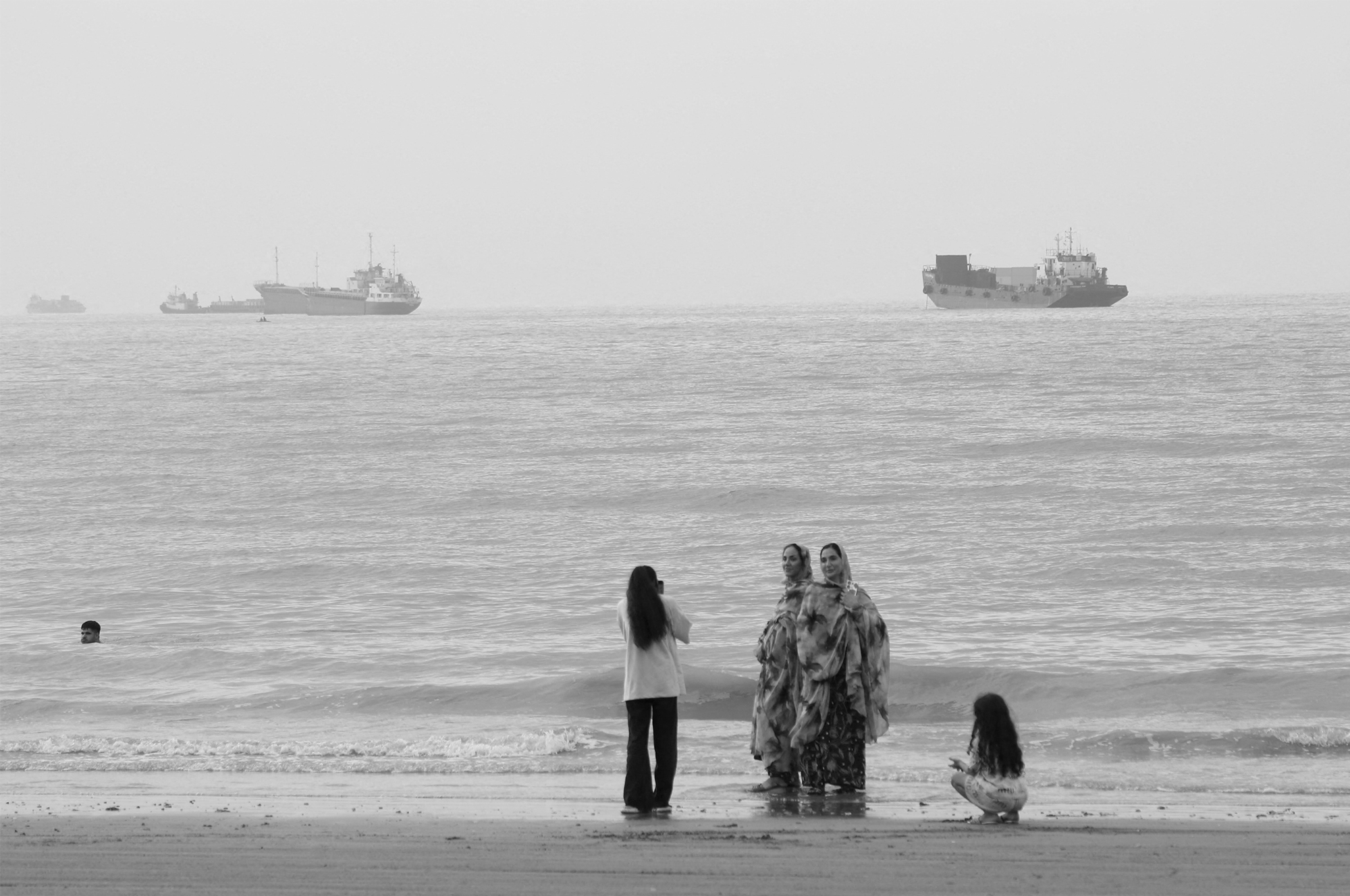
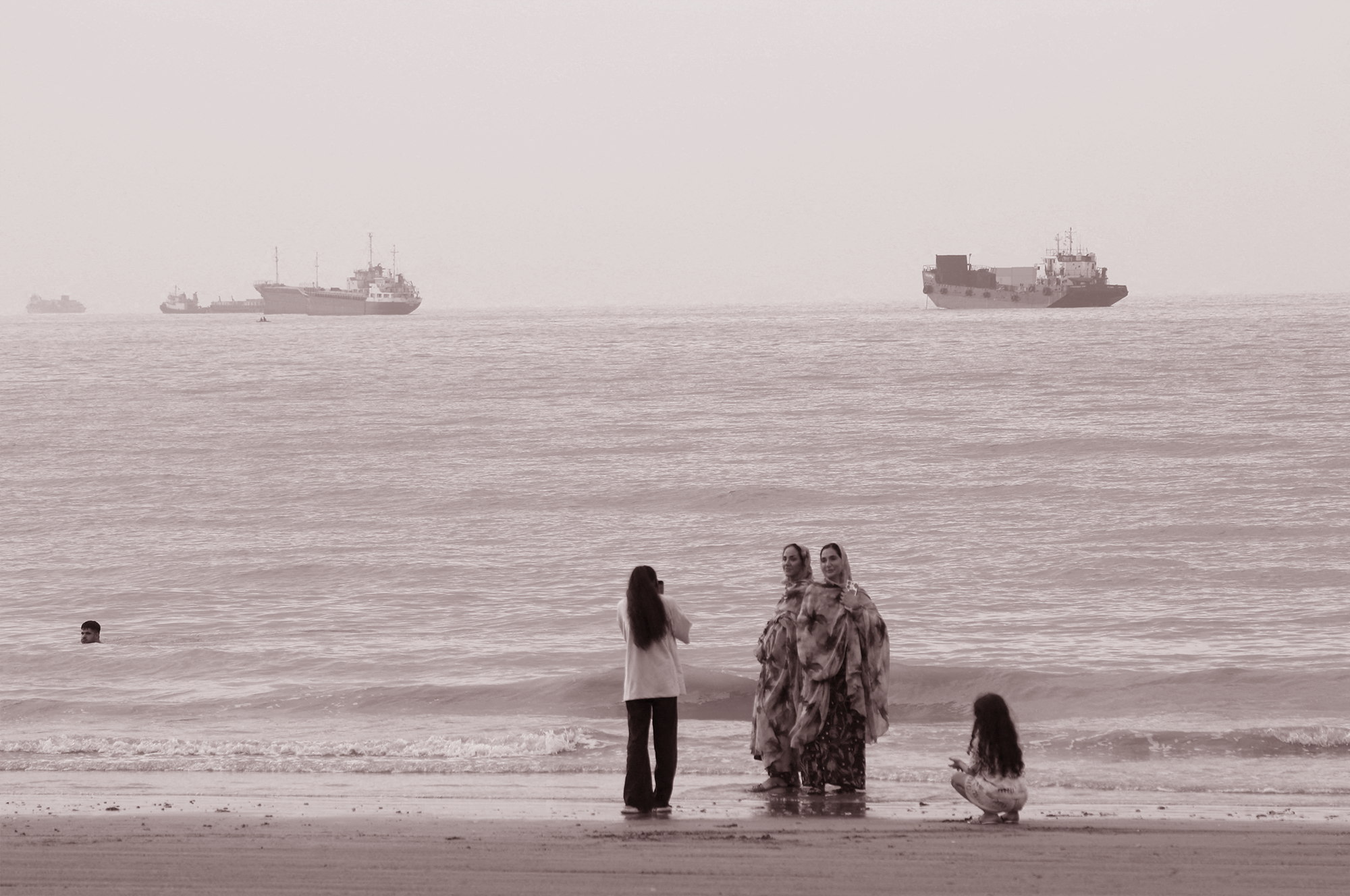
Iran has taken control of the Strait of Hormuz, a key waterway for oil shipment out of the Persian Gulf, and the United States has not been able to force its reopening through military means. Meanwhile, fuel prices have risen, and people around the world are feeling the economic pressure.
In this episode, the Institute for Global Affairs’ Jonathan Guyer is joined by Gregory Brew, an oil historian and senior analyst at Eurasia Group. They discuss historical analogies to the Hormuz crisis, why a diplomatic end to the war has not yet been achieved, and how oil markets are reacting. Greg also explains why oil is a useful vector for understanding history and geopolitics.
Listen Here: Apple Podcasts | Google Play | Libsyn | Radio Public | Soundcloud | Spotify | TuneIn | RSS
Gregory Brew, a historian of modern Iran, oil, and US foreign policy, is a senior analyst at Eurasia Group. He is the author of the book The Struggle for Iran: Oil, Autocracy, and the Cold War, 1951-1954 (The University of North Carolina Press, 2023). His writing and analysis have appeared in Foreign Affairs, Foreign Policy, Time Magazine, The Washington Post, NPR, and Bloomberg’s Odd Lots podcast, among many others.
Find Greg on X: https://x.com/gbrew24
Transcript:
JONATHAN GUYER: Welcome back to None of the Above. I'm your host, Jonathan Guyer. The US war with Iran is nearing the six-month mark, after a new round of bombing. As oil prices rise and the midterm elections approach, there's still very little clarity on how this will all end.
I'm excited to welcome Gregory Brew to the show to help us understand the situation. Greg is an oil historian focused on Iran and a senior analyst at Eurasia Group. He breaks down what's really going on with the Strait of Hormuz, some relevant historic parallels that merit a lot more attention, and how oil markets are learning to navigate through all this geopolitical disruption. As always, thanks for listening to None of the Above. Please subscribe to the show, and we hope you enjoy the conversation.
Greg Brew, welcome to None of the Above.
GREGORY BREW: Thanks for having me on.
GUYER: Greg, I think of you — I mean, you're an amazing oil analyst, but you're also a historian. And I wonder if you could situate us in history a bit. What are the historical moments that you're coming back to right now? Given your writing, your research, the books you've done, what are the oil shocks of yesteryear that are helping you understand this moment?
BREW: So, on the one hand, there's a lot that's unprecedented about the current situation. The closure of the Strait of Hormuz is something that lots of analysts, including myself, have always been talking about, theorizing about, preparing for. I'll be honest, I don't think anybody really thought that it was very likely to happen. My kind of canned response when anyone ever asked me what are the odds that Iran closes the Strait of Hormuz — I would say ten percent, or something fairly low, because it was always my understanding that they would only do so if they faced an existential threat. And since their threat to close the strait was so well understood by the region, by the United States, by others, and since a full-on attack on Iran was always something that seemed too risky and likely to fail, it was never likely to happen. So, I always thought the Strait of Hormuz closing was an unlikely scenario. But here we are.
When it comes to thinking about potential moments in history, sometimes I find myself thinking about the Iranian Revolution of 1979, which before now was probably the single biggest oil supply shock as far as the amount of oil that was disrupted. A lot of folks think about the 1973 energy shock, sort of the first oil shock, which involved an embargo on the United States by Arab oil producers. But the Iranian revolution brought a very large amount of oil off the market and caused prices to jump considerably in 1979 and 1980, along the lines of what we've seen this year. But honestly, if I'm searching for historical parallels, the one that I tend to think about the most is the Suez Crisis of 1956—
GUYER: Really? Huh.
BREW: —which involved the closure of a major waterway, Egypt's decision to close the Suez Canal to traffic. But also, and maybe this could serve as a kind of kickoff of our conversation, a moment where a great power, a military power, believed that its power was greater than turned out to be the case in reality. This was the United Kingdom, and France was also involved. Nineteen fifty-six involved the nationalization of the Suez Canal by Egyptian President Gamal Abdel Nasser. The canal had been regarded as a British possession, and the British government responded by essentially attempting to overthrow Nasser with a military operation that went very, very wrong, and resulted in, I think, both Nasser's increase in prestige — his appearance of power, his position was greatly improved as a result of this crisis — and Britain's fell dramatically. This is generally regarded as the moment where Britain ceased to be a great power, because its reach had far exceeded its grasp, or its ambition had far exceeded what it was able to pull off in reality.
I don't think necessarily the situation facing the United States is quite analogous. I think the US has fumbled quite considerably in both launching this war and in the prosecution of this war. I don't think it means that the US is going to cease to be a great power, but I do think that the United States, the US foreign policy community, the decision-making community, the national security apparatus, whatever you want to call it, is now facing some very serious questions about the limits of US power, the limits of what the US can hope to achieve in the Middle East, and what US policy in the Middle East should be moving forward. And then finally, this idea, this ambition that the Islamic Republic could be overthrown by military force — I think has proven to be chimerical. I think this war has shown the Islamic Republic to be very resilient, very resistant to outside military pressure.
GUYER: I'm really glad you brought this up, Greg, because I do think this is a Suez moment for the United States. And I'm not sure that many in the pundit and analyst class — of which we both are, card-carrying members — have really brought this up, because it involves digging into this history and explaining to viewers about Nasser and the Tripartite Attack and Israel ganging up, and having a real loss that doesn't usually fit the five-minute soundbite on TV.
BREW: That's true. When you think about it, it's an event that is, I think, very much in a bygone era. It's the early nineteen fifties, it's the early Cold War. It's one of the oldest or earliest flashpoints in post-colonial history. The decolonization of the Global South really began in the late '40s, early '50s, and the Nasser moment around Suez is a major flashpoint, marking the rise of the Global South and the decline of the classic colonial European powers.
And in a way, this war may augur a somewhat similar shift. I think it's still a little early to say, to be perfectly honest. I think it's very clear that this has thrown into stark relief the limitations of what the US can achieve against Iran in particular. As I mentioned, there's long been this belief that there were military options for overcoming not only the pressing issues, or the tangible issues facing the US from Iran — Iran's nuclear program, Iran's missile program, the key physical points — but that the threat that was believed to exist in the form of the Islamic Republic was one that could ultimately be handled decisively through war, through military force. I think this war has made it very clear that that ambition was misplaced, in a way that is somewhat analogous to the British belief that strong military action was possible in '56, against Nasser, to reimpose British control over this canal, to essentially reestablish British imperial hegemony in the Middle East. Britain was wrong in '56. I think the US was quite wrong in 2026 as well.
GUYER: The one nuance there is that Eisenhower kind of said no. He wasn't going to get the US involved, wasn't going to provide weapons for it. Is there an Eisenhower who's going to say no to the United States right now? Or are we in a different great-power moment, where maybe the analogy isn't going to land so perfectly?
BREW: Yeah, that's another area where the analogy does kind of fall apart, because in '56 it was more a question of: have we truly entered a bipolar world, or a world defined by really one massive superpower in the United States, one fairly strong but significantly less powerful state in the Soviet Union, and could the pre-existing European imperial powers coexist in this world and still hold on to some degree of their pre-World War II influence? '56 decisively showed that that could not be the case — that Great Britain could only practice decisive imperial policy so long as it had buy-in from the United States. Eisenhower clearly vetoed any kind of decisive British or French or Israeli military action in Egypt because it went against US interests.
There is no Eisenhower now. There is no new superpower who is going to check the United States or replace the United States. What we have potentially are different voices within the US national security community, within the US political leadership, who I would hope are ready to offer up some different ideas about how to manage not only Iran, but the future of US policy in the Middle East. So far, I would say that they're not really making their voices heard quite yet. But again, it's early days — the full impact of this crisis as it pertains to US posture globally, US posture in the Middle East, and US posture against Iran still hasn't become fully clear, because we are still living in the midst of the crisis. Hormuz remains closed. We remain in a position where US escalation against Iran could happen really any day. We haven't come out the other end of it quite yet.
GUYER: So, we really liked your recent tweet where you said it's not war, it's not peace, but a mysterious third thing. Tell us about how you're conceptualizing this mysterious third thing that we're living through right now, because — you're very active on social media, and you were pointing out that this recent weekend was the first weekend where there weren't US strikes, and it's so back and forth. Even as someone who's steeped in Middle East policy, like myself, I have a hard time knowing what's happening on a given day in this war, or this mysterious third thing. So how are you seeing it, bigger picture, right now?
BREW: Well, that tweet was trying to do a couple of things. I was trying to be funny, which I occasionally attempt to do, but not always with success. I'm willing to take the L on provoking a chuckle on social media. But this idea of no war, no peace is not my idea. If anything, it originated with the now-departed Supreme Leader Ali Khamenei of Iran — the idea that Iran could exist in a constant state of confrontation and resistance to the United States, that never blossomed into full-fledged war, but which was also never fully managed through diplomacy. This was an idea that Khamenei sort of occasionally directly espoused, but usually just sort of represented within Iran's elite, within the Iranian system. There is still very strong resistance from hardliners against any kind of idea of negotiations with the United States, somewhat similar to the fact that there really isn't a constituency in the US that advocates diplomacy with Iran. You still generally hear this from both Republicans and Democrats, this idea that we need to be strong against Iran, there needs to be resistance to Iranian foreign policy, the Iranian nuclear program needs to be handled firmly, with firm action.
Obviously, there's been a lot of criticism directed towards President Trump and the administration for the handling of this war. But the idea that military force against Iran isn't entirely justified, or that diplomacy should be emphasized more as a piece of US policy, still has trouble coalescing, I'd say, in sort of policy-making conversations. But as far as where we are now, and where I think we're likely to exist for a while moving forward, is this environment of no war, no peace. Because the moment that created this war was a moment that began last year, or really I would say in late 2024. It emerged from the aftermath of October 7th, the Hamas attack on Israel, which then precipitated really a regional war, where Israel did tremendous damage to Iran's major allies, particularly Hezbollah in Lebanon, the collapse of the Assad regime in Syria, successful Israeli airstrikes on Iran in late 2024, and then, of course, the Israeli attack on Iran in June of last year, that ended with the US bombing raids on Iran's major nuclear facilities at Natanz, Fordow, and Isfahan.
All of this suggested that Iran, coming into 2026, was extremely weak, that it was vulnerable, that there was a window of opportunity for more decisive military action. And this belief was further strengthened by the events of January 2026, where there were very large protests against the Islamic Republic. There was a huge crackdown, a very violent crackdown. And to be perfectly honest, as an analyst, I interpreted that moment as illustrating not necessarily the weakness of the Islamic Republic, but its latent strength. The fact that it was prepared, its leadership was prepared, to go to extraordinary lengths to remain in power — lengths to which very few governments in history have been willing to go. The mass use of lethal force against tens of thousands of their own citizens is something that the Islamic Republic has done in the past, but never on this scale and never with this intensity.
And it suggested to me, in January, that this was a regime that was conscious of how weak it appeared, conscious of how vulnerable it appeared, and a regime that was preparing for additional crises and additional attacks. But for the US, it suggested that there was scope for this more dramatic, more ambitious military operation that Israel and the US launched in late February. Trump being — I think it's now been proven fairly comprehensively that Trump was convinced by Israeli Prime Minister Benjamin Netanyahu that this war was a good idea. But the war didn't go well.
And now we're in a state where Iran has restored some of its lost deterrence, right? The weakness that was evident in 2025 and early 2026 — that weakness, I think, has been dispensed with by what Iran has done with the Strait of Hormuz, by what Iran has demonstrated with its missiles and drones. Yet at the same time, the attempt at diplomacy that the MOU represented — the agreement that the US and Iran reached in late June, this belief expressed by Vice President J.D. Vance and a few others, that this was actually a moment of opportunity where diplomacy could be advanced more aggressively — that collapsed very, very quickly. We are in a world, we are in a limbo, where violence between Iran and the United States is likely to remain ongoing, where there is likely to continue to be flare-ups.
At the same time, a return to large-scale war appears quite unlikely, given, again, what Iran has demonstrated that it can do, and given the experience the US has now had overthrowing the Islamic Republic by airstrikes isn't really a feasible option. And yet the space for diplomacy remains very, very limited. There is very little trust, there is very little understanding, there is tremendous skepticism, particularly on the Iranian side, that the US is capable of offering it anything that is worth the concessions. So we're not going to get war, and we're not going to get peace. We're going to get this mysterious third thing, which is likely to define US-Iranian relations, in my expectation, through the rest of Trump's term.
GUYER: Glad you brought up the memorandum and this kind of elusive ceasefire — or, one UN analyst called it a "lesser fire," which I like, because it doesn't seem like the fires really cease, but it's definitely a lot less. Why do you think diplomacy hasn't been more effective here? It was kind of striking — you had Pakistan brokering, you had J.D. Vance stepping in. You had some real major diplomatic moves this spring that seemed to portend a new equilibrium. And it seems like none of that has really helped.
BREW: Yeah, I think there are a couple of reasons. Some of them are deeply structural, and speak to decades of experience on both sides with this stop-start diplomatic process. There were discussions between US and Iranian officials during the Clinton era. There was an attempted opening up in the late nineteen nineties, early two thousands, under Iranian President Khatami. There were discussions under the Bush administration, there were of course, the negotiations that led to the JCPOA, the nuclear deal under Obama, that were initially successful. And then, of course, it came to nothing when Trump withdrew from the deal in 2018. And then there have been, more recently, the rounds of discussions between Trump's envoy, Steve Witkoff, Jared Kushner joining, later J.D. Vance, and Iran's Foreign Minister Abbas Araghchi, and Iran's Speaker of the House, Mohammad Bagher Ghalibaf.
But throughout all of these discussions, achieving real progress on issues that matter, establishing trust, establishing an understanding of each nation's interests, each nation's priorities, each nation's red lines, has been extremely difficult. And some of that is ideological. Some of that comes down to the fact that the Islamic Republic is built around an ideology of resistance to the United States. It goes beyond the chant of "death to America." It goes to this idea that the Islamic Republic was kind of forged in the fires of defying US imperialism in the late 1970s, that it has struggled through the last 47 years against US pressure, against perceived US military hegemony in the Middle East. And of course, this perception has only been further enhanced by the experiences of the last year and a half — these attacks by the United States, the fact that Trump held talks with Iranians and twice attacked them while negotiations were ongoing.
GUYER: Yeah.
BREW: It feeds into a perception on the Iranian side, a perception that is very, very widely held by the more hardline elements of the regime, but also by the regime's base in the population — this kind of 20% that actually supports the Islamic Republic. They don't believe anything the United States says. They don't believe that the US can make promises that it can then keep. And in their view, one of the reasons why there shouldn't be progress in diplomacy is that diplomacy is ultimately bound to fail, unless it is diplomacy that is backed by force. The more recent position that has been expressed by most elements of Iran's system — and Ghalibaf, who leads the Iranian negotiating team, frequently espouses this position — is that the battlefield and the negotiating table are one and the same, that they are parts of the same struggle, that you can only achieve things at the negotiating table that have already been achieved on the battlefield. And this is why they return to force. This is why their posture now is more risk-acceptant, it leans more heavily on using missiles and drones. And similarly, on the US side, I think the Trump administration, and I honestly think a considerable portion of the US foreign-policy-making community, has come to see things quite similarly: well, the Iranians only respond to force, the Iranians can't be trusted, the Iranians are going to tear up any deal that they reach, you can't trust anything that they say, they're only going to use any kind of financial windfall to fund their regional adventurism, to fund their proxies, to fund their terror groups. And that, at the end of the day, bombing is what works. Bombing is what actually achieves US goals, US priorities.
And one of the reasons why I think diplomacy has not made much progress is that these are kind of the consensus positions on both sides, and the diplomats have to overcome those assumptions in order to make any kind of progress. The final point that I would make, and I do think this is worth emphasizing: diplomacy is a very difficult process. It's exhausting. It requires immense effort. It requires teams of people. And while the Iranians have generally pursued diplomacy with the United States with an understanding of its importance — when the first round of talks was held in Islamabad during the ceasefire, the Iranian team was very, very large, and it came with fully drafted portfolios on all the issues they wanted to discuss.
On the US side, it's Steve Witkoff, who is a friend of the president, not a professional diplomat. It's Jared Kushner, the president's son-in-law, and now it's the vice president, who does have his own staff, but who is not tremendously well versed in Middle East affairs, Middle East politics, and who does not have experience dealing with the Iranians. And this is something you hear from professional diplomats: as it is with any negotiation, any negotiating process, any diplomatic process, it's important to know your opponent. It's important to know who they are, what they care about. Iranians approach negotiations in a particular way. They have a particular method, they have particular tics that you have to sort of acknowledge and deal with. And the US team, for the most part, I think has been more geared around rapid progress, achieving a rapid result, trying to get a deal that the president can also accept. The president is also not always entirely clear about what it is he wants from a diplomatic process. All of this makes achieving any kind of diplomatic solution extremely difficult.
GUYER: Maybe you could tell us more about the Strait of Hormuz, because I think in hindsight, it's almost remarkable that this has never happened before — that the strait has shut down, that there was some kind of modus operandi between the Arab Gulf states and Iran, and US military bases nearby, that everything kind of operated pretty seamlessly, even when there were Gulf wars, even when there were international crises and so forth — the strait was kind of a steady state. And here we are, at this incredible breaking point, getting almost a half year into this moment. Have we been thinking about the strait wrong this whole time? Or what does this reveal to you about the reality of this shared waterway between arch-rivals, so to speak?
BREW: Well, something I mentioned at the top was that this idea of Iran closing the strait has always been there. It's always been actively discussed. I'll cop to it — I never thought it was particularly likely.
GUYER: You never war-gamed it or something?
BREW: I never thought the US would launch such an attack on Iran that would then warrant an Iranian closure of the strait. I'll put it that way. But the geography has been very clear for a long time. The strait is very narrow. The actual waterway is only a few miles wide. As we saw in 2023 and 2024 with the Houthi campaign in the Red Sea, it actually doesn't take much, using newer, unconventional, asymmetric methods — drones, ballistic missiles, drone boats, et cetera — for a group, a military group, to close a major waterway; for shippers, for shipping companies and carriers, to feel the risk is so high that they can't actually send their ships through, that they have to go around, or that they can't move at all.
So, when the war began, and Iran closed the strait, and they kept it closed fairly easily for a prolonged period of time without actually having to expend much effort, I think that really hammered home to me, and to lots of other analysts, that this is something that they can do, and they're going to do moving forward. That the Rubicon has now really been crossed. This threat was always there. The Iranians were always making it, and they chose not to do it until a moment of real existential crisis, a moment where they really came under fire, to a degree to which the survival of the Islamic Republic was at stake, requiring them to undertake this kind of incredible action.
The other thing that I thought was very surprising for the first few months of the war was that Iran continued to use the strait. Iranian oil tankers were continuing to move through, and the US didn't do anything about it. And it wasn't until the ceasefire period, where the US launched a naval blockade of Iran and bottled up Iranian exports — oil exports as well as other commercial exports — that this sort of dueling blockade over the strait became the key feature. But the Iranians really did exercise control over the strait. They've demonstrated it to a degree to which I think they've drawn quite a lot of confidence that they can do so again, and that they're entitled to controlling the strait. And that is, incidentally, what is driving this current confrontation, right? The reason the Iranians and the Americans have gone back to shooting at each other — it's not about Iran's nuclear program, it's not about the survival of the Islamic Republic. Iran wants its control over the strait to be recognized, and the US has been saying no. The US has been saying the strait's going to go back to the way it was before the war. And the Iranians are saying, hang on. And I think, given how firmly Iran has dug in to that position, and given how limited the options are for the US to force the Iranians to make concessions or back down from their position, I think ultimately this does resolve itself with the Iranians getting what they want — the Iranians getting their influence in the strait acknowledged, likely with some provision for collection of a fee of some kind. It is going to have to be worked out mostly between Iran and the regional states, particularly Oman, which shares the Strait of Hormuz with the Iranians. But the upshot of all this is that the strait's never going back to the way that it was — that this war has permanently altered the status quo in one of the world's most important waterways, in a way that overwhelmingly benefits Iran.
Now, the caveat to this is markets are good at managing risk, generally speaking. Incentives are created for actors to find ways around new risks, or to absorb risks, or to manage risks. And you're seeing that now. You saw that as soon as the war began — Saudi Arabia and the UAE using pipelines that went around the Strait of Hormuz, getting oil out through alternative methods. And what we're seeing now is an intensification of efforts to build out non-Hormuz-dependent supply chains — new pipelines, new railways, new roads, new ports — such that, by the end of this decade, a considerably smaller amount of oil is going to have to go through the strait than was the case in early 2026. It could be as little as fifty percent of the pre-war flow. Once all these new pipelines have been built, once all of these new exit terminals have been constructed and completed, the amount of oil that will actually be disrupted by an Iranian closure of the strait will be considerably less than was the case when this war began.
GUYER: Can you explain to us, Greg, why haven't prices shot up much higher? I filled up my gas tank over the weekend, and it was a lot more money than I've ever put in for my little station wagon. However, it's not exorbitant. We're seeing $5 oil here and there, but clearly the president, as you've noted in your analysis online and elsewhere, cares a lot about that hundred-dollar-a-barrel marker, but it doesn't seem like it's having the cataclysmic effect of the oil shock of the '70s, let's say. And inflation is bad, but inflation was already pretty bad. How do you make sense of it? Is it this invisible hand of the market doing some stuff that we can't totally imagine? I'm just curious — why hasn't it been worse? And, knock wood, it obviously could get a lot worse.
BREW: It could, because I think one of the major reasons why it didn't get quite so bad is that the international oil economy did have some shock absorbers. It did have some buffers when the war began to absorb the loss of the Strait of Hormuz. And there are a few worth noting. The first are strategic petroleum reserves. The United States has one, but so does nearly everybody else in the industrialized world, in the OECD community — every member state of the International Energy Agency is actually required to have an SPR. And when there are releases of oil from SPRs, it's meant to be done by all IEA members in a coordinated fashion. This is one of the outcomes of the 1973 energy crisis — this idea that if there is another major supply disruption, everybody should release oil at the same time to manage the impact, so that it's not a sort of beggar-thy-neighbor approach.
And this is what happened this year. The US released a lot of oil from its SPR. So did Japan, so did Western Europe. China did its own thing, which had, I would argue, an even greater impact on the international oil economy. What China did was it didn't do a coordinated strategic petroleum reserve release the way that everybody else did — what China did was dramatically reduce its oil imports. Before this war, China was the world's largest oil importer. It imported around eleven million barrels of oil a day. And within about a month of the war breaking out, those imports collapsed to around six million barrels a day. So China reduced its oil imports by nearly fifty percent. And this took a lot of pressure off of everybody else.
The final reason why I think the market handled the supply shock this year fairly well is that Hormuz was never fully closed. As I mentioned, Saudi and the UAE did have ways of getting oil out through alternative means, the pipelines. Saudi has a pipeline running east to west to the Red Sea. The UAE has a shorter pipeline that just runs across the UAE to the Sea of Oman. But there was also a fair amount of oil that was sneaking through — tankers that had been trapped in the Gulf, turning off their transponders, their identifications, and just going dark, hoping that the Iranians wouldn't see them, occasionally taking advantage of US assistance. The US very quietly assisted with tankers getting out of the strait throughout the war and the ceasefire period.
So, all of this helped. The other reasons — the kind of macro reasons why this wasn't a 1973-style shock — two things that I would note. First is that the international economy is actually much less oil-dependent now than it was in the early 1970s. When you look at transportation fuel as an input in general economic activity, it's much less than it was in the early 1970s, thanks to a whole variety of reasons — technological advancements, the development of the economy away from hard industry, away from things like construction and industrial output. There are lots of economic activities that happen today that are affected by the price of oil, but not to the same extent that was the case in the early 1970s and 1973.
The other reason that maybe made 1973 more major, was that '73 saw the alignment of kind of a perfect storm of factors that made the oil production cuts and the Arab oil embargo so significant. For the United States, it was a moment where the US had become uniquely oil-dependent. By the early 1970s, oil was not only being used for transportation, it was also a major source of power in the US. Burning diesel for power had become a considerable piece of the US energy mix. Some of that was down to the fact that coal was becoming less competitive because of environmental regulations, natural gas had become more expensive, again, for some wonky regulatory reasons.
And the other reason was that Middle East oil was so cheap relative to oil from everywhere else that, by '73, the US had very quickly become pretty dependent on that imported source of oil, as had many other people — Japan, Western Europe. So '73 was what it was because the stars kind of aligned in a way that made the Arab oil embargo and the OPEC price increases so dramatic as macroeconomic factors for the whole global economy, in a way that is unlikely to happen again, I would say — leading to stagflation. We may not have it as bad as we did then.
GUYER: What about the nuclear dynamic? It does seem like everything is about energy, so you're so perfectly suited to help us make sense of it. All of a sudden, in the context of a Saudi Arabia-Israel deal, Trump has brought back this proposal, essentially, that's been on the table since the first term, and that the Biden team played around with, that they were going to give Saudi Arabia some civilian nuclear technology. And I feel like there's something kind of interesting here, thinking more meta about these issues — that Iran seeks civilian nuclear technology, we have a massive war, Saudi Arabia might get it. It also could be the thing — and I think there's a lot of valid criticism of nuclear — but it could be the thing that helps us avoid oil shocks in the future and changes the way the economy's ordered. What is your assessment of this kind of carrot-and-stick approach to nuclear civilian enrichment, and how it's playing out in the Gulf?
BREW: Yeah, first off, I'd say I'm a proponent of nuclear power. I think it's an excellent alternative to fossil fuels. It's still probably the best way of producing electricity in a way that doesn't release carbon emissions, in a way that is sustainable long-term. It is extremely expensive. But when it comes to the Middle East dynamic, yes, part of this is due to aspirations across the region for civilian nuclear energy — a desire to become less dependent on fossil fuels, incidentally freeing up more fossil fuels for export. If Iran or Saudi Arabia or the UAE are producing electrons at home through nuclear power, that frees up more hydrocarbons to sell and thus make more money. So that is sort of always a factor in these considerations.
On Iran — Iran does want a civilian nuclear program and feels entitled, justified, to have it. But I think that is inseparable from the question of does Iran want to, or could Iran at some point in the future, develop a nuclear weapon? It's in the public domain, it’s a matter of public record that Iran did have a clandestine nuclear weapons program in 2003, before Ali Khamenei shut it down. Iran also has a new supreme leader and a new leadership that is more dominated by military figures than was the case in the past, and who are very likely — some of whom have gone on the record of saying this — of having a more open, more flexible approach to the question of nuclear weaponization at some point in the future.
So, this question of could Iran build a bomb? This question of managing the threat of nuclear proliferation in the Islamic Republic of Iran — it's not an idle question. It does require substantive engagement. Now, the question of regional proliferation is now even more prominent, because the main reason why Saudi Arabia is interested in a nuclear program with the United States is to hedge against the possibility of Iran developing a nuclear weapons program. Saudi does want civilian nuclear power, but it also wants to have the option. And Crown Prince Mohammed bin Salman has said this — that if Iran develops a bomb, Saudi Arabia will too. And it takes a very long time to develop a domestic nuclear weapons program. It takes decades. Iran has gone a long way towards doing what it needs to do to build a bomb. Now, much of its program was destroyed in 2025, but it can be rebuilt.
Saudi, from the point of view of matching the threat, has a lot of catching up to do. And it's also — Saudi Arabia is in a position where it's not only trying to address its own strategic concerns, national security concerns, but it's also evolving its relationship with the United States. And this question of drawing the US in for a nuclear energy program is a way of ensuring continued ties with the United States, a continued warm relationship. But it's also sort of trying to bring the US on board with this question of Saudi nuclear policy — having the US become more entangled in Saudi affairs is a way of ensuring that the US continues to see things kind of from a Saudi perspective.
And this is where Israel is very concerned, because Israel, of course, does have nuclear weapons, has had them for a very, very long time, and is very concerned about anybody else in the region getting nuclear weapons, because it immediately diminishes Israel's conventional or strategic superiority in the region. And that's where the Biden administration's formula of normalization in exchange for a civilian nuclear program — that's where it really came from — that for Saudi to get what it wants on nuclear, it has to recognize Israel. Now, with the latest announcement — the president has kind of gone back and forth about this.
GUYER: It's totally ambiguous.
BREW: It's very ambiguous right now. But it does suggest that the direction of travel is Saudi Arabia getting civilian nuclear cooperation with the United States, without really having to move the ball very much on normalization with Israel. So that all suggests, big picture: new regime in Iran that is probably more risk-acceptant, more open to the possibility of changing nuclear doctrine; Saudi Arabia embarking on a nuclear program with US support, likely without in conjunction to Israel normalization; the UAE already having a nuclear program and likely looking at expanding it in a similar way. All of this suggests that regional nuclear proliferation is going to become a more important risk moving forward, which, incidentally, is what a lot of folks said, including myself, in 2018, when Trump jettisoned the JCPOA. When Trump killed the Iran nuclear deal, it immediately raised the question of: is this going to lead to a situation where everybody in the region starts to think about developing a bomb?
GUYER: And you mentioned a new supreme leader, a more militarized state of Iranian leadership. He hasn't really been seen in public. What's your read on this new cohort that's running the country there?
BREW: Well, it's not just that he hasn't really been seen in public, it's that he hasn't been seen in public at all. No one has seen Mojtaba Khamenei, the new Supreme Leader of Iran, in public in a very long time — I would say at least eight months. There are reports of what he was up to before the war. There are various accounts of where he was the day his father was killed, that he may have been at the compound the day that it was bombed by Israel at the beginning of the war.
Those are very, very hard to verify. As far as anyone knows, based on publicly available information, Mojtaba Khamenei is alive. He was injured in the war during that first round of bombings, and he remains in a secure location. Despite the slight de-escalation, despite the fact that Iran has sort of relaxed from a war footing in some ways, even as it continues the confrontation with the United States, other leaders have emerged and done public events. Mojtaba Khamenei is nowhere to be seen. And it's very unclear if he's ever going to be seen, or if he is, it's probably going to take a long time.
And there has been, for a long time, this belief that the Islamic Republic was in a state of evolution, that it was moving away from being a system dominated by clerics, to being one that was dominated by military leadership, military command, the leadership of the Islamic Revolutionary Guard Corps, which is both a military organization, an ideological organization, and also kind of a conglomerate, a business empire, and that ultimately, whoever became the new supreme leader was likely going to be sharing a degree of power with these military figures, with other members of the political elite. And that appears to be the case. Iran, by best guess, best analysis — because Iran is a black box at the best of times — Iran is currently operating under a collective leadership model. There are four, maybe five, individuals who are all executive decision makers, who make decisions through committee, who come to an agreement.
Mojtaba signs off, as he is supreme leader, but it doesn't appear as though he is the kind of key decision maker — that the decisions are made by a group. And this group includes Ghalibaf, who I mentioned, includes sort of the senior-most military commanders. But a collective leadership model is inherently unstable. It's very difficult to maintain, especially in an authoritarian system. The Soviet Union following the death of Stalin, China following the death of Mao — in each of these cases, you saw a collective leadership eventually coalesce around one, or maybe two, key individuals. And that is likely to happen in the Islamic Republic as well. It's unclear how it will happen, or how long it will take, but that is the likely direction of travel.
And the upshot of all this is: it will be a system that remains Islamic, remains committed to revolutionary Islam — they haven't moved away from that — it is being more informed by nationalist iconography, references to Iran's pre-Islamic past have become much more common. Certain cultural and social laws have been slightly de-emphasized — mandatory hijab, for instance, which drove the protest wave in 2022, following the death of Mahsa Amini, who was arrested and beaten to death for not wearing hijab correctly.
GUYER: The Woman, Life, Freedom movement.
BREW: Exactly. This issue of mandatory hijab has very much subsided in the national atmosphere, the national environment. So there has been a slight relaxing in some areas, and then a more vigorous crackdown in others. Protests, of course, have been brutally repressed. Freedom of speech has been even further curtailed. Political dissidents have been arrested in greater numbers. There are more executions. So, it's still a very, very rigidly authoritarian system, but one that appears to be more built around the security and military apparatus than around the apparatus led by senior Shia clerics — the Supreme Leader being one of them.
And the last thing I'll say is: Mojtaba was chosen as supreme leader not only because he was the son of Ali Khamenei, but because he has, and had, this close relationship with the IRGC, this close relationship with the security leadership. He was very much the guards' pick for supreme leader. There were other candidates who were being floated and being pushed by their various factions, their various supporters, but the guards coalesced around Mojtaba, and that's why he was chosen.
GUYER: I want to zoom out a bit, because I think you started 2026 focused on another conflict zone, which was Venezuela, where oil was also kind of the big open question. And as I understand it, their oil facilities have largely been offline. Where does that stand now? There were kind of public and private meetings between the Trump administration and oil companies, and a lot of bluster and exaggeration, I'm guessing, as this administration sometimes engages in — what is the actual reality in terms of those vast oil resources in Venezuela, and what comes next there?
BREW: Well, Venezuela — incidentally, I think the administration's success in Venezuela very much teed up the war against Iran in February.
GUYER: Success in maybe quotation marks.
BREW: Well, I would say credit where credit is due — they removed a head of state and replaced him with a new figure who proved much more cooperative. I think the administration was very impressed with what they did in Venezuela in December, removing Nicolás Maduro and replacing him with a government that was much more willing to do deals with the administration, much more willing to do deals with US energy companies, US oil companies. I think this very much created an impression inside the administration that: well, if we could do it in Venezuela, I bet we could do it in Iran as well. I bet we could do it quickly, we could do it cheaply, and we could carry out the same kind of success. Looking forward — with the caveat that I'm not at all an expert on Venezuelan politics — I do think there is this expectation that Venezuela is going to be more open, not only to investment from American companies, but investment from many international oil and energy companies. Venezuela has nominally some of the largest oil reserves in the world.
It is not oil that is particularly easy to process, exploit, extract, develop, and export, as some other sources in the world are, but it does happen to have the advantage of geography, which is that Venezuela is not behind the Strait of Hormuz. And there is this now, I think, very pertinent question — because, despite the volatility that this suggests around global energy, global oil, we're still going to need a lot of it moving forward, for the next half-century or more. And there is this belief that there are certain sources of crude oil that are likely to be more secure than others, likely to be less exposed to geopolitical risk, geopolitical disruption. And the ironic thing is that the events of the last six to twelve months suggest that the oil of Venezuela might be relatively more readily available than the oil of the Persian Gulf. I think that's going to play to Venezuela's benefit. I would say that it's still going to happen slowly. It's still a question of overcoming geology, infrastructural challenges, security is still a concern. This is a Venezuelan government that is still, I think, somewhat shaky on its feet. They have a relationship with the Trump administration now, which is working, but who's to say if that proves durable? Lots of question marks to this question.
GUYER: Are there other oil markets that you're watching right now that are maybe humming in the background but could face vulnerabilities? Something that could cause an outsized reaction given that the strait has largely been shut down?
BREW: Well, what's interesting is that there is another war that remains ongoing that affects international oil markets, that hasn't been getting quite as much attention, and that's the ongoing war between Russia and Ukraine.
GUYER: Exactly.
BREW: Ukraine has been consistently attacking Russian oil refineries for several years now, doing tremendous damage to Russia's domestic refinery capacity. Lately, Ukraine has also been attacking Russian oil tankers. They've been attacking infrastructure in the Black Sea. That's been affecting supply. So even if the situation in the Strait of Hormuz is even partially resolved, even if we see some degree of de-escalation between the US and Iran, so long as the war in Ukraine continues, there's going to be risk attached to any oil coming out of Russian Black Sea ports, which also includes oil from Kazakhstan, which exports quite a lot via the Black Sea.
But I think the bigger takeaway that I have, from not only this crisis but the crises over the last several years, is that the oil market has gotten very good at seeing through geopolitical disruption — that there is now this acknowledgment that, well, stuff's going to blow up, tankers are going to get attacked, and at the end of the day the oil's going to keep flowing, customers are going to get what they need. There is storage, there's inventory, there are buffers, and we can manage this without having to see dramatic increases in price. So the question that I have isn't necessarily what's going to cause the next price spike. The question I have is: is oil ever going to be above a hundred dollars ever again? Are we moving into an environment where oil prices structurally are going to remain fairly low relative to where they've been in the past? Inflation is another part of this. Oil at a hundred dollars isn't today what it was in 2008, or even 2022.
GUYER: Does this disincentivize renewables and other kinds of energy sources?
BREW: Potentially, yeah. It acts as a potential headwind to the advancement of alternatives to oil. It suggests that, if the oil market is very good at managing geopolitical risk, then geopolitical risk is probably not going to be a factor pushing consumers away from oil towards other sources, so long as the oil remains cheap. Cheap oil is good for consumers. It's not necessarily good for Middle East oil producers. So this is maybe another problem that the Persian Gulf producers are going to have to grapple with — that the price that they can fetch for their key export isn't going to be quite as attractive as maybe they would have anticipated. And they're going to have more trouble getting it out. If the Strait of Hormuz is closing every six months because of another US-Iran squabble, then not only is the environment for their product more risky, but it's one where prices may not rise to a level commensurate with that risk.
GUYER: Greg, have you always been an oil man? Did you get into oil first, or into Iranian history and Middle East history and policy? Or did you come at it through energy? Give us your origin story.
BREW: I have a weird origin story. I'm actually a historian by training. I got my PhD at Georgetown in 2018. And I actually did come to the region primarily through oil. I started studying the history of oil and US foreign relations first. I then got interested in the Middle East, and in Iran specifically. The key episode that I was most interested in, that I've written a book about and done a lot of research on, is the nationalization crisis of 1951 and the US coup of 1953.
That was kind of my introduction to oil, to US-Iranian history, to Iranian history especially.
GUYER: I'll plug your book. It's The Struggle for Iran: Oil, Autocracy, and the Cold War, 1951 to 1954.
BREW: There you go. That's a great plug. And then, from there, coming from my academic background, when I joined Eurasia Group in 2023, I became much more interested and much more involved in contemporary analysis and geopolitical risk assessments. I still have that history inside of my brain, and I can't help but turn it on once in a while. But I came to Iran through oil. That is my origin.
GUYER: And what drew you to oil? Is it just that it's so central to the American way of life? I'm from Detroit, and I feel like gas prices are sort of even more than the stock market ticker in New York in terms of what explains the world. But what drew you in? Because it's sort of a fascinating — oil does explain the world. It becomes a way into every set of issues, but it is a unique way into the region.
BREW: Yeah, I think it's served for me as an entry point to all these other interesting topical areas. Oil connects the US to the Middle East, it connects the world to the Middle East, it connects the Middle East to each other, it drives so much of Middle East political history in the 20th century. And by broadening the scope, oil was the most important single natural resource of the 20th century. It really drove America's path from industrialization through international conflict, through World War II, into the post-war era. It ties together the origins of the international financial system, which was all based on dollars, because all oil was traded in dollars, and oil was the most widely traded commodity in the world for many, many years. I think it still is, as far as a single commodity, as far as the value attached to it. So it ties everybody together. It's very important. It's deeply problematic, obviously. It's an element not only of international relations, international political economy, but it's an element of the history of capitalism. And now it's a key element in the struggle against climate change, and the effects that human industrialization and human industrial activity have had on the planet. So there's really no way to avoid it. It's everywhere, and it's just everything. And I just wanted to know as much about it as I could.
GUYER: Not to mention all the plastics and synthetics everywhere that we probably have inside of our bodies as well.
BREW: Yeah, we're all made of oil, and oil is made of dinosaurs mostly, and algae. But yeah, it's in basically every consumer product, it's in almost every industrial activity. The other thing that I always thought was very interesting about oil, from a uniquely American point of view, is that the United States is by far the most prolific oil producer of all time, compared to everybody else. It has far and away produced more oil over its history. It's where the oil industry was founded. It's where oil was first developed, in the 1860s. And it is, I think, the quintessential oil consumer — the petro-economy, the petro-culture that was built around the car, and that was built around the consumer lifestyle and suburban lifestyle and hyper-consumption of the second half of the 20th century. All of it was built around oil, and all of it was deeply American. So you can't detach American history from the history of oil, just as you can't really detach Middle East history from the history of oil, and really from the history of US involvement.
GUYER: I think that sums it up. Greg Brew, thank you so much for joining us on None of the Above.
BREW: Thank you so much for having me.
GUYER: Thank you, Greg Brew, for joining me on this episode. None of the Above is a podcast from the Institute for Global Affairs at Eurasia Group. Eloise Cassier is our producer. I'm your host, Jonathan Guyer. Thanks also to our team, Lucas Robinson and Ransom Miller. If you enjoyed what you heard, please rate and review us on Apple Podcasts, Spotify, or wherever you like to listen. And if you haven't already, subscribe to the show so you don't miss an episode. As always, your questions and comments, send them over: info@nonoftheabovepodcast.org. Till next time, thanks for tuning in.