The Economic War on Cuba
Ed Augustin on the evolution of US-Cuba policy and the consequences of economic warfare
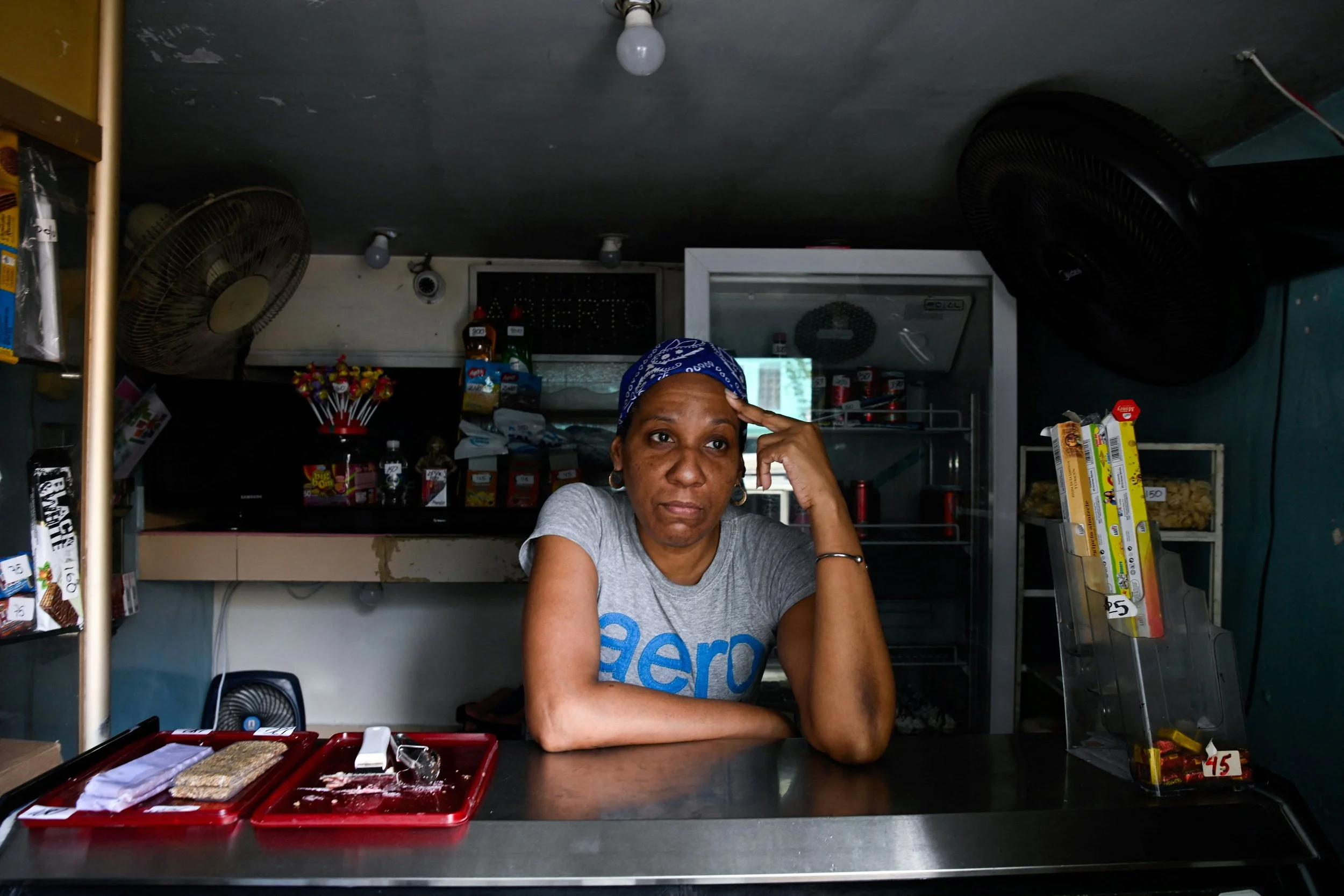
After Venezuela and Iran, many are asking if Cuba is next. The island is enduring energy blackouts, food and medicine shortages, and halting public services. But while the most vulnerable Cubans are hit hardest, Secretary of State Marco Rubio’s apparent dream of toppling the regime does not appear close to fruition.
In this episode, the Institute for Global Affairs’ Jonathan Guyer is joined by Ed Augustin, an independent journalist based in Havana, to discuss the situation on the ground. Ed updates us on the unfolding humanitarian crisis, Trump's 180-degree turn on Cuba policy, why the Cuban government is not backing down, and much more. They also touch on how Cuba fits into Trump’s broader Western Hemisphere policy.
Listen Here: Apple Podcasts | Google Play | Libsyn | Radio Public | Soundcloud | Spotify | TuneIn | RSS
Ed Augustin is an independent journalist and documentary filmmaker based in Havana. His reporting spans Cuban politics, the economy, labor, international affairs, and human interest stories. He is a contributor to The New York Times and Drop Site News and has written and produced work for Al Jazeera and The Guardian, among others.
Find Ed on X: https://x.com/ManInHabana
Read Ed’s most recent article in The New York Times: https://www.nytimes.com/2026/03/26/world/americas/cubas-health-system-us-oil-blockade.html
Check out his other recent piece for Drop Site News: https://www.dropsitenews.com/p/on-the-streets-of-havana-hope-that
Transcript:
JONATHAN GUYER: Welcome back to None of the Above. I'm your host, Jonathan Guyer. Cuba has taken on new geopolitical significance in Trump's second term. It's also struggling under the most dire humanitarian crisis in its recent history, resulting from an oil blockade from the United States. Thousands of Cubans are struggling to access the medical care they need and the island is subjected to lengthy power outages.
My guest today, Ed Augustin, has been doing crucial reporting from Havana for outlets including The New York Times, Drop Site News, and Al Jazeera. He joins me to discuss what is unfolding on the ground, the evolution of Cuba policy across three US administrations, and what we can expect to happen next. I hope you enjoy today's episode.
GUYER: Ed, welcome to None of the Above. You are joining us from Havana. Can you tell us a bit what drew you to Cuba? How you became a reporter, a journalist in Havana?
ED AUGUSTIN: It's a bit of a banal story. I graduated from university where I studied philosophy and politics and I wanted to do something meaningful. And in the UK, the city of London is very powerful, and if you want to earn enough money to live when you graduate, you basically have to become an investment banker or recruitment—or a management consultant. It's really like that. Those are the three that were kind of being talked about because rents are impossible. And so, I lived in a squat, because I didn't want do any of that.
So that was fun because I got to meet a lot of anarchists and a lot of politicized people that would, you know, hold the Metropolitan Police accountable for violence and things like that. And so, it really opened up a world that I didn't know.
And so, I guess I fell into journalism because I just, I wanted to do something meaningful, not just make money for a big corporation. And so, journalism just presented itself as a format where I could maybe do that.
GUYER: How does that bring you to Havana?
AUGUSTIN: Well, that's the banal part. I was living in Barcelona, either Catalonia or Spain, depending on your politics, and I met a Cuban woman and just on a kind of whim almost, both of us decided to go to Cuba. She'd been living in Spain for a long time. And so that was back in 2012. And it was just kind of a naive little adventure, so it happens. And life happened, and 13 years later, for better or worse, I'm still here.
GUYER: So you've been in Cuba for 13 years. What do you think are the biggest misconceptions of the country?
AUGUSTIN: Hm. That's a very good and very difficult question.
GUYER: Because I think, you know, for so long, and especially in the imagination of Republican administrations, the leadership is so demonized as communists, we probably don't actually encounter what daily life is like in Cuba. Maybe you can just tell us a little bit about what you see and how that contrasts to how you see it in other media.
AUGUSTIN: Yeah, I'm a freelancer, right? So I've worked with lots of different media from lots of different countries. And I must say that the narrowest, most cartoonish views of Cuba comes from the US media. And I don't think that's too much of a surprise because it's kind of like demographics, right? There's just a huge amount of exiles in Florida. There's a very powerful Cuban-American lobby. It's one of the most powerful foreign policy lobbies in US politics. Not talked about much, but one of the most powerful dollar for dollar.
And they have a huge kind of structural power and ability to shape the way that Cuba's talked about. The Miami voice is very, very powerful. And so, we’re talking about misconceptions, a massive one is that the sanctions hammer the regime and the military.
Yeah, they do. But you know who they hammer a lot more? The Cuban people. And that is just so blindingly obvious, right? But especially when you're here, right? So, like sanctions around the world. There was a study out last year in The Lancet Global Health. They're estimated to kill over half a million people a year.
GUYER: Half a million people a year. It's shocking. Yeah.
AUGUSTIN: And that study found two things. That's around about the same death toll as war, number one. And number two, most of those killed around the world are children. Children are the first to die, especially young children under five, because life is so fragile. And so, what you see with the sanctions on Cuba, and again, most of them aren't so-called smart sanctions, right? They came in the 90s and the 2000s. These are non-discriminative sanctions. They aim at the whole population because the old US theory, the State Department theory, and it's been in place for well over 60 years now, but it was articulated back in 1960, is that policy should aim to "bring about rising hunger, desperation, and overthrow government.”
GUYER: With the idea that it would galvanize people, so to speak, to rise up. But it hasn’t exactly done that.
AUGUSTIN: No, it hasn't exactly. And yet we're seeing this right now with the Trump administration, the US coverage, you know, you have these kind of lazy cliches, you know, with the government teetering on the edge of collapse is my favorite. We're saying this for 67 years, you know, it's kind of like, plus ça change plus c’est la même chose. Maybe the government will collapse tomorrow and I'll sound like an idiot. But so far, it's just been this, like, two-thirds of a century of the same script.
And you've got to get to a point where, what's that Einstein quote? Doing the same thing again and again and thinking you're going to get different result is the definition of insanity.
GUYER: But so, does that mean, Ed, that people are really suffering, but you don’t tend to see it from the leadership in Havana? They seem to be able to get the medicine they need.
AUGUSTIN: Well, just look at their waistlines. I have an analyst friend that calls it a fat government. I’m not one to judge but the president and a lot of the people in the cabinet are overweight and a lot of the military figures are overweight. But yet when you speak to the population at large, especially the population that doesn't have a cousin in Miami or Madrid, so they're not sending them money, especially the population that isn't working in the growing private sector, when you talk about people that rely on the state, when you are talking about people who are relying on a state pension, when you talk about people who have young kids and the milk that used to come is no longer coming—they’re the ones that are hit the hardest.
And I think this is really important to recognize. It’s not that they hit the civil population harder, but they hit the most vulnerable the hardest. People in government have more connections and they're able to get their hands on resources, kind of pilfer. This is kind of the way it works in Cuba, I think.
The people that these sanctions are hammering are pregnant women, are babies, are the black population, are the elderly. And this just doesn't get out in the US media as it should. And perhaps I'm naive, but I'd like to think that, seeing as collective punishment is illegal, my hope would be that if people in the United States really knew what US policy is doing, then it would stop.
And I'd like to say I've got a piece coming out tomorrow in a US newspaper that tackles this, you know, what we find in our reporting, both speaking to Cuban doctors and speaking to international health experts, is that the petrol blockade right now is killing babies. More specifically, the infant mortality rate has shot up since this January, ever since the Trump administration has stopped petrol coming to the island.
And it's hardly surprising, you know, people can't get to work, the cleaners can't get to work, so it's dirtier. The doctors and nurses can't get to work, so there's less care. Less medicine is coming in the country because they've got even less money. And the medicine that comes in can't be delivered because there's no petrol. I mean, as soon as you start thinking through these things, and that's before you talk about power cuts during operations, it's before you even think about how food prices are going up because of petrol shortages and also, crucially, water is becoming even more scarce because it relies on electric pumps, which rely on petroleum because most of Cuba's energy is produced by petroleum.
So, if you just start thinking through, how this US attack on energy attacks the infrastructure that sustains life for everyone on the island, it's blindingly obvious that this is really indiscriminately harming and leading to deaths. And it's very difficult to get that out there because there's a lot of vested interests in the United States that want that to be kept on the down low.
GUYER: Talk to us, because you've been there over a decade, you've seen many changes for life in Havana for Cubans. Does it feel more drastic now with these energy shortages, with these cuts that the Trump administration has instigated?
AUGUSTIN: Yeah, much more drastic. So, 10 years ago this month, President Obama visited Cuba when US policy was really kind of the opposite, right? At that time US policy was moving towards engagement, was moving towards normalization, was moving towards softening the sanctions.
GUYER: They opened an embassy, ultimately. Yeah.
AUGUSTIN: They opened the embassy, but they also softened the sanctions, right? And they didn't have to do that much because the sanctions legislation is more difficult to revoke because you need the Congress to do that. But the Obama administration basically did two things – three things. They opened the embassy. They punctured holes in the sanctions at the executive level. And then they created the mood music, telling Cuban Americans and telling US businesses like Netflix, like Airbnb, like Google, like AT&T, come and invest in Cuba, we're not going to hit you with big fines. And that really quite small amount of policy change led to an enormous amount of hope amongst Cubans that finally this half-century nightmare might be over.
It led to a huge amount of excitement because Cubans tend to be very welcoming people and they get on with people from the States and people from the States, you know, baseball in common is the classic thing to say. The music's amazing. And people from the States coming on these cruise ships, on commercial airliners, really just loved Cuba. They were like, this is amazing. I love this place. And it kind of like smashed through these old fossilized stereotypes very, very powerfully.
And so that was one of the reasons why I think when the first Trump administration got in, Marco Rubio and the Cuban-American lobby really felt they had to shut it down. Because I think that if that was allowed to go on a little bit longer, it would have been irreversible. And right now, yeah, ever since then, things have got much worse.
GUYER: Well, so, let's stay in that moment. So, in the first Trump administration, Marco Rubio is in the Senate, of course, not yet Secretary of State, but he immediately reversed a lot of these Obama changes, right? What was that like in that moment for, and the perception of President Trump back in 2017, ’18, ’19, was it very negative that this sort of optimism was immediately shut down?
AUGUSTIN: This is really fascinating. Donald Trump's, through most of his political career, has been in favor of normalization.
And in fact, when he stood for president the first time in Miami, he crossed swords with Marco Rubio on that question. He said, I'm paraphrasing, 50 years is too long, folks. The concept of a deal is fine. So, what he said is that he'd get a better deal than Obama. Deal, deal, deal. But the point is, he'd do a deal with the Cubans. We're seeing it again in a different context.
You know what? He was so in favor of normalization that a few months before he became president the first time, he even sent executives from the Trump organization to Cuba, in possible violation of the embargo legislation, to look at opening hotels. And thats when the Trump—
GUYER: And he was going to open a Trump hotel even in Havana? That was the idea?
AUGUSTIN: Well, they looked into it and my understanding is that from sources here were even plans to drawn up to do it. I think it was quite early stages. But what we know is that the Trump organization was patented here and it was patented for many years into the first presidency, for golf courses, for beauty contests and for hotels. I mean, it says quite a lot.
What changed is Rubio. So, he cut a deal with Rubio at some point shortly before he got elected, and a few days before he became, a few weeks I should say, before he won that election, he did a big speech in Miami to the Bay of Pigs veterans in which he said, you know, classic Republican stuff—end is near, we're going to hammer the communists, and all of that. And it was widely reported throughout his first term as president that Marco Rubio was known in policy circles as “the Secretary of State for Latin America.” So, particularly on Venezuela, Cuba and Nicaragua, that was the deal. He was just running the show. And so this was a modus vivendi between Donald Trump and Marco Rubio.
I think that's really important to understand, so that when we start thinking about what might happen at this very perilous moment for the Cuban people, Donald Trump's instincts, we know, are to normalize and are to engage. And I think it's very, very notable now that they're talking increasingly about a deal, and they're talking increasingly about an economic deal and less about regime change.
GUYER: I want to stay, though, in this moment, just for a second, because I think it's very revealing that Western Hemisphere, Latin America, was not a huge part of Trump's first term. I mean, the focus was much more on Middle East and so forth. And so was it—what was the perception of Cubans of Trump? Did they see a possible hope with the rumors of hotels opening?
AUGUSTIN: They saw hope! They did see hope. I mean, of course, we all know everyone presumed Hillary Clinton was going to win. But it just seemed kind of common sense at that time in Cuba that whoever won, the normalization process would keep unfolding. Obama had spoken very eloquently here in Havana.
GUYER: It was almost inevitable, yeah.
AUGUSTIN: There was that feeling, right? But then reality hit. Obama had spoken very, very eloquently in a big theater there to the Cuban people. And part of that in those negotiations, they had the Cuban state media broadcast that speech.
And the joke here at the time in Cuba was that if there are free and fair elections tomorrow, Obama would win. He was a hugely popular figure amongst Cubans. Hillary Clinton was on board. US corporations, big ones, were moving in. Nobody really thought Trump would win. And when you spoke to Cubans about Trump, you'd have this kind of thing, no, he's a businessman, he's going to cut deal. That's good. We need business. And so there was just this feeling, it was in the air, that this was inevitable.
GUYER: But then what happens? I mean, after Trump loses in 2020, Biden comes into office. You know, we've talked about this before. There was no policy review, right? They said they were going to do a big policy review. They said things were going to change. They said they were going to, you know, probably revive a lot of these Obama entreaties to the Cuban leadership. But what happens?
AUGUSTIN: Well, they fibbed about the policy review. They told the progressive Democrats that they were doing one, you we're looking into it, we'll review policy. It was a load of guff. It was a fib. There never was a policy review. Quite extraordinary, right? Quite an extraordinary lie. But that really kind of gets at the whole Biden policy towards Cuba. There was a lot of duplicity and subterfuge. So, as you say, he did say on the campaign trail that he would broadly go back to Obama. He didn't talk about it too much, but he did talk about that. He didn't campaign on it too much, but he did talk about it.
GUYER: Right. Mm-hmm.
AUGUSTIN: Once he gets in, the internal decision is made that they're going to talk about Cuba as little as possible because they want to win Florida. They want to win Florida. And they make a strategic decision that proved out to be disastrous because they got trounced in Florida, that you should kind of triangulate, do a Trump lite, not be seen to be, you know, being soft on the communists and basically lock in the maximum pressure policies that began under Trump from 2019.
And that was really a disaster. That was really a disaster because they lost Florida in any case. But it really set the scene for the level of destruction and death we're seeing now. Because those sanctions killed, by knocking billions of dollars a year off Cuban hard currency flows, which is what both the Biden and Trump administrations did—sure, that translates into less money for the regime and less money for building hotels and less jacuzzis for rich people. I don't have evidence of it, but it might well happen in the Communist Party. I'd say more importantly, because there's more of them, it translates into less antibiotics for women. It translates into less food for the elderly. It translates into less folic acid for pregnant women and more, as we're finding now, higher rates of mortality, which, by the way, over the last 10 years in Cuba have more than doubled. Some of the lowest in the world to now twice as high as the United States.
So, it really was very cynical on the Biden administration and they managed to keep it out of media scrutiny. So as a journalist now, it's really easy for me to report on this because the Trump administration is saying, you know, I'm going to take Cuba and we're not letting oil in, none's getting in. Even now that, you know, Trump said total and complete blockade on Cuba. The US chargé d’affaires here, the top diplomat, has said, you know, no oil is getting in, nothing is getting in, blockade.
So, they're kind of just like the Communist Party now in terms of what they're doing. And so, as a journalist, it's easier for me to kind of get to cover it because the editors who really rely on what the White House is saying are like, this is happening, so you can do it. Whereas under Biden, it was really frustrating because they're basically doing the same thing as Trump the first time around. But because they didn't talk about it, when I pitched it, they're like, no, that's not the story. We're not sure what's going on.
GUYER: I feel like—I mean, you did some really remarkable reporting on the fact that Biden did not make this opening. And, you know, I was recently speaking with a senior official from that administration who said that the president himself maybe just wasn't so keen on this. He did kind of bring with him some of that Cold War baggage as a very elderly statesperson. And he was also dealing with people like Senator Menendez, who obviously is very aligned with people like Marco Rubio or Ted Cruz on these issues. So, there just wasn't that momentum, I understand. But there were some contradictions, right?
AUGUSTIN: Bit of a self-serving argument.
GUYER: I mean, there are some contradictions though, because Biden removed Cuba from the state sponsor terror list. Talk us through that, because that was kind of one of the very small maneuvers, right?
AUGUSTIN: But it was illusory because he said he was going to do it six days before Trump took office, but it takes 45 days to do it. So, it was an announcement, it was for the cameras. They could have done that on the first day they were in office and it would have passed almost without comment, because the first day you're in as president, talking about other things, Cuba’s very low down the list. They didn't do it. They did it six days before.
And again, they got away kind of scot-free with that because when that happened in January last year, there was this big media circus about, they're taking it off the terrorist list. But they didn't actually do it because Trump just first day back in office, the executive order, slapped it back on. And as I said, it never came off in the first place. So they kept the core maximum pressure sanctions in place. That's not my term. It's the first Trump administration's term. And the most powerful one of those is the SSOT, State Sponsors of Terrorism list. So ever since the early 1990s, my sources tell me, the US intelligence agencies have agreed that Cuba is not a state sponsor of terrorism. It used to be, in their analysis, in the 70s and 80s. Since the end of the Cold War, it hasn't been. And so this is incredibly political.
The Biden administration even said, the State Department said in January 2025, there is “no credible evidence that Cuba sponsored terrorism.” Which begs the question, if there's no credible evidence, why has it been on for the last four years under your administration?
GUYER: Right, right.
AUGUSTIN: So yeah, this was a domestic political—this is baseless, it's not evidence-linked, it's not factual, but also this was driven by domestic political considerations. Winning Florida, not angering Bob Menendez, yeah, you're right, did have a load of structural power over the Biden administration and look what happened to him. I think it's quite descriptive actually. I think it says quite a lot about a lot of these characters.
GUYER: Quite embarrassing, yeah.
AUGUSTIN: Yeah, but you know, Bob Menendez, his credentials as a human rights defender are somewhat undermined, I'd say, given that he was being paid by the Egyptian government to send arms there. And a lot of these characters that posture as human rights defenders and great democrats, there's quite a lot of dodgy money behind that.
The final thing, yeah, I think you're right that President Biden's worldview kind of reprising old kind of good versus evil Cold War things, freedom versus autocracy, the Russia-Ukraine war being what it was. Cuba was on the wrong side of that kind of ideological binary, right?
Cuba was with Russia. Cuba is not a democracy. I don't know if it is, and it's certainly not for President Biden. And so that kind of world view and that kind of fracturing that happened after Russia-Ukraine put Cuba on the wrong side. But I think that to overemphasize that is not correct. I think that fundamentally, and this is what I've been told by sources, the decision was taken very, very early on that we'd touch Cuba as little as possible, talk about Cuba as little as possible, because we do not want to lose Florida.
Remember, Ron Klein was Biden's head of staff for long time, and he was involved in the Al Gore campaign when they lost Florida by just a few hundred votes fundamentally because of Cuba. So he's been on record saying he's very scared by that. It was a domestic political decision that led to their Cuban policy.
GUYER: So then, bring us a little more up to date. Trump comes into office in 2025. Maximum pressure on Cuba endures. But also Trump suddenly has pursued a really militaristic approach to the Western hemisphere that's pretty unprecedented in terms of just the extrajudicial bombings of drug boats, the overt targeting, the real emphasis on the Pentagon running Latin America policy in a way that I think we haven't really seen in decades. How is that perceived among your friends and sources in Havana?
AUGUSTIN: I think they're thinking about what's happening to Cuba more than anything else.
There's fear in Cuba. There's fear about how bad things are getting. I haven't reported on this yet, but I'm desperate to go out and do it. But I've been told that polystyrene is running out in private shops. I mean, everything's been running out for years in state shops, but private shops can just import more. And the reason I'm being told it's running out is that Cubans are making more and more polystyrene rafts to get out of the country because there's a growing sense that things are going to get absolutely awful and we have to risk our lives with all of the danger that implies to get out of here, to get to the US, even with the deportations happening. So that's a really powerful, if it turns out to be true. There's fear of people's parents getting sick and going to hospital and there being no medicine. There's fear of US military intervention, not that it seems probable, but it's now kind of seen by those people as not impossible. There's fear of hunger.
And while people don't have the level of like policy detail that I think you have when you're talking about the increasingly militaristic application of the sanctions, there's a broad awareness that the US is crushing the country and that whether or not people support the government, and the government's very unpopular at the moment, it is very, very clear to Cubans who have to suffer it that US policy is hurting them and their families.
GUYER: But the government remains pretty defiant at this point. The leadership is—what kinds of positions is the Cuban president and the leadership taking in this ongoing crisis?
AUGUSTIN: This is one of the most defiant countries—you could talk about society, resilient people, but just in terms of government—I think this is one of the most defiant governments on the planet. The US has had a consistent regime change posture towards Cuba ever since 1960, going back from early attempts to assassinate Fidel Castro, to Bay of Pigs, to state terrorism, chemical warfare—chemical warfare has not been fully proved—but it's just replete. All of the mechanisms have been tried. All of the methods have been tried. The Obama window lasted two years in 67. For 65 of those, there's been consistent regime change posture towards the country. And the notion that a small downtrodden country with 11 million people could withstand that, even for a few years, is kind of the stuff of fantasy. Geopolitical rules don't seem to apply to Cuba.
And the US government doesn't have to think particularly hard, to try particularly hard to get rid of Latin American governments. Those of us on the left know the history of Allende in ‘73 in Chile and Arbenz in Guatemala. If you look at these things, the investments aren't that big and it doesn't take too long to get rid of them. And of course, this extends into 21st century, the kidnapping of Jean-Bertrand Aristide in 2004, democratically elected.
The coup against the Bolivian government, left-wing as well, in 2019, also democratically elected—well democratically-ish elected. This is a constant US pattern in Latin America. It's not called our backyard for no reason. And what I'm trying to emphasize is that they win, right? They managed to get rid of the government. The Cuban government has resisted this, for better or for worse, for two-thirds of a century. It's absolutely astonishing.
And right now, if you look at the negotiations that are going on—again, it's absolutely astonishing how little the Cubans are offering them. No oil has gotten into the country for over two months. The amount of external pressure being put on Cuba, and of course it's cumulative because it didn't start yesterday, it’s been going on for many, many years, is enormous.
And under those circumstances, you'd expect a small country to really make massive concessions to a superpower, right? As far as we can see, it's not happening.
There was a big thing last week when NBC News interviewed a deputy prime minister who said, you know, one of the things that is going to be allowed soon is that Cuban nationals living abroad, including in Florida, which she was careful to say, will soon be allowed to invest in and even own a business in Cuba. This is a tiny gesture given the amount of pressure they're under. And so, you have a load of stuff that the State Department's briefing very aggressively and anonymously to the US newspapers like USA Today, like Politico, like Bloomberg, et cetera, Wall Street Journal, about all of these things.
And that we're going to get regime change by the end of the year, the president must stand down, these are our demands. And actually, you kind of look at them as journalists here and you kind of evaluate them. And then the days and weeks pass and nothing happens because it's what the State Department wants to happen. It's not what the Cuban government's accepting. So, this is one of the reasons why it's so interesting to report on Cuba because it's the ultimate David and Goliath as far as I can see. And it's just fascinating to see how they just don't bow their heads down.
GUYER: And tell us more about the Cuban president, Miguel Díaz-Canel. What is his posture, personality? And you said the leadership is not very popular. How is that manifesting itself?
AUGUSTIN: Well, leadership is not popular because, I'd say the government is not popular because for the last 35 years, the country's been in a massive economic crisis that they haven't been able to pull themselves out of. So if we just think to a democratic country, if a government, if there's a recession and bad economic performance for five years, they'd be voted out. And it's the same in Cuba apart from the extent. This has lasted two generations.
And so the way it tends to happen is that, elderly parts of the population, older segments will support the government or are more likely to because they lived through this incredible period where there was political repression, of course, but there was also a massive social transformation. Illiteracy eliminated in the 60s, public healthcare free at the point of use, instituted and very high quality, sanitation, housing, access to culture. I mean, the strides forward in the 60s, 70s, and 80s were really enormous.
And the government, you know I wasn't around then, but when I speak to analysts and Cubans, it's just, not really allowed to say this in the US, but almost everyone supported the government, you know, also because it's a one party state, and there was a lot of social pressure to even if you didn't really. Whereas ever since the 1990s, you've had a generation that's grown up in hardship and scarcity. And so, they support the government much less.
I'm about to be 40. People under my age, very, very difficult to find people that support the government. People over 50, a large number of the population do. So that's the basic breakdown.
In terms of Miguel Díaz-Canel, he's been president for eight years now. Cubans call him “el presidente del dedo” or the “president of the finger,” because it's clear to them that he was—well formally there was an election by the National Assembly, which is a rubber stamp assembly and meets a couple of times a year for very short periods. He's presidente del dedo, he's president of the finger, because Raúl Castro selected him. That is true, and it's also widely seen.
He's not particularly charismatic. He's a bureaucrat. I think he's fairly capable, but perhaps not overly creative. But he's just been dealt the most atrocious hand a president could be dealt because I want to be clear, there is no circumstance under which a country of Cuba's size, geographically so close to the United States, could not be in a deep, deep, deep recession given the sheer force of economic warfare on the country. If it's capitalist, socialist, anarchist, fascist, if the government's competent or incompetent, it's almost a moot point now. The hunger levels would have gone up and the economy would have been cratering come what may.
GUYER: Tell us more about the influence that the Castros still have. It's interesting you say “president finger” or however you put it. I'm not nailing it quite right. So what is the role of the Castros today?
AUGUSTIN: Raúl Castro is the most powerful person in the country. All Cubans are conscious of that. He’s the late Fidel Castro's brother. He and the president are involved in these negotiations. It's no secret to Cubans that Raúl Castro is not even the power behind the throne, I mean it's just clear to Cubans that this is the way it works. Díaz Canel is Raúl's man. And while he's been administrating the daily decisions of government, the major decisions, if a deal is currently reached and what form it will take if the Cubans do accept, that's ultimately Raúl's decision. And that's known by everyone. That's just in the air because Cubans know how things work.
There is this tendency in the US to kind of obsess with the Castro family, you know, as if like you've got other massive players. And there are powerful members of the Castro family, but there are also a lot of people that, you know, there's one guy that's like an influencer, a bit of an embarrassment to them and likes, you know, he owns a bar, likes driving fast cars and expensive clothes and stuff. It's often suggested in US media that characters like him have a lot of power and decision-making, but Cuba's a lot more institutionalized than that.
So I think it's pretty clear that the government is united. Raúl Castro is the most powerful person, but it's really the institutions of state, not the kind of Castro family that is running the show.
I think there's like an ideological attempt in the US that comes from Florida to cast the Cuban government as something akin to a mob, you know, as something that's involved in crime, a cartel, running drugs. And of course, the expropriations or nationalizations that happened in the 60s are seen as illegitimate, as criminal by the families that had the property taken off them.
And so even if you look at US laws from the 1990s, the Helms-Burton Act of 1996 that talks about how any multinational—the word they use is “trafficking in stolen property”—can now be sued in US courts. You've got this whole discourse that's been really curated for many decades and framing the Castro family as the ultimate power on the island really plays into that trope.
GUYER: And what about Venezuela? I mean, there was a long-time security agreement between Hugo Chávez and the Castros. A lot of solidarity, obviously. This whole oil and energy catastrophe is resulting from US policy towards Venezuela. Are those connections drawn? How do you see those on a day-to-day basis in terms of the relationship between Cuba and Venezuela, how it's all playing out?
AUGUSTIN: Well, now it's far less significant than it was because as far as I can see, the Venezuelan government is fundamentally controlled from Washington and no oil has arrived this year since the abduction of the Venezuelan president.
So, the relationship is far weaker than it was before. I think the Cubans want to keep it as cordial as possible as with the Rodríguez, Delcy Rodríguez administration. But just to root it historically, Cuba got into a massive economic crisis in the 90s after the Soviet Union collapsed. That peaked in ‘93, ‘94, and then they got hotels, companies basically, to come in and invest and tourism slowly dragged them out of the crisis.
Hugo Chávez becomes president of Venezuela in 1998. And from 2000, they sign an agreement in which a load of stuff is done, but fundamentally two things. Cuba sends Venezuela doctors and teachers, lots of them. We're talking upwards of twenty thousand. And in exchange, Venezuela sends Cuba oil. And that oil really powers growth in what was and is a very dysfunctional economy.
Then what happens is in 2002, Washington tries to coup Hugo Chávez. But the coup fails. He's back in power a few days after, at which point security cooperation between Havana and Caracas, which may have already existed, deepens because the Cubans are very, very good at counterintelligence and the Cubans are very, very—they've just got their stuff together when it comes to fighting imperialism and stopping coups.
So it's natural, I think, or common sense from the president that's just been tried to be overthrown by the W. Bush administration to reach out to the ally that's very good at thwarting that. And they reach out to the Cubans and from then on there's more military integration and bodyguards. And so, that grew and it's presented as Rubio's Cuban colonization of Venezuela. But it's not economic colonization, it's a security agreement.
It's an odd relationship, but it's not without historical precedent. And so we saw on the 3rd of January, 32 Cuban bodyguards were killed when Maduro was kidnapped. And ever since then, the relationship between Venezuela and Cuba has reduced and again, no oil has arrived here.
And that's phenomenal, right? So last year, my understanding was that Cuba had about $9 billion of dollars coming in income. Two billion of that was from Venezuelan oil. A lot of it was used to keep the lights on, but there's not many lights on either way last year. Most people go most of the day without power. But some of that was sold on the international market so that they could get some hard currency coming in to, for example, get medicine to people or repair machines. And so it's from a terrible situation, even before the current oil blockade in which the Trump administration threatens to tariff any country that simply trades oil to Cuba, completely illegal under international law. If you just look at January the 3rd and the fallout, that's catastrophic for Cuba’s economy because it takes out $2 billion from income when they only had $9 billion to start with.
And so that is going to drive a great many people more into poverty. Many people, millions of people will inevitably be eating worse and getting more ill because of that just on its own. And that's only one part of what's happened in the last few months.
GUYER: What about Cuba's relationship to Mexico right now? think President Claudia Scheinbaum has been a pretty interesting international figure in her ability to navigate Trump dynamics, also the fact that she's kind of a bold left leader for the Western hemisphere at this very turbulent time. How do you see that dynamic playing out right now?
AUGUSTIN: I don’t follow Mexico is closely as you might, but my impression is that she's a very effective leader. But clearly the threat of tariffs on Mexico, if it continued sending oil to Cuba, that threat was made explicit in executive order on the 27th of January this year. That was too much because she's got a lot on her plate. She's having to renegotiate a trade deal with the US and Canada.
The US is pushing to have more involvement in anti-narcotics operations and pushing to be able to strike within Mexican territory, people that they see as criminals. And so clearly she's got a lot on her plate. And on that particular one, she caved in. And I don't think it's too surprising that she did because she's the president of Mexico first and foremost. And so that is a big loss for Cuba.
GUYER: So, she's offered to be a mediator between Cuba and the United States at this point.
AUGUSTIN: She has, and Mexico sees that it's got a special relationship with Cuba. And I think there's something in that. So a) it has, historically, negotiated between Cuba and the United States, and there's been a lot of them over the years. Some of those have taken place in Mexico. Mexico, like the Vatican, has been a country that's facilitated them. Secondly, when the Cuban Revolution happened in 1959, there were only two countries in the Western Hemisphere that stood up to pressure in Washington to cut diplomatic ties with Cuba: Canada and Mexico.
And I think that a lot of people in the current Mexican administration and in Mexico more broadly, are proud of the fact that they've managed to keep a relationship of friendship as they see it with Cuba over the years. So Mexico is no longer sending oil. It is sending hundreds of tons of humanitarian aid, milk, personal sanitation, equipment, and food.
I think that that is important, but not as important as selling oil, because I think Cuba needs that more than anything else.
GUYER: Tell me Ed, in Washington, when you start to talk about Cuba or the Western Hemisphere, one of the first things that comes up is China and great power competition. Does China actually come up much when you speak with Cuban sources, when you're watching the way the government there engages in international affairs? Like, what is the role of China in Cuba?
AUGUSTIN: China is—if Venezuela was Cuba's most important ally, then China was probably number two, definitely number two. So economically, they are very important in sending particularly mass solar panels, but chemicals and a whole load of things economically.
That's definitely true. Having said that, Cuba is not even amongst the top half dozen of countries in Latin America that are of most importance to China. I think it's called a strategic partnership. Cuba does not have that role because China wants, amongst other things, resources, extractive resources that Latin America can offer. Cuba's got very little in that regard.
And Chinese ambassadors, not that I've spoken directly with them, but I've been told that over the years, they'll always say the conditions are not yet ready. They're frustrated with Cuba for not going down a more market socialist reform program, as you've seen by—I don’t know if socialist is the right word—but whatever China has done, whatever we can call that, they wanted market economic reforms that Cuba hasn't done. And they accurately say that the current economic model in Cuba, even if you abstract from all of the US stuff to destroy it, is deeply unproductive and failed, I think you can say. So that is the relationship that we know.
Now, on top of that, there are layers and layers and layers of Washington disinformation. The Wall Street Journal for the last couple of years has come out with these big, they call them scoops, about China spy bases. For some reason it's not Chinese—China spy bases.
And if you look at it in Cuba, not an iota of evidence is actually offered that they exist. They might exist, I don't know, but the reporting doesn't actually give any. Now they talk about how China's given $2 billion to Cuba in return for these spy bases. And yet, all of the analysts I speak to say that a) there's no evidence that that's the case and b) it makes no sense because China’s already got an embassy here, which espionage will be done for, and old antennae from the Cold War are of very limited use if you want to spy on the United States these days. Far better to go cyber.
And so it's a little bit Orwellian how the phantom menaces are just conjured up in what should be evidence-led, serious publications.
But that is in large part an outcome of huge investments the US government makes every year in disinformation. There's a budget of $52 million every year for so-called democracy promotion programs, which are in effect covert programs because we're not clear how the money's spent, but we do know that lots of that money is spent on media, online media and disinformation. So, one of the drums that they hit again and again and again is this question of spy bases, spy bases, spy bases. But we're just not seeing any evidence on the ground that that's actually the case.
GUYER: So bring us back to this moment. I was recently at a think tank panel where a top Pentagon official was asked, you know, is Cuba next? And the whole room, it was a bit eerie, abruptly laughed. And it's, you know, kind of this caricature of Trump militarism that Cuba is on the agenda for the next intervention. How are you seeing that? Do you think that's likely? What are you watching for as you're trying to make sense of what is a very difficult time, I imagine, for people in Havana like yourself.
AUGUSTIN: Back a decade ago when President Obama made the historic move to normalize relations between the two countries, one of the main arguments of the democratic establishment was that if we don't engage with Cuba, it creates space for adversaries. And that's exactly what we're seeing play out right now. The Cuban government needs Iran to win the war or least raise the cost against the United States.
Because if the US can as easily get as easily overthrow the government as it did in Venezuela, that narrative—first Venezuela, then Iran, next Cuba—makes awful sense. Washington will feel emboldened. So that's driving them, if not closer to Iran, it's putting them even more on the side of Iran. Russia is sending oil. It's the only country that's sending it. We'll see if it gets there. China is giving very soft credit for Cuba to put up solar panels, which the only way they're going to get out of this, the government, is if they have a green transition, green revolution, why not call it that, to Cuba in almost impossible circumstances, you know, when they're bankrupt and they have to spend—find a way of decking out the whole country with solar panels.
And so, Iran, Russia, China—Washington policy is welding Cuba to what they see as adversaries. And in a sense, we have a self-fulfilling prophecy, right? So when the US engages, Cuba was willing to keep its relationship with Europe and Russia and China, but also make more space for the US. And that was happening very quickly under Obama. When Trump comes in, you get these, why not call it fake news about Russian spy bases and China this, China that, which is not true at the time. But if they keep on hammering the island's economy, they have to look out for the few hands that are offering anything. And so it becomes a self-filling prophecy. So I think that's one thing to point out.
I think in terms of possible US military intervention, it's not seen as likely here, but it has become a topic of conversation. You find some Cubans who say, yeah, military intervention, I want it. Que venga Donald Trump. Let's have Donald Trump come.
That's not a fringe view, but neither is it a substantial minority. The vast majority of people in Cuba, even with the Cuban government being unpopular, clearly do not want a US intervention—military intervention. And there is a substantial portion of the population that would fight. I've spoken to many of them that say if the US invades, I'll fight—including people that don't like the current government, because Cubans are nationalists and they don't like the idea of a foreign power, especially the United States headed by Donald Trump, who the other day said he would “take” Cuba, you know, this is a colonial discourse, they don't like the idea of that. There is this idea that's pretty broadly shared amongst Cubans on the island, not quite like that in Florida I understand, but Cubans on the island, that Cuban problems are for Cubans to sort out. What an idea.
And so I think it's pretty clear that militarily, it would be doable to the United States to take out military sites. This is not Iran, this is not a population of 90 million, there are no hypersonic missiles, and it doesn't seem like there's any Russian or China spy bases.
So that part would be easy enough. The question is, as always with US foreign policy, what happens then? And one of the big problems they've always had is how do you execute regime change if you don't have an organized opposition in waiting? There are very few organized opposition figures in Cuba. What happened is they leave. They leave and they get to the US. I'm not making a normative judgment on it. It's just what tends to happen. And so you don't even have a sort Juan Guaidó figure or a María Corina Machado figure, who Trump doesn't tend to like either way.
You don't even have that card to play or pretend to play in Cuba, because there's almost no one here. They just go to Miami. So that's something the regime changers in Florida have never been able to answer. Like, okay, you can pulverize the economy and you can delegitimize the government, and the government can delegitimize itself by making silly errors economically. But ultimately, if the army and police stay loyal, which as far as we see they are, and there's no opposition, then how are you ever going to get this what you call democratic transition to take place? They've never been able to answer that. They've never been able to articulate it. So the classic strategy for the last 67 years, they can't even articulate how it would happen, number one. Number two, a Delcy option, how do you do it? In Venezuela—
GUYER: There's no Delcy.
AUGUSTIN: There's no Delcy! And even if they're able to kidnap Raúl Castro and Miguel Díaz-Canel, which is pretty difficult because I don't think they've got human intelligence to do it, and the Cubans know that they might be thinking about it because they're boasting about it in the press and they saw it happen this year. Even if they were able to do it, the population knows exactly who would step in and would be ready for it. This is a very united leadership, not like Venezuela. The notion of different phone calls to different people that were being made under Trump during these what seemed to be bogus negotiations to build up intelligence on who's who. This is not foreseeable in Cuba. All of the analysts I respect tell me.
And so if you can't do it internally, and if you can't just kidnap the person and plonk the person you want there, then you kind of got to negotiate. I'm not aware of any other way of doing it, which is why I think we see Rubio stepping away from his maximalist demands and, especially from Davos onwards, talks more about how, you know, we're all grown up here. We know Cuba can't change all of a sudden. We need economic changes.
And so I think we're seeing a similar model to Venezuela, not through military force in terms of US strategy, but in terms of trying to weaken the government so much that they have to come to negotiating table so that then structurally and economically and perhaps in terms of energy, that's what I'm hearing too, the Cuban government will have to become more dependent on the United States. And there was a very revealing quote from a State Department source the other day and it said, “there is nothing more in line with the Donroe Doctrine than making Cuba dependent on the United States.” They, I think it's clear, are pushing to begrudgingly leave the political structure in place and yet create an economic situation in which they'll have a structural hold over the Cuban economy, and therefore political leadership.
GUYER: Well, Ed, thank you for your analysis. Thank you for your reporting. And please keep us posted on events happening in Cuba. We'll definitely be reading you. Thank you.
AUGUSTIN: Thanks a lot. Enjoyed it.
GUYER: Thanks to Ed for joining me. None of the Above is a podcast of the Institute for Global Affairs at Eurasia Group. Eloise Cassier is our producer, and I’m your host, Jonathan Guyer. Thanks to our team, Lucas Robinson and Ransom Miller.
If you enjoyed this episode, please rate and review us on Apple Podcasts, Spotify, or wherever you listen. And subscribe so you don’t miss an episode.
Comments or questions? Email info@noneoftheabovepodcast.org. Until next time, thanks for listening.