How Democrats Can Reimagine Foreign Policy
Matt Duss on AOC in Munich and the future of progressive foreign policy
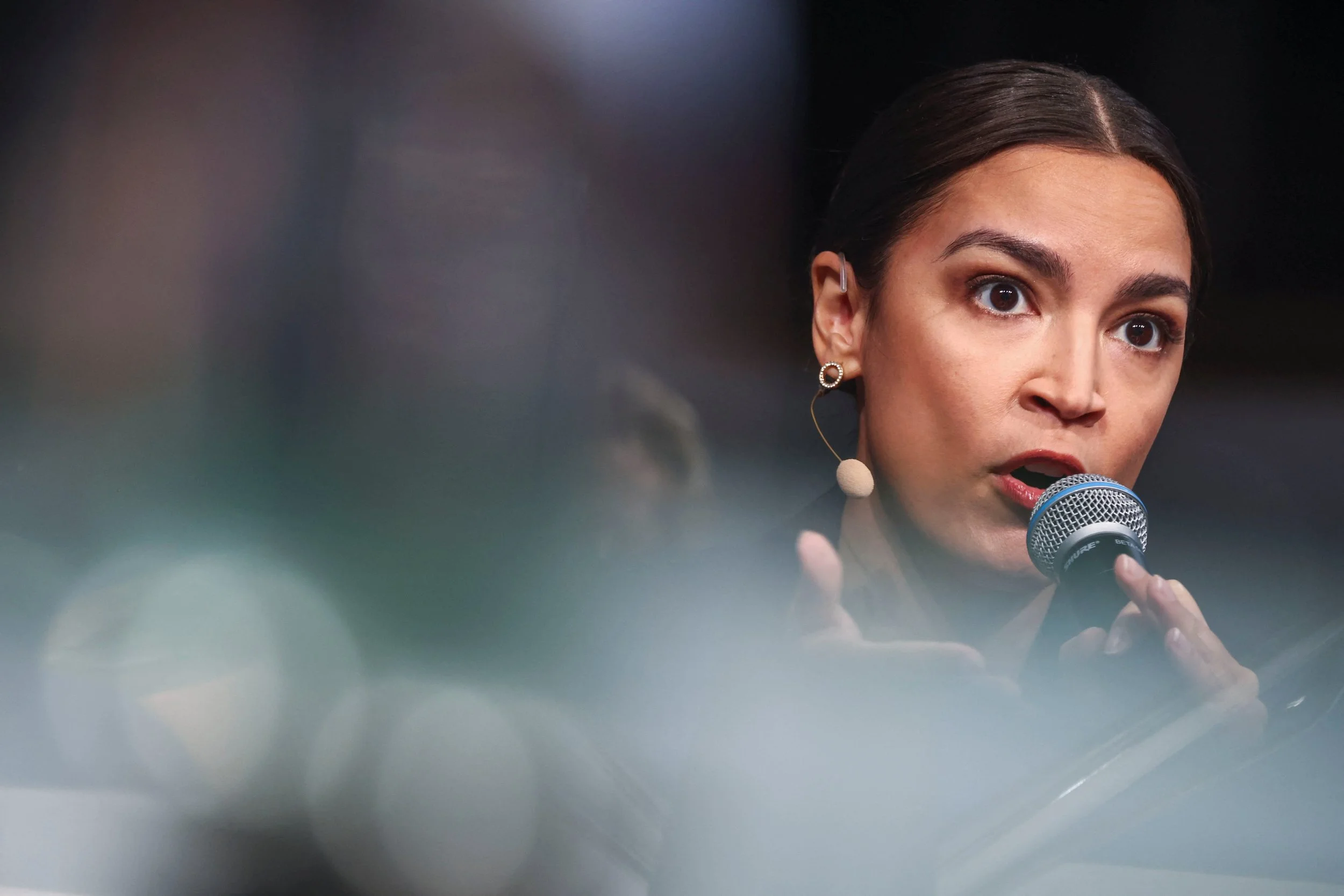
Representative Alexandria Ocasio-Cortez gave her first major foreign policy remarks at this year’s Munich Security Conference to lay out her vision of progressive foreign policy. Many are speculating that she is preparing for a presidential run in 2028. She has called for a reckoning with the United States’ history of intervention and repression abroad and attempted to offer an alternative to Trump’s “might makes right” approach.
In this episode, the Institute for Global Affairs’ Jonathan Guyer is joined by Matt Duss, executive vice president at the Center for International Policy and former adviser to Senator Bernie Sanders, to discuss foreign policy on the left. Matt gives Jonathan his perspective on AOC in Munich, where the Democrats went wrong on foreign policy, and how they ought to respond to the Iran war.
Listen Here: Apple Podcasts | Google Play | Libsyn | Radio Public | Soundcloud | Spotify | TuneIn | RSS
Matt Duss is executive vice president of the Center for International Policy. He was previously a visiting scholar in the American Statecraft program at the Carnegie Endowment for International Peace. From 2017 to 2022, he was a foreign policy adviser to Senator Bernie Sanders (I-VT), also serving as foreign policy director for the 2020 Sanders presidential campaign. His writing has appeared in The New York Times, The Washington Post, Foreign Affairs, The Nation, The American Prospect, and Foreign Policy.
Find Matt on X: https://x.com/mattduss
Transcript:
JONATHAN GUYER: Welcome back to None of the Above. I'm your host, Jonathan Guyer. I recently spoke with the American Conservatives Kurt Mills about the state of foreign policy on the right. Today, we get a view from the left with Matt Duss, a former advisor to Senator Bernie Sanders, who's now the executive vice president at the Center for International Policy.
Last month, he traveled to the heart of the blob, the Munich Security Conference. With Representative Alexandria Ocasio-Cortez as she delivered some of her first major foreign policy remarks. It was a buzzy moment, and Matt's here to tell us all about it. And we also discuss what the Democrats got wrong on Gaza, how he's working to develop a new foreign policy for progressives, and how Democrats ought to respond to the war in Iran.
I hope you enjoy the conversation. And if you do, please subscribe, like, share None Of The Above wherever you get podcasts. Thanks so much.
GUYER: Matt, welcome to none of the above.
MATT DUSS: Glad to be here. Great to see you, Jonathan.
GUYER: So I was wondering, we recently had Curt Mills on. He gave us a tour of the Republican GOP landscape on foreign policy and key players in the Trump administration. Wondering if you could give us the kind of lay of the land on the Democratic side on the left, who are the power players in this moment since Trump administration's taken over? Is the Hill jumping in, or is it more in the nonprofit private sector think tank world like yourself? Or where are the progressive power players right now?
DUSS: Yeah, it's hard to say who the exact power players are. I mean I there are people who have started to sketch out a new foreign policy for the Democratic Party. Obviously, I'm biased here as a former Sanders staffer and currently
GUYER: You worked for Bernie Sanders, went what years were that?
DUSS: I did. I started working from the beginning of 2017 and worked with him until fall of 2022 so for almost six years. Okay. and also, an informal advisor to Congresswoman Alexandria Ocasio-Cortez, who really I think started laying out some of the contours of a progressive working class focused foreign policy when she was at the Munich Security Conference, but then also the day after that in an event she did in Berlin. So yeah, certainly I think Bernie has continued to be out there in front on foreign policy. Again, my cards on the table, biased here in favor of these progressive left members. There's a few others, I think Senator Chris Murphy has long been a leading voice in the party on the Hill in the Senate on foreign policy.
GUYER: I was hoping you'd bring him up. He's sort of playing a big leadership role on foreign policy.
DUSS: No, he has long been kind of a leaning progressive voice, but I think especially over this past year or since Trump was re-elected, he really has started to articulate, I think, a really compelling theory of the case about the connection between foreign policy, domestic policy, corruption, our political malaise, I think it's important. He's taken a really interesting approach. He's someone who has written about the crisis of loneliness, about gun violence, about how all these things are related. So I do think he's someone who really— he's a foreign policy leader, but I also think he's one of these folks who've talked about this as in the broader connections to our kind of political crisis right now. I think Congressman Jason Crow is a very interesting voice.
GUYER: He gave this big speech, right, at the Center for American Progress.
DUSS: He did, he gave a speech at Center for American Progress, but also someone who himself a veteran, a combat veteran, but someone who's able to speak with great credibility about the failures of our foreign policy, the way it's failed American working families. And then I think you have some of the, I would say, the professional democratic foreign policy class.
GUYER: What do you mean by that?
DUSS: You have people who were close to Biden, people like Jake Sullivan, who were part of what I think was in some ways an important move away from the old neoliberal order, but in other ways kind of repeated and just reinforce some of those old misconceptions in a way that I think was pretty disastrous. I mean, to say more about this, I mean Jake gave a pretty significant speech, I think it was April of 2023, laying out the Biden administration's new global economic and trade approval.
GUYER: I think this was at the Brookings.
DUSS: The Brookings Institution, I was there for that. I think it was an important speech to say that listen, all this kind of old neoliberal religion about how trade should work, about how, cutting taxes and protecting American corporations and the idea that, it will help American corporations get rich and make trade as free as possible and then the benefits will flow to everyone. Well, that didn't really work. So we're taking a new approach. The government is going to get much more engaged in managing the market to the benefit of American workers in the American middle class like this whole approach foreign policy for the middle class which was a project that was done at the Carnegie.
GUYER: Salman Ahmed.
DUSS: Yeah, Salman Ahmed and Jake were a part of it. Yeah. And I think that was a good project. I mean, that came out of the shock of 2016 when a few, not all, not very many, but a few democratic foreign policy thinkers like Salman, like Jake, were actually, okay, what have we missed about how Americans think about foreign policy? And they did this project that spoke to went into the country and spoke to Americans from in different regions to just kind of get a read on how they think about foreign policy, the questions they have. The concerns they have. And again, in the language of recovery, the first step is admitting you have a problem.
So, I think that is that was a first step. The way it cashed out, unfortunately, was okay, we understand that Americans have questions about America's global role, this massive global hegemonic role that the United States has been playing since the end of the Cold War, and arguably even during the Cold War, except there were two competing hegemons, the US and the Soviet Union. Union. But rather than I think really doing a full the sort of deep rethink about some of the preconceptions that underlay that I think should have been done, I think what happened was, okay, we need to a better job of selling the American people this idea of—
GUYER: This idea of American exceptionalism.
DUSS: Yes, America out there making and shaping the rules and you often heard Secretary of State Blinken the way he would say it was, if America's not there, right setting the agenda, then a competitor will, or perhaps even worse, no one will, and it'll just be chaos. And it's, well, if the United States isn't out there getting up in everyone's business, then it'll be chaos and we'll all die. And I just don't think that's true, but it is also reflective of a very specific Cold War and post Cold War mentality that is Joe Biden. Biden, right? I mean, that's where he comes from. He is very much a creature of this way of thinking. And I think his administration really reflected that. So I don't need to tag all the people who worked for him with that, but I do think it was a very powerful tendency that a lot of the folks who worked in his administration, who had been raised and mentored and trained and sort of inculcated in the priesthood of American exceptionalism, and hold its tenets very dear and its various confessions of faith. But I think now—
GUYER: Well, you've been a really outspoken critic on that group, I think particularly on Gaza policy and Israel policy. Is that right, Matt?
DUSS: Yes, I am.
GUYER: I mean, because what you're kind of describing is an environment where some of the Democratic Party is doing a rethink and trying to decide what they want to do going into the midterms, into 2028. And then half of them are saying, let's put a new face and a new image on American imperialism or progressive interventionism or whatever term we want to use for kind of the Biden world order. But I think one of the most salient criticisms you've had is we shouldn't be listening to a lot of these folks who had such a big role, arming Israel while it was doing what many say are war crimes, many say are genocide. Yeah. Do people not like hearing that in Washington? Are you losing dinner party invitations? How's that going?
DUSS: No, I mean I never accepted too many dinner party invitations in the first place. I occasionally do. I won't lie, but that's part of the problem you get at. A problem, which is, DC is very cliquish. It is, like I said, it's a priesthood. It is a or, to put it another way, it is a trade guild and as such it is very protective of its own members and its own prerogatives. Ben Rhodes has referred to this as the Blob, which is both a community of people and a certain way of thinking about American power that continues, unfortunately, to be pretty dominant in the professional foreign policy class. But to your point, yeah, a lot of folks, for various reasons, both professional and personal, don't really want to get out there and criticize their friends, both because those are their friends, and also because they feel if they get too vocal and too public with questioning certain ideas and certain policies, that could create professional difficulty for them down the road. And again, I'll just say fortunately for me I don't really care about those kind of things as much.
GUYER: I say fortunately for us too, because it's good to have a little friction on social media.
DUSS: I appreciate it, but I also think it's just the truth. I mean, their Gaza policy was a catastrophe. It was atrocious. it supported war crimes and they knew it. And I've written about this. I wrote a piece, probably the most explicit piece I've written about this was in Foreign Policy magazine last summer. Where, again, there's a couple pieces of this. One is, okay, there's a policy disagreement. Their argument was and still is, as far as I can tell, that in supporting Israel and continuing to send weapons to Israel, this gave us a measure of influence that we wouldn't have otherwise had. So yes, it was bad, regrettable, too many civilians have died, all the talking points. But we were able to make it less bad. Because we were—we're still—sending them the weapons and therefore they listened to us. And that's bullshit. And the reason I know that's bullshit is because a lot of these same people admitted it was bullshit when it applied to Saudi Arabia and Yemen.
And this is something I referred to in the piece, is in during the first Trump administration, Trump continued Obama's policy of supporting Saudi Arabia in this really, really horrible war against Yemen. And a number of former Obama administration officials wrote a letter saying, listen, this was a mistake. Our argument was that by continuing to arm and support Saudi Arabia, that would give us a measure of influence to make the war less bad. And that turned out not to be true. And then they went ahead and made that exact same argument about Israel.
But the second part, and this is where I really feel strongly, I mean I feel strongly about the fact that they helped perpetrate a genocide, I want to be clear, but it wasn't just that they did that. It wasn't just that they refused, as I see it, clearly, and I think it's pretty obvious, refused to uphold US law that would have prohibited supplying weapons to the Israeli military, which was clearly in engaged in atrocities. It's that they lied about it. I mean they John Kirby and the spokespeople at the State Department would constantly come out and get these questions about these war crimes. We've seen evidence in this and they'd just be, we haven't really seen that. Haven't made an assessment, nope. And it's just absurd.
GUYER: Well, this is, I mean, there's very often, very few journalists ask follow up questions, but there's always this follow-up question, Jake Sullivan’s office says we could have done more. What is that? What is the could have done more? Or he says, I'll be reflecting on this. It keeps me up at night. What part are they reflecting on? I feel like there's a substantive question that I'm just genuinely curious about. I mean, the counterpoint I think that they often say is look, we withheld these two thousand-pound bombs. We did put pressure in certain parts.
And then there's other people, and I'm curious what you make of this criticism, Matt, that say, “Well you, Matt Duss, should have called for a ceasefire earlier. Senator Sanders should have called for a ceasefire earlier.” I mean, I don't think you were working for the senator at that time, so that gets a little muddled. I'm not sure why people have been criticizing you for that. But yeah, I don't know. That's also a very different moment when we're going to October 2023. And I don't know, it's sort of a micro moment to reflect back on, but I don't know. I just thought I'd bring that up because I've been seeing a lot of that on social media as well.
DUSS: Yeah, no, I see some of that too. I mean and some of that is, I mean, I'm happy to engage with any good faith criticisms. I'll just say that our organization and we started calling for a ceasefire in November of 2023. My colleague Nancy Okail and I wrote a piece in Foreign Affairs and I think at the very beginning of December, laying that out even in more detail, saying we need a ceasefire and we need to invest immediately into ending the occupation and moving toward Palestinian liberation. Now, Senator Sanders I think took a little longer. He was someone who came out pretty early in turn for a humanitarian ceasefire—
GUYER: Right. That's what I'm saying. In this micro moment there were a lot of different interests.
DUSS: Right, if that was not enough for some people, I understand they wanted him to just call for a full ceasefire. So again, he can explain himself on that. My own view was we should have pushed as many people as possible to call for that humanitarian ceasefire and then extend it as long as possible. I think given that the Israelis were making clear we're not interested, given that the Biden administration was being as tough as possible on all this. I think just in terms of that moment, we wanted a full ceasefire. I think that getting people on board for a humanitarian ceasefire made some sense at that point, just weeks after October seventh. But again, I understand especially in the wake of what happened, why people are critical of that position.
GUYER: So put us into the halls of Munich. You mentioned Ben Rhodes's coinage, the Blob, and Munich is kind of the epicenter of the Blob. You were just there. You were advising representative AOC at some level, helping her think through the remarks she gave in a couple contexts. And I don't know, I'm thinking about something, Mark Carney's saying how the world order is changing, there are these ruptures. And so you arrive into Munich a couple weeks ago. What's going on with the Blob and what is it like to be accompanying American politicians who are willing to say genocide, like AOC? I mean, this is kind of a major frontal attack on the Blob by kind of calling something—
DUSS: And to say it at the Munich Security Conference, which is like the high church of the Blob. And yes, also in Germany. Let's note that. But again, this is something she said, she said it multiple times. This is what she believes, I think it was very important that she said it there. And frankly, she said it and she received a round of applause for it. And I think that's notable. I mean, she is saying what a lot of people agree with, including in the audience at the Munich Security Conference, even if she was one of very, very few, I think perhaps only one other. I think Senator Murphy said the word genocide on his panel. But really those are the only two, not just American, but I think perhaps, in any legislator, any member of government who was there. I might be wrong about that, but certainly no other Americans. So again, that's part of what I think she's been willing to bring.
She did cite Carney's speech a couple times. Because that, that was a moment where he basically admitted, listen, we all knew that this rules-based order was kind of fiction, but the fiction was working for us, and but now it's time to tell the truth about it. And okay, that's good. It's good to tell the truth about things, but let's also understand the context is that Carney was like, “Yeah, we used to have this assumption that we got to be part of the imperial core and that as such certain privileges applied to us that didn't apply to other parts of the world. But now that we realize that is no longer true, let us all stand up and tell the truth.” And it's okay, good. I guess better late than never.
But I think the problem is not necessarily that the rules-based order turns out to be a fiction. It's that it took people way too long to be willing to say that. Certainly countries in other parts of the world, the developing world, the global south, whatever term they want to use, they've never had any illusions about the double standard because they have suffered at the pointy end of that double standard far too often. So I guess where AOC is coming from is, okay, let's acknowledge that. We all admit that there was this was a fiction. Let's think about how we make it into a reality. What does an actual rules based order look like? She made a reference to we've been in kind of a pre-rules-based—
GUYER: Right. This is an interesting coinage. Talk with us about the pre-rules-based order, is something I want to ask you about. It's never really been implemented. Is that the idea?
DUSS: Right. It's never really been implemented, but it's been implemented with certain rules for some and different rules for others. If you're America's friend and ally, there's one set of rules. If you're America's adversary, there's a different set of rules. And of course one need to look no further than US policy toward Ukraine versus Gaza to see how that works in reality. But I think what she was getting at was okay, let's, there's a great quote or famous quote from Gandhi when he was asked about Western civilization. He said, I think it would be a great idea. I think this is the approach on a rules-based order. It would be a great idea. Let's have one. Let's actually have an order where we're where rules are upheld equally or much more equally for all countries. Let's a system like that is actually going to be one that really benefits Americans. That will benefit our security and prosperity, as opposed to the one that we see forming now, which is one just purely based on “might makes right”.
GUYER: Talk to us about the Taiwan answer. This was one that got a lot of headlines, but what's your interpretation of what seems like a complex or a simple news cycle about a complex answer, which is sort of to your point, Matt, about the kind of the priestly cabal that runs US foreign policy. I mean Taiwan policy is sort of one of these things you don't really speak about. And here Representative Ocasio-Cortez has asked very directly about—
DUSS: Would you defend Taiwan? And again, her answer, I mean, she hesitated. I get why people are seeing what they're saying, and the obsession about that just I think is kind of ridiculous. But she got to the right answer, which is, let's not get to that point. That's the right approach. I mean, you compare that to Biden, who at least a couple times was like, “Yes, we defend Taiwan,” which is the wrong answer.
GUYER: He said it three times. I remember Alex Ward called it the Beetlejuice. If you say it enough times...
DUSS: Right. And remember this is Mr. Foreign Policy. This is a guy who is regarded, in my view quite wrongly, by the Washington establishment as a guy who just knows foreign policy and again, he blurted out the wrong answer on this, not once, not twice, but three times. So again, I get why people are taking the opportunity to criticize the hesitation, but I think she got to the right answer. We're going to be hearing more about that. But in the moment, the right answer is let's make sure we don't get to that point. And it also gets to the premise of the question which is, people are presented with these kind of pop quiz would you defend x and it's well though there's a lot of space between now and that. The more interesting question is what policy should we pursue to de-escalate, as she said, to make sure we don't get to that point.
GUYER: Right. And China policy's been one of these kind of confusing parts of Trump's approach during this term. I think we don't have a complete picture of what the China Taiwan policy is.
DUSS: Right. I think a lot of folks, including me, have been surprised at how little China has been, occupied his foreign policy. I mean, he in his first administration really made China the thing. He made China the focus of American foreign policy and the Biden administration followed on that as they unfortunately followed on a lot of what Trump did. But the second term he's focused on a bunch of other things. He is, he kind of, launched this little trade war or attempted to against China and then Xi showed, Well, I have Things I can do too, and he backed down, Trump backed down and now seems in a much more conciliatory position. but this is kind of consistent with the way that he deals with other powerful countries too. And again, I've resisted the idea. I mean, a lot of people are talking about, spheres of influence and this, that. I think there's maybe some element of that. But my view is Trump is still very much a primacist. He still believes that the United States, by virtue of its economy and enormous military power, has the right to shape the global order. But I think he does view that, militarily powerful countries like Russia, like China, like Israel, essentially get to be other Mafia families around the table that is still run by the American Mafia family or the Trump Mafia family.
GUYER: Let's get into Russia a little bit, Matt, because you're in Munich. Obviously, there's a lot of discussions about what will US policy towards Western Europe, towards Ukraine look like. And last year, Vice President Vance was very much the skunk at the Garden Party, kind of reminding everybody that Trump's foreign policy is about a rupture with Europe. I mean, this year Rubio put a little bit of a prettier face on that, but what is the Democrats' answer to that? Where would a democratic foreign policy go on Ukraine and on Europe?
DUSS: Well I think on Ukraine, and this is interesting because even though Trump has gone about his Russia-Ukraine policy in, I think, a really brutish way, you know that horrible scene with Zelensky last year in the Oval Office, where they, kind of humiliated him and berated him, but still pushing Ukraine into negotiations was not the wrong policy. And the United States engaging with and trying to broker negotiations with Russia is not the wrong policy. I think we have to try and find, if it's possible, to get to a mutually agreeable resolution that ends the war, that you that protects Ukraine's independence, its democracy, that addresses Russia's legitimate security interests. And yes, every country has legitimate security interests, even if we don't like that government. That's something that's very hard to say often in Washington.
So the upshot of Trump's policy, as kind of again, as rude as it has been, is to reveal that, to put the onus where I think it belongs, which is back on Putin. I mean, Putin, it's hard to imagine a president who is who wants more to cut a deal with Putin. And Putin continues to make clear, I'm not really interested. You're giving me a lot. You're giving me pretty much everything, not everything. and he doesn't seem to be all that interested. My own view is. That his view his goal with Ukraine remains as it has been, which is to control Ukraine, which is, if not to, directly control it, to at least, replace its current government with one that is much more subservient to Russia because he sees Ukraine essentially as part of the Russian Imperium. And I'm ready to be, proved wrong. I mean, if there is a deal, if there's some element of a deal that we have not yet offered and he's ready to take, I think we should try it. That's why I support continuing diplomacy to identify different possible formulas that could achieve both of those goals. I'm just very skeptical.
GUYER: But it does seem like it's one of these moments where President Trump and his team are these great revealers of the shortcomings and hypocrisies or inability of kind of mainstream policymakers to get stuff done. I mean, it's very as you say, it was rude, it was insulting to President Zelensky, it was also kind of all over the place with the contradictions last year about right wing parties and vice president Vance saying he supports, free speech. But it seems to say something like Europe needs to get its act together on security. US isn't always going to be there.
DUSS: Yeah. I think that's a very key thing that is very slowly, way too slowly sinking in. Is that part of, the US under Trump has become not a partner of Europe, but a predator of Europe. It is using the deep interconnections between the United States and Europe. It is weaponizing the transatlantic relationship, which is one of the most deeply institutionalized relationships in the world. This has been core to US and Europe's whole security concept, but it has made Europe very, very dependent on the United States. And that is part of what Trump is using to put pressure. and I think Europeans are realizing how serious this is. Again, these when I say they are deeply institutionalized, that means they're very hard to change. Because that is the nature of institutionalization.
It will take a very long time for people to really kind of, start to understand how much this relationship needs to change, what they need to do to insulate themselves from this kind of predation. Because as we saw from Vance last year at Munich, and we heard and we saw in much more detail in the national security strategy that was released in early December of last year. And we saw again articulated by Marco Rubio in his speech in the most recent Munich Security Conference, which was I think Rubio just gave kind of a kindler, gentler version of the Vance speech. He gave the Vance speech, but in the language of the high foreign policy church. But it was basically the same message. That the United States now believes that keeping Europe white is in the US national security interest. Right? I really, that's just bluntly what it is. You heard Rubio lay out this really kind of potted history of white Europeans coming to America, and even he himself, as a son of Cuban immigrants, was like, we're actually Spanish. Just really, really, really a bizarre history.
And also, and this is something that was heard loud and clear by Germans themselves, was look, we need to break away from this culture of shame. This idea that we should be ashamed of certain things that were done. Sure, there were genocides that were carried out and slavery and all this stuff, but we need to not dwell on this so much. And what Germans hear, this is the language of the German far right. The AfD, the Alternative für Deutschland Party, who reject, who say that it we should be done feeling guilty about the Holocaust. Let's just be done with this culture of shame. Now, you don't want to let historical guilt and historical shame color everything you do, but these are important things to consider. If for no other reason to make sure it doesn't happen again. But what we don't do is completely whitewash history, and that's exactly what Rubio was there to do. I mean, my own view is that we should be confident enough to go forward with a foreign policy that takes very much into account these crimes that were committed by the United States, both at home and abroad. I think, we should be mature enough. So I think it is it's just a kind of insecurity.
GUYER: Well it's interesting. I mean, we saw that I think with AOC and the codel she took to Latin America in 2023, visiting the home of Salvador Allende, talking with his family, considering Dr. Kissinger's role in the Chile coup, the extent to which he was knowledgeable, declassifying stuff. So there is a kind of reckoning with this progressive wing of the Democratic Party, I think, that's pushing for a deep understanding of the US role in a lot of bad stuff. What was the perception of what's happening in Venezuela within the Blob? How is the Blob seeing that? And how is Munich seeing that? Because it's one of these things where the criticism's been kind of muted. I haven't heard a lot of activity around it.
DUSS: I heard barely anything about it in Munich.
GUYER: I mean it’s kind of shocking right?
DUSS: I mean it's shocking, but it's not.
GUYER: Because people just didn't like this dictator, that's—
DUSS: Well, no. I mean it's two parts. On the elected leaders, government leaders. I mean, they won't talk about it, they won't criticize it for the same reason they applauded Rubio's speech and the same reason that they got up on stage after his speech, that was very reassuring. Because they have to. Right? They don't want to get crosswise with Trump. They fear him. It's an abusive relationship. Now at the level of writers, analysts and other policy professionals, privately, they all acknowledge I mean this is horrible, it's illegal, it's destructive, it's bad for security, it's bad for us all. But still, that's fine, it's good they recognize that. But it would be great if elected leaders would have the courage to say this publicly.
But I also I wanted to get back to what you said and this stays with Latin America is you mentioned the trip, the codel to South America. After Munich, we traveled to Berlin where the congresswoman did an event at the Technical University of Berlin, a moderated Q&A with a member of the Social Democratic Party, the SPD, Isabel Cademartori. Yeah, no, it was hacked, it was great, it was a great event. But the interesting thing about Isabel is that her grandfather was in Allende's government. And after the coup fled and ended up in Germany, which is where she was born.
And so that conversation, I would encourage people to find the video and listen to, it was a really good conversation, but it also and they comment on this, this was this is a different view this is a different interpretation of the transatlantic relationship. And I think a much more positive and forward looking one. You have two women with roots in the Global South, Puerto Rico on the part of the Congresswoman and Chile on the part of Isabel Cademartori. And yet up there representing Germany and the United States, but who have their, part of their background and they have an understanding and they have one foot in this in these other communities. And I think that's powerful. That is a vision of the transatlantic relationship that also has strong relationships with parts of the world that have been far less privileged and have received far less attention and has have often simply been sources and regions of extraction rather than cooperation. And I think that sort of illustrates the approach that we need to take now. In my view, that illustrates just the two of them up there talking and representing their respective countries, illustrates the kind of foreign policy, the progressive foreign policy that I'm really excited by.
GUYER: And what about Cuba? Is that become a focal point among progressive Democrats right now? How focused? I mean, is this kind of Steve Bannon theory of that there's so much happening, it's hard, I think, for progressives, for activists, for organizers to keep track of.
DUSS: Yeah, again, there's not enough attention on Cuba, which, having taken out Maduro, which even though the regime is still in place minus Maduro, I think they've managed to diminish Venezuela's support for Cuba, to further isolate Cuba, essentially to strangle Cuba's economy even more. I mean again it's a growing humanitarian crisis there. and this is all being done out of a personal obsession of Marco Rubio's. I think this is just part of Marco Rubio's 2028 project. But no, I don't think there's nearly enough attention. Again, this goes to Biden as well. I mean this is something like the Iran deal. That Biden just didn't pick up
GUYER: He never made good on the Cuba opportunity that Obama...
DUSS: Which he absolutely should have, just as he should have kept his promise to rejoin the Iran nuclear agreement. He did neither. Right. And again, I don't want to put it all on Biden. We have to understand there is a history here. Those were just, we are here in part because the previous Democratic president decided not to do I think what was clearly the right thing.
GUYER: So Matt, Trump is engaged in this war of choice, already hundreds, probably thousands of civilians killed in Iran, extended to a dozen countries, US and Israel are bombing, Strait of Hormuz is closed. How are the Democrats responding to this?
DUSS: I mean I think you can find some Democrats who have responded very well. I would say Senator Chris Murphy, Senator Chris Van Hollen.
GUYER: Murphy's been sharing all of his intelligence briefings and these in depth threads.
DUSS: No, he really has, he's been coming out of these classified briefings, obviously not sharing classified information, but yet sharing everything that he can. And I think really doing an excellent job in terms of just education, right? Because part of the problem here is it's not the only problem, but one of the problems here is that the Trump administration launched this war without any real consultation with Congress, let alone authorization. And so I think Murphy and others, but Murphy is a real standout here, is just making public a lot of what's being said, and making public the fact that this war does not make sense. It's obviously illegal, it's strategically stupid, and it's immoral. So yeah, I mean Murphy, Van Hollen, obviously Bernie's been great.
GUYER: Senator Van Hollen, super outspoken on Gaza, calling for accountability. What has he been saying on Iraq?
DUSS: I mean he's been, I think, hitting a lot of the same notes is that this was illegal. There's no plan, there's no strategy, it's stupid, it's immoral. It is not making us safer. It is bad for American security, it's bad for American prosperity. And then folks over in the house, obviously Ro Khanna has been a real standout. So you ask about the Democrats, and I'll say, someone who's been working on these issues for nearly twenty years, the Democrats are way better than they have been in the past. Now, that's, I want to obviously there's a caveat there because the leadership, Hakeem Jeffries and especially Chuck Schumer have just continued to be very bad. Chuck Schumer had this, came out of a classified briefing, I think, last week or the week before, and his first response was, Iran must not, must never get a nuclear weapon. It's just regurgitating these stale talking points completely out of date, completely out of touch. So I think it is it's falling to other Democrats. And the ones I mentioned to take the lead on this. But really, I mean the party leadership and the establishment, and I would say a lot of folks who were in the Biden administration as well, the kind of, authoritative voices. I mean, the most, the most visible people we're seeing from the Biden administration, I'm very sorry to say, are like Brett McGurk and John Kirby. I don't want to hear shit from these people, man.
GUYER: What's interesting though, Secretary of State Tony Blinken has been pretty critical and forthright. I think a lot of people are saying, well, where's the self-reflection on the Israel-Palestine policies that were rather failed and so forth? But he's been very outright critical of the Iran campaign.
DUSS: Yeah, I don't know if I've seen that. I mean from the clips that I've seen, it was just the usual kind of could have been AI generated, process oriented here, markets and munitions. nothing that I would that would come close to meeting the moment, as far as I would say. And I think again, that's pretty typical of the democratic foreign policy cartel. I mean, they just for some reason seem completely allergic to making bold, courageous arguments. They always have to be kind of nested within this kind of what's the strategy here? And I'll also say in terms of Blinken, it's good if he's saying critical things about the war now, but let's remember during the twelve day war last June, he wrote an op-ed basically trying to claim credit. For having, laid the groundwork for that war. So I'm not giving Blinken any passes here.
GUYER: And so what's happening in Congress? There was this war powers resolution that didn't pass. Can you just explain that? Because that's been a big move, procedurally for Democrats to assert some accountability and some power, but it hasn't really connected the dots.
DUSS: Right. I mean the war powers is, you it's based on the 1973 war powers resolution, which kind of codifies a bit more clearly Congress's Article I authorities. The Constitution gives the Congress the power to declare war, which is say a president, one person does not have the authority to take the country into a war, except in emergency circumstances. And the war powers resolution lays out if there is an emergency, the president can take the country to war, but then has to, within a series of days, come to Congress, explain his action and get authorization. So I know some Republicans are trying to cite the war powers resolution as if it's like a 30-day pass for war. It is not. What it does is create a certain amount of days within which a president having responded to an emergency, having responded to a clearly imminent threat, which neither of which applies to Iran, would then have to come to Congress.
So there is no scenario in which the president just gets to launch little wars. but unfortunately this is where we're at, not just under the Trump administration, but other under a number of administrations. Going back to 9/11, but even before that, where the executive has just grabbed all kinds of authority to keep waging these wars around the globe. But the war powers resolution is a way it operates according to the tool of privilege, which is to say it cannot get bottled up in committee. It's a way for any member of the body, House, or Senate, to introduce a resolution, saying that the president has taken us to war, here's the arguments why, and therefore Congress must now vote to order the president to withdraw forces unless the president comes and seeks authorization. And so it's a way of getting a measure on the floor for a vote, at least one vote. And that is the vote that failed the other day. It was the motion to discharge the resolution from the committee.
GUYER: One Democrat I think who voted against it was Senator Fetterman, is that right?
DUSS: Fetterman who's just decided that he just loves war, especially when it's against brown people.
GUYER: And what about, there were a couple of Republicans, right, who were on board with it?
DUSS: Okay. I mean there were a couple of Republicans. Rand Paul was a co-sponsor along with Senator Tim Kaine on the Democratic side. Only two others, if I remember correctly, which was kind of disappointing because in the past we've gotten, four or five. When Senator Sanders offered the Yemen War Powers Resolution, I believe we got seven or eight. again, there was an Iran War Powers Resolution in the wake of the assassination of Qasim Soleimani, in which I think we got eight Republicans. But again, the reality of today is just that far fewer Republicans are willing to get at odds with Trump. He has almost total control over the party, more so even than he did in his first term. So I think, that's the reality of that.
But I would also say even though the measure didn't pass I do think, it's a way of creating political pressure. It's a legal and constitutional measure, but it's also a political tool. And I think this is, one of the ways being used, I think quite appropriately, is to put attention on the issue, especially in the absence of any real congressional oversight. The Republican Party has not held hearings on this war, which is pretty staggering, but that just goes to the complete dysfunction of Congress right now. So it's a way to put attention, anytime you're going to force a vote on something, members, are going to have to put their name to a vote that tends to focus attention, it tends to focus media attention and creates opportunities for education, which as we discussed, Senator Murphy among others, I think is really using that opportunity to share really good information about the stupidity of this war.
GUYER: So this war is hugely unpopular among the American people, according to initial polling. But what do you think it would take for there to be a grassroots response, a bigger movement, a kind of people power peace movement to come to the streets? I mean, we just haven't seen that maybe since the Iraq War. I mean, there were of course immigration protests, there was the Black Lives Matter protest, but when it comes to foreign policy, it's been a lot tougher, right? To connect the dots, I think for the American people and kind of get that assertion of people in the street.
DUSS: Yeah, I don't know. I mean there were pretty huge demonstrations on the Gaza War.
GUYER: That's right.
DUSS: Right. But I think the problem here is not that it's hard to get people out. I mean, we have seen again, you mentioned the Iraq War, but we also had a number of waves of demonstration, the Black Lives Matter protests in the summer of 2020, obviously the Gaza protests. Both of those were huge, I mean historic protests. But we are in a situation right now where this has relatively little, if any, impact on actual policy, right? The Black Lives Matter protests, some of the biggest, if not the biggest protest. protests in American history, what did they achieve in terms of legislation? They achieved nothing. I mean they achieved, and again that's not to take away anything from the organizers and the people on the street, I was one of them. But I mean, what did it do to impact? I mean, did we reform police violence? Did we do better on police accountability? I don't think we did. And the same thing on Gaza. You had huge historic protests across the country for weeks. Did it manage to move the needle on the policy? No, unfortunately not. And I think this goes to a bigger problem of just Americans having so few opportunities and ways and channels and levers with which to impact foreign policy decisions. They have become completely removed from the—
GUYER: I like your coinage of the democratic cartel on foreign policy. So what breaks this cartel map?
DUSS: Well, what breaks it is first of all candidates who are willing to reach beyond the usual suspects when they're building their foreign policy teams. I think what breaks it is Democratic candidates both for Congress and for the presidency in 2028, saying, I am not going to speak to these people. I will not be seeking advice from the people who helped perpetrate the Gaza genocide. Right?
In a similar vein, the way that Bernie in 2016, I think, really hit a nerve when he responded that, I'm glad to say that “Henry Kissinger is not my friend.” That was not just about Henry Kissinger. That was challenging the idea of the foreign policy cartel that this is a serious man whose ideas must be taken seriously as if he's some kind of pope of foreign policy. I think Bernie really effectively called BS on that. And I think we need to see a lot more of that. And again, I think ultimately what's going to kind of smash this foreign policy cartel ultimately is a progressive Democrat who can win the presidency and populate their administration with people with new ideas, people, who aren't part of the old thinking, who aren't marinated and mentored in the old thinking. And that's going to take a lot of work. I mean, I think there is there's the makings of a new bench of foreign policy professionals. But again, that's going to take a lot of work.
GUYER: Before you go, Matt, I feel like one of the big policy areas you've been most active in is what's happening in the West Bank, what's happening to Palestinians in West Bank. We talked a little on Gaza up top, but there's been kind of a sense that what's happening in the West Bank is unprecedented and getting much worse recently. Can you give us a little update from what you're hearing from friends and sources on the ground there?
DUSS: Yeah, it's just a constant I mean I remember a few years ago when there was a settler attack on a town in the West Bank and everyone took note because it was referred to as a pogrom. Which is a powerful term, obviously a powerful term in Jewish history. Attacks on Jewish communities in Eastern Europe, with the acquiescence, if not outright, participation of the government, police, armed forces. That's happening all the time now. In the West Bank. That is just the daily reality. These attacks are constant. You have these leaders, Itamar Ben-Gvir, and Bezalel Smotrich, who are part of the government. The settlers are not supported by the government, the settlers now are the government, or at least the even not just settlers, but the most extreme settlers. And they are working to establish permanent control over the entire West Bank. I mean, there was a video of Ben-Gvir that came out the other day where Ben-Gvir himself accompanied a group of soldiers to eject and expel Palestinians from their village and declaring this is Jewish land. This is what they are doing.
GUYER: And the role of the US embassy there, of Mike Huckabee, it seems like I read a report that settlers can now, even in they're in the occupied West Bank, can get counselor services if they're American citizens.
DUSS: Right. They had opened up a consulate office. I don't know if this was temporary or now permanent, but temporary things tend to become permanent. A consulate in a settlement for settlers, American settlers to get consular services, which is just another step toward, the one-state reality. And let's recognize whether or not annexation has been officially declared, the de facto reality of Israel and Palestine is that it is one apartheid state. Millions of Palestinians are ruled by a government. In which they have no say, they have no democratic representation. That is the reality. The U.S. government, basically it just completely supports that. I say Biden did very, very little to push back on it. You can identify some things they did, like some sanctions on settlers and a little bit here and there, but really didn't push back in any meaningful way. With Trump, he doesn't care. And of course, Mike Huckabee is just a kind of an end times, total fundamentalist Christian Zionist who believes as a matter of theology that Israel has to control the entire land to prepare for the return of Jesus Christ.
GUYER: And just to bring it back to the top though, is there anything the Senate or the House can do? I mean, Chris Van Hollen jumps out as someone who's been really outspoken about accountability for this, but from your perspective, this is just sort of being more and more ingrained, these kind of apartheid realities.
DUSS: Yeah. I know again, Van Hollen. I mean, he's been a great leader on this. He's had, multiple efforts to kind of move resolutions and letters and, the possibility of moving actual legislation imposing sanctions or any consequences is slim. And the possibility of Trump, actually imposing those sanctions in if a law was passed is even slimmer. So that's the depressing reality. What we are talking about here, I think, is looking toward, do continuing to do whatever we can to raise awareness of this as Van Hollen and a number of others are, but all also to prepare, a democratic party foreign policy that is actually good.
GUYER: Well, we'll look forward to following up on that. Thanks for the report from Inside the Blob, Matt, and thanks for the catch up.
DUSS: All right. Glad I could be of help. Thank you, John.
GUYER: Thank you to Matt Duss for joining me on this episode. None of the Above is a podcast from the Institute for Global Affairs at Eurasia Group. Eloise Cassier is our producer, our team is Lucas Robinson and Ransom Miller, and I'm your host, Jonathan Guyer.
If you enjoyed what you heard, please rate us, review us on Apple Podcasts, Spotify, or wherever you're listening. And if you haven't yet, please subscribe so you don't miss an episode. We welcome your thoughts, feedback, join the conversation: info@noneoftheabovepodcast.org. Till next time, thank you for tuning in.