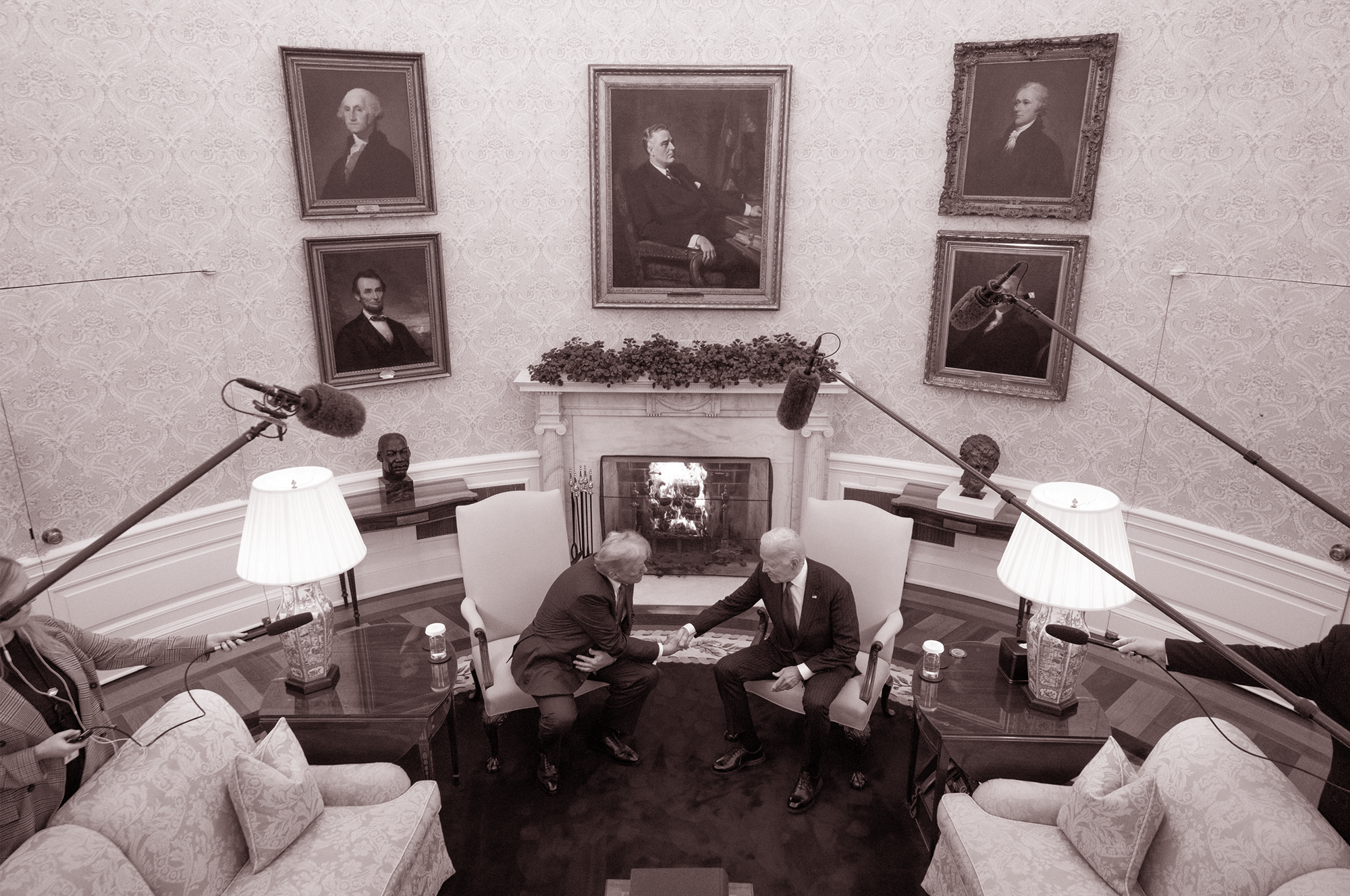
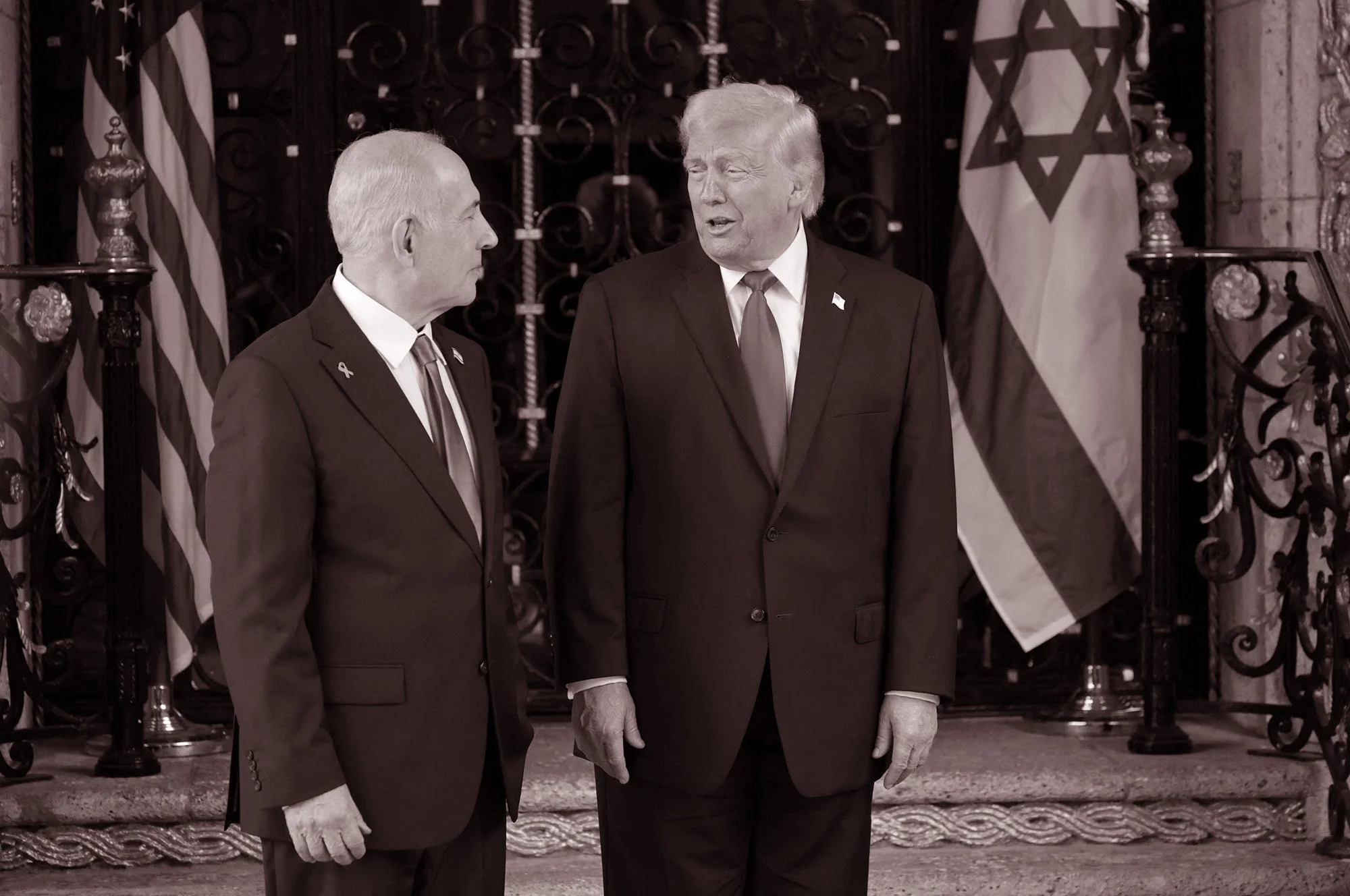
Biden, Trump, and Gaza
Akbar Shahid Ahmed & Rosemary Kelanic on why Washington keeps repeating itself in the Middle East
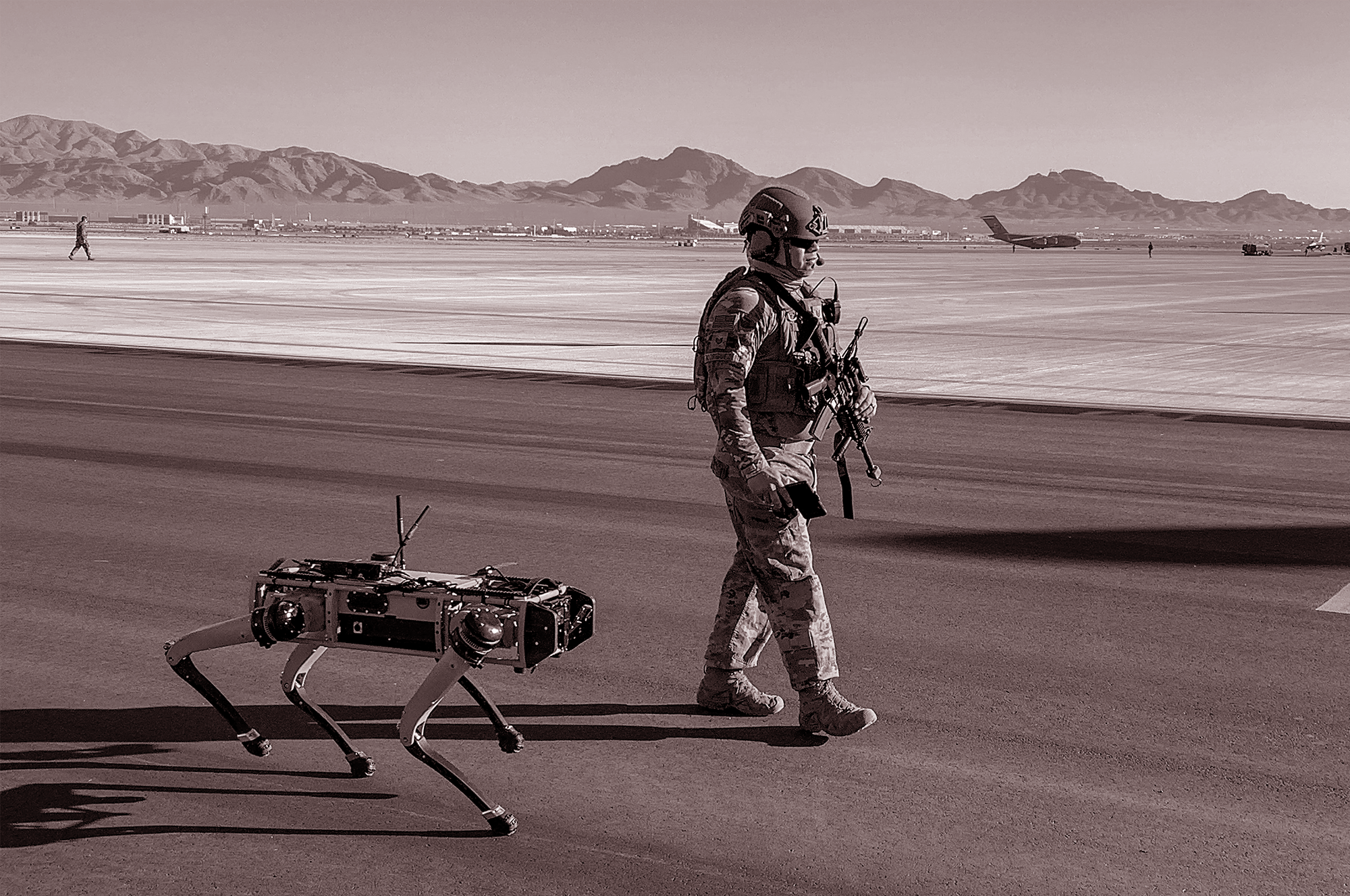
Today, large swaths of the Washington establishment—including advisors to presidents Biden and Trump—agree that the United States has made many mistakes in its approach to the Middle East. But course correction is easier said than done. Through a series of misguided choices, the Biden administration enabled atrocities in Gaza, journalist Akbar Shahid Ahmed details in his new book Crossing the Red Line. And today, President Trump, who campaigned on pro-peace platform, is at war with Iran.
In this episode, the Institute for Global Affairs’ Jonathan Guyer is joined by Akbar diplomatic correspondent for The Washington Sun, and Rosemary Kelanic, Middle East program director at Defense Priorities. Together they discuss the continuity of Gaza policy from Biden to Trump, the lack of accountability for moral and strategic foreign policy failures, contradictions in the US relationship with Saudi Arabia, and much more.
Listen Here: Apple Podcasts | Google Play | Libsyn | Radio Public | Soundcloud | Spotify | TuneIn | RSS
Akbar Shahid Ahmed is a diplomatic correspondent for The Washington Sun. He was previously the senior diplomatic correspondent for HuffPost. He won the 2025 Writers Guild Award for Outstanding Writing and a 2025 New York Press Club Award. He regularly provides expert commentary for MS NOW, NPR and Democracy Now! and has also appeared on CNN, BBC, PBS, Al Jazeera English and Arabic, CTV News, WNYC and other outlets. He is the author of Crossing the Red Line: Biden, His Advisors, and Israel’s War in Gaza (W. W. Norton, 2026).
Rosemary Kelanic is the director of the Middle East program at Defense Priorities. She is an expert on energy security, great power politics, and US grand strategy in the Middle East. Her work has appeared in outlets ranging from Foreign Affairs and Security Studies to The New York Times and The Washington Post. She is the author of Black Gold and Blackmail: Oil and Great Power Politics (Cornell University Press, 2020) and co-editor of Crude Strategy: Rethinking the U.S. Military Commitment to Defend Persian Gulf Oil (Georgetown University Press, 2016).
Find Akbar on X: https://x.com/AkbarSAhmed
Find Rosemary on X: https://x.com/RKelanic
Transcript:
JONATHAN GUYER: Welcome back to None Of The Above. I'm your host, Jonathan Guyer. Every recent administration has come into office with the stated goal of changing the United States' approach to the Middle East. But when push comes to shove, they all seem to make the same mistakes as their predecessors. Today, I'm joined by Akbar Shahid Ahmed, journalist at the Washington Sun and author of Crossing the Red Line, Biden, his advisors, and Israel's War in Gaza, as well as Rosemary Kelanic. Director of the Middle East program at the Think Tank Defense Priorities. Together, we discussed the strategic disaster of President Biden's Middle East policy, continuity under Trump, contradictions in the U.S. Relationship with Saudi Arabia, and much more.
I also want to give a special thank you to our listeners. We came home from the Signal Awards with a gold for news and politics. It means the world to us, and we couldn't have done that without you. Thanks for listening. We hope you enjoy today's conversation.
Akbar Ahmed, Rosemary Kelanic, welcome to None Of The Above. Akbar,
ROSEMARY KELANIC: Thank you.
GUYER: You've got this new book that focuses on the Biden administration in the Middle East, but what struck me reading it is there's a lot of continuity between Trump won and the Biden administration, and also with the second Trump term. Talk to us about that continuity. How do you see it based on your extensive reporting on Middle East policy?
AKBAR SHAHID AHMED: Yeah, thanks for having me. First off, great to be here with Rose. Look, I think it's really staggering and quite devastating that for instance three years after The horrors of October 7th, we are still in a situation where Gaza is under an unprecedented aid blockade. Palestinians are squeezed into about 35 percent of the land. There is so much continuity when it comes to Israel-Palestine policy in particular, which in large part is a result of the callousness and cowardice of the Biden administration to not reverse some of those Trump era policies that they were told was so damaging. And then some of what we've seen in the Trump era, like the escalation with Iran and The expansion of war now into Yemen, Saudi Arabia, it's this tolerance of a military-first approach and ever swelling US military commitments abroad without clear strategic goals. In my analysis talking to around 175 officials, there are specific aspects of democratic foreign policy failure that are perhaps different than Republican Party foreign policy failure, and we can get into them, but there are threads that unite them. And one of the big ones is. A real disregard for civilian life in the Middle East in particular. There's a real fixation on American primacy and the sense that can be upheld at staggering cost, and a detachment, frankly, from the checks of public opinion, from Congress, or from the courts.
GUYER: It's quite a sum up. Obviously, I agree with a lot of the analysis, but of course the big difference is this Iran war, two versions of it, June 2025, and then the version we're living through now is represent a pretty big departure, I would say, from Trump. How do you see it rose? Because what is the realist view? I mean, it seems like the effects on people in the region, a lot of continuity, but do you see the big picture policy as being pretty similar or where are where are the breaks?
KELANIC: Yeah. Well, I see some similarities and some differences. Something that's really striking to me, both from reading Akbar's excellent book and just watching events, is how in this situation, from a realist perspective, both US national security interests and humanitarian values point in the same direction, right? We so often have this problem where what the US needs to do to protect itself. Can cause problems in terms of civilian casualties, human rights abuses, all these other sorts of things. And those two parts of American foreign policy are usually in tension with one another. But particularly when it comes to Gaza, this is a situation where there's no overriding strategic interest that demands callousness from the United States, right? It actually hurts the US position strategically that the US has helped Israel and allowed them to lay waste to Gaza for years now. And so that's something that's very striking to me. And I think that's true across both administrations, because the Trump administration certainly the war in Iran is a departure from what Biden did. Biden worked very hard to contain this and not allow it to spread to an Iran conflict, whereas Trump was more than willing to listen to the Israeli demands to go after Iran and did that and sort of granted Netanyahu's wish for 20 years that this happened. But yet we still have this problem where we're not helping American values, but we're also not helping American security. And that to me is really stunning.
GUYER: Do you agree, Akbar? How do you see that tension? Because I it's weird, there's a realist case for human rights in Gaza, which is I've made that case, but usually those don't line so clearly.
AHMED: Yeah, and I would expand. I think that's there's there are realist cases for human rights considerations in, say, the US relationship with Saudi Arabia. So that's correct. There's been moral hazard with various other countries that we've seen. And what's really stunning to me is how policymakers who so often when they're out of power will say that they're abandoning that kind of hubris that I think all of us maybe on this call are a little exhausted with, right? So they'll be out of power and they'll say The US should not be finger wagging, should not think it can reshape regions or have these hypocritical double-standard policies for its partners. And then they'll go back in and do the same thing. And I think that is where I look at people in the Biden administration who are now coming out critiquing the Iran war, critiquing Trump's Israel policy. Biden's deputy national security advisor John Feiner just came out with a piece in the New York Times describing what Democrats should do differently on Israel. And while there are there are often ideas in there that are what experts from a range of backgrounds would say would be effective, there's very rarely personal responsibility or acknowledgment. So it's as though all those policy failures and choices were an unfortunate weather system rather than the result of people whose salaries we pay. And I think until we break from that culture, it's going to be unlikely that we have that level of reflection.
GUYER: Rose, is it about the personnel or is it about the structures of government and the way the national security institutions are designed that leads to these poor policy choices?
KELANIC: I think it's a little bit of both. And I think I mean this in a lot of ways this book it reads almost like an ethnography of the blob.
GUYER: That's what I was thinking, yeah.
KELANIC: People who are critics of US foreign policy talk about the blob, this bipartisan foreign policy consensus that's just kind of like milquetoast, mealy continue the status quo, don't change policies, don't question any assumptions and just sort of go along with it. And I was really struck by just the institutions are set up to perpetuate themselves as all institutions are. But then also the cast of characters that you get into these kinds of positions, the people that become the special envoy, the people that become the national security advisor of the State Department the secretary of state, right? They're people who play this game really well. And the game is to avoid responsibility, to not speak up, to make nice with the boss, say yes, and to just sort of continue and avoid any responsibility for the decisions that are made, right? And it's really a case study in that I think is really Astounding. Both the institutions are set up that way, but then the people who succeed and lead the institutions are the ones who are really good at playing that game, given the institutional structure.
GUYER: To frame this a little bit historically, which is I know this is something you've reported on Akbar, which is Yemen, especially in the late Obama years, as a kind of rehearsal case for a partner and ally, Saudi Arabia, dragging the United States into a kind of forever war. Sorry to set this up so much because Yemen just doesn't end up enough in the conversation, but you had a number of Obama officials write a letter, open letter, saying we're against this. We don't want to fall into this trap again of a war that doesn't really make sense. And then a number of those officials are involved in the Gaza policy of the Biden administration. But I bring this up because Yemen is this perennial war in the US forever wardom. I mean, I feel like as long as I've followed foreign policy two plus decades, we're always bombing Yemen and it doesn't really lead anywhere. How are you seeing Akbar this? This sweep of history from Obama, Trump, Biden, where the one constant is bombing Yemen and it having almost no effect.
AHMED: Yeah, when the Saudis began their most recent intervention in Yemen about three weeks ago now, I immediately thought of President Biden being us on the tarmac in January 2024, when he began his intervention Yemen against the Houthis. A reporter asked him, President Biden are the strikes working? And he said, “If you mean are they working, are they going to stop the Houthis? No. But will we continue doing them? Yes.”
GUYER: That Biden candor we love, yeah.
AHMED: Right. And I too think that there's a that speaks to this blindness towards the region too, right? Because yes, from the US perspective it is the US has continued perhaps bombing Yemen for twenty, 25 years at this point. For the Yemeni people, what that has meant is a perennial collapse of any hope towards stability, right? So often the US policy under Obama actually just entrenched the Yemeni civil war rather than undermining the Houthis, kind of leading to this frozen conflict, which is really hard to resolve, leading to perpetual issues with the Saudis, but also the Omanis, Emiratis getting involved through secessionists. It's a blindness that I think US officials have. And the open letter you mentioned, Jonathan, is so interesting in this context because it was removed from the internet when all those Biden administration officials went back into power. So there's a there's a very strong pattern of don't look at what we did before. And this is echoed in, it's in Yemen, but it's echoed in the Iran policy. It's echoed in Brett McGurk, Biden's Middle East advisor, coming out with his excerpt from his new book in The Atlantic and saying, “How we prevented a war on Iran.” And as Rose notes, Biden rhetorically said that repeatedly, but also permitted the Israeli escalations and US military buildup that brought us to the war in Iran. But we are invited as the public. It's the culture among officials and in institutions, but it's also a gaslighting of the public to give officials this goldfish-like status, which we don't have to do.
GUYER: So Rose, I mean I don't want to conflate so many so many different Yemen conflicts. I mean, I don't want to ahistoricize them, but to me it does seem like this is war is politics by another means. It's pretty clear there's not a military option that solves Yemen. But what do you make of officials across so many different administrations, so many different parties continuing to bomb the poorest country in the Middle East? Muscle memory? Or I mean it's not strategic, is it?
KELANIC: No, it's not. I mean, they do it because they can, right? They do it because they can. It's relatively cheap. It makes it look like they're quote unquote doing something, right? And even if it doesn't work, it doesn't really matter. It's far harder to stop doing something than to just keep doing something that's already going on. I think that you had made that point in the book. Akbar, that like it's a lot more costly politically, it's a lot more risky to say no and stop a policy. But if you just continue something that somebody else started, all the better because you can blame them when it doesn't work.
AHMED: Hmm. And the creep of that is really interesting because in my reporting now this year on Trump's drug boat strikes, which totally different region, different context, right? But that kind of culture that you're talking about, Rose, talking to congressional Democrats, I've asked you all are saying these are clear extrajudicial killings, violations of international law. What will you actually do to stop them if you as Democrats retake power? And I've heard this exact point from lawmakers of well, once you've started a war and they raise Somalia and they erase Yemen. And they say the US just has a pattern of bombing.
GUYER: Yeah. So Akbar, how do you see the Gaza set of decisions that the Biden administration made? How did that set us up for this war in Iran today?
AHMED: Let me count the ways. Well it begins right from the start of the policy, actually. And I think there's a couple of overlooked junctures. So if you'll humor me, I'll go through a few. One reason why we have you here. What hasn't gotten enough attention is President Biden negotiated a prisoner spot with the Iranians in September of 2023. In exchange, was meant to give them six billion dollars in frozen Iranian oil revenues, agreed to do that, and soon after October seventh, the administration made the choice of we're not giving the Iranians this money anymore. That was not a decision based on intelligence that the Iranians had directed the atrocities of October seventh, right? The in fact the administration knew that wasn't the case. But they were acting out of this knee-jerk Washington instinct of we're going to be seen as enabling America's enemies, where it's just a moment where Hamas has attacked our ally Israel. So let's pummel another enemy, Iran. I link that to the policy now because in the Trump Iran diplomacy, this six billion number kept being brought up by the Iranians as a moment of bad faith from the US. For them it was continuous, right? They weren't looking at Trump v. Biden. They were looking at like Trump, Biden stayed out of the JCPOA, didn't go back in. Then he also built on it by taking away the six billion in this tiny, smaller accord they had, the trust deficit wasn't there.
The other aspect is the consistent escalation, right? So you saw the Israelis in January of 2024 bomb Beirut, which was a real escalation vis-à-vis Hezbollah, Iran's ally in Lebanon, which the Biden administration had urged them not to target, but the Israelis did so anyway. No response from the Biden administration. April 2024, the Israelis target Damascus, an Iranian embassy complex. The Biden administration again says we don't want a big regional war. And makes a big noise about shielding Israel from the consequences of that when Iran does retaliate with a really scary rocket and missile barrage, which thankfully was muted. It didn't have a huge effect. But the Biden administration wasn't able to link that to Israel pulling the US deeper in. It was a narrative of, well, look at what a great job we've done defending our ally. All this leads us into the end of the Biden administration, into July of 2024, permitting an Israeli strike on Tehran, Iran's own capital, during a presidential inauguration, to kill the leader of Hamas, but also Iranian officials. So you've gone from allied capital to embassy grounds to their own capital. There's a clear pattern here. And by the end of the Biden administration, I was told by officials, effectively a yellow light was given to Netanyahu to prepare battle plans. This is after a year of the Biden administration saying Netanyahu's approach to war is not what we want to see, and we don't want regional war. So why are you okaying this? And they close out their time in office with really shaky ceasefires in Gaza and in Lebanon that are very easy for Netanyahu to very quickly breach, as he does in Gaza right away and Lebanon soon afterwards, but also don't lay the ground for any kind of stability or any kind of US-Iranian outreach or diplomacy. I think if you ask officials why did they do this given their stated goals, they'll argue, well, we had to stand with our ally Israel. It was an election year. There's always an excuse, but The strategic toll is really high as they now come out and say themselves.
GUYER: Well, this brings me to the point exactly I wanted to ask Rose. And there's a useful paper I'd say worth reading by Daphne Rand, who is a human rights official in the Biden State Department. It's up at the Brookings Institution. You may have not read it because you're not a dork like me reading think tank reports all the time, but I think you guys actually are super fans of think tank world. But the paper's all about how small allies and partners kind of convince superpowers to get involved. Deeper in a war. I mean, is that the dynamic here, Rose? The sort of I don't want to say wag the dog, but the kind of mission creep that happens in the dependencies created between a middle power, we might say, like Israel and a superpower like the US?
KELANIC: Absolutely. I mean, this is a continual problem that we see in US foreign policy, not just in the case of the US and Israel, but in the case of, say, the Saudis, other partners in the region, where you would think that the US being the stronger country would be the one dictating the terms of the relationship. But more often we're sort of the guy at the end of the parade cleaning up after everybody else has sort of gone by, right? Like in Rocky and Bullwinkle. And there's a structural reason for that, right? So because the US has for many decades worried about credibility and has made these commitments to various actors, that was all driven by sort of standing up to the Soviets to being credible against the Soviets. Soviets disappeared, but our worries about credibility never went away. And so we have these credibility issues. We've made promises to various countries, and we try to convince them almost no matter what they do, we're going to back them. And that creates a problem known as moral hazard. Right. Where the fact that the US has basically said, we've got your back, incentivizes these countries to do things that are reckless, right? It incentivizes reckless driving because we're insuring them and they're not responsible for the full consequences of their own behavior because of these US security guarantees that we've given them over time.
And that's really apparent in the US-Israel case, and especially in those instances in 2024 that Akbar just talked about, where Israel took some kind of provocative action against Iran, Iran retaliated, and the US shot down the drones and the missiles and all of this. And those examples are actually historically really significant because they're the first time that the US directly defended Israel. And they both came after Israel took a provocative action. In the past, the US did not defend Israel directly. We basically had the line that we arm Israel so that they can defend themselves, but Israel's responsible for its own security. This really made the US responsible for Israel's security in a way that before had never happened and pretty much went unremarked upon. I mean, it just sort of slid along and it changed the status quo in a really major way. But yes when we promise that we have somebody's back, it incentivizes them to do wild and crazy things that then we end up getting dragged along for.
GUYER: Akbar, do you want to respond to that?
AHMED: Yeah, it's really interesting. Several things in there. W just your Saudi comparison, which I thought about in the book, there are all these colorful phrases that people use in the Biden administration. So Lloyd Austin would say, the Israelis are playing with house money, right? The idea of the US will cover them regardless of the gamble. Jake Sullivan said to people, the Israelis are driving drunk. And I remember Obama administration officials using that same phrase to talk about the Saudis in Yemen. I'd also note that. Through all of this, the it really underscores the way that this is an American war and American policy in a way that I think we need to confront in this country and also that Iran and other countries observe. Right. So again, for Iran, if it's looking at this continuum of US actions, and then you're asking them to negotiate in 2025 under President Trump, they are seeing these policies as interlinked. And repeatedly Washington has said this is the success of our policy, is that we are shielding Israel versus Iran. The Biden administration closed out by saying we've reshaped the region. President Biden thinks not in terms of presidencies but decades. This these kind of big claims that are then perceived by other actors in the region as I think implying a US commitment, a US intent that might not be there. It certainly has never been debated, voted on, or even matched public opinion. Not to mention the letter of international and American law. Which I really think we need to I'm not a lawyer, but I keep going back to the law because so often these policymakers are treating laws as optional. And with Yemen, for instance, it's a great example of how never-ending authorizations for the use of military force are stretched out again and again to justify military campaigns.
GUYER: To kind of get deeper into the Saudi dynamic here, because I think this is another area of continuity between these administrations. The Saudi civilian nuclear deal, which has been this kind of pipe dream of the crown prince, Mohammed bin Salman, for many years. And I've been quite surprised to see it, it's something that former Biden advisors and officials are quite in favor of, and something that seems to be on the on the top to-do list of Mr. Kushner, Mr. Witkoff. And so forth. I know you've written a lot about this, Rose. Can you talk us through this, what it would mean to give Saudi Arabia this nuclear technology and how it fits into the regional security and energy dynamic?
KELANIC: Yeah. So it's a it's a really I mean it's a really big deal. It's a real departure from decades of US non-proliferation policy.
GUYER: Well you said it ends it, right?
KELANIC: Yeah, well it does. I mean, essentially it does, right? So the deal on the table, the US has helped other countries get nuclear energy domestically before in the past. That's bread and butter, totally normal stuff. What's different in the Saudi case is that the US is proposing helping them to build enrichment facilities on their own territory. And that is a major red flag because much of the technology that you use to make nuclear energy can also be diverted to make nuclear bombs. And the real bottleneck in that process is in getting the fuel that you need to make a nuclear weapon, right? So in the past, what we've done is we've helped countries build nuclear reactors and then we provide them with the fuel or we set up some kind of international means where the country imports the fuel for their reactor, they run their reactor, they set it up to the grid and they have energy and everyone's happy, right? We do it that way because if a country can build their own nuclear fuel, if they can enrich their own uranium. Then that means that they can use that uranium. It's the same technology for building a bomb. And so we've tried not to allow countries to enrich uranium. And by the way, that was the entire reason we started this war with Iran. This war that's been going on, right? It was all about how the Iranians can't have enrichment on their territory because it could possibly lead to them getting a nuclear weapon. So we are proposing doing that for the Saudis. And there are some safeguards that are in place, not very strong ones. But the idea would be the US would supervise this in some way and make sure nothing is diverted to a weapons program. But if you actually are doing it on their territory, they could just nationalize the place, kick us out, and take it over. Or Saudis that are involved in the science behind it learn how to do it themselves and then they can develop their own indigenous capabilities. And so this is like a soft launch for a Saudi nuclear. Program. It would give them a huge head start in catching up with Iran in building their own nuclear weapons someday if they wanted to. And so that's not something that the US has done willy-nilly in the past. And it could significantly sort of change things in the region. And it's not in a way that's positive. Because
GUYER: Well let's also add something here, which is a security pact. That's also something that's been batted around by both administrations, some kind of security guarantee. I think the Saudis were rightly or wrongly very sore that the US hasn't come to their defenses when their oil facilities have been attacked previously. Talk us through that part of it too, Rose, because it seems to be the other side of this call.
KELANIC: Yeah. So the other side of it is we don't have a formal security guarantee with Saudi Arabia. Some would say there's been an implicit or tacit promise that we would defend them. We haven't always done it, right? But yes, that's part of it. I mean, the Saudis from a US perspective, if they do have uranium enrichment, right, it's likely that the US will give them some kind of security guarantee. Because now we have to worry about. What happens to the Iranian enrichment in their country, right? If the current Saudi regime got overthrown and some new regime came to power that possibly we didn't like, they would then have control over these materials and this technology. And that's going to incentivize us to intervene, not just for external threats, but internal threats against the Saudi regime that we are friendly with currently. And so that's a really sort of radical change that makes us really deeply intertwined with not just Saudi Arabia as a country, but the MBS regime, right? The Saudi Crown Prince's regime, in a way that's really sort of disturbing and potentially lasting. And we're doing it at a time when we're also telling Iran, you can't have nuclear weapons, we're at war with you, and we're helping your regional rival increase their own military power vis-a-vis you in this process. So I mean the enmity that this can create with Iran is just huge.
GUYER: So Akbar, is this all about a normalization pact and kind of goodies to entice Saudi Arabia to normalize with Israel? And or is this about misguided approaches to MBS? Who, I mean, you're reporting and you and I have both been following this so closely since the Khashoggi murder. I mean, it's really unclear whether Mohammed bin Salman is a reliable actor. He seems like a huge threat to US interests. But how do you see this?
AHMED: Yeah, I'd start with just starting on Khashoggi and you've done incredible reporting on this too, Johnson, that I highly recommend to folks. The cover up of that and the sweeping away of MBS's record, it's not just the record of the Khashoggi murder, which in itself is horrifying. The cover up, the enablement from the top, it's the kidnapping of Saad Hariri. It's the repeated launches—
GUYER: Lebanese Prime Minister, yeah.
AHMED: The Lebanese Prime Minister at the time. It's the launching of repeated offensives like what we're seeing in Yemen, but also a really increased rivalry with the United Arab Emirates, another close US partner in the region. What does it mean for these two to be jostling with each other so directly, so aggressively in some ways? It's the entanglement with countries like Pakistan and Turkey with their own stability questions. Yeah. And what I think is staggering, and Rose pointed to this, is The treaty aspect and the security commitment that we're talking about, the bipartisan endeavor here and the bipartisan willingness to be blind to what that would entail is reflected in the fact that the Biden administration for years saw itself as part of an effort to secure a Senate-confirmed treaty, a binding treaty. Not just a formal commitment or promise like the US might have with some other countries, a formal treaty that they've they thought they would get. Enough Republicans and enough Democrats to support, and that Jake Sullivan, Biden's national security advisor, and the former the deceased Republican Senator Lindsey Graham saw as a joint endeavor. It was their joint baby of we are the only two people who can bring together this bipartisan support with the full knowledge that there is so much bipartisan suspicion and doubt about this. So you see these people at the center of American foreign policy elites saying. We're kind of going to defy the mass public opinion because we know better, as Jake Sullivan and as Lindsey Graham. And again, never making a public case for it. I think to your question of was it driven by Israel normalization? In some ways that was sort of the PR spin of it, because Israel and the Saudis didn't care so much about the normalization aspect either.
GUYER: What do you make of it, Rose? The kind of the emphasis on the Abraham Accords across administrations. Is it a good policy? Does it work? Does it make the region safer? Or it is notable that three years after October 7th, the relationships between Israel and the United Arab Emirates, Bahrain, and so forth have stood up, Morocco. But then again, there's not really been much added there. There's been some smaller countries that have been supposedly added to the Abraham Accords, but I don't think they're really significant or have the same kind of haft of a UAE joining a pact with Israel.
KELANIC: So I'd say the Abraham Accords are just the premise of them is very problematic. In multiple ways. One is that why should it be the US's job to negotiate normalization between third party countries? Right? Like why
GUYER: Henry Kissinger actually said this at one of his last remarks.
KELANIC: The man was right sometimes, right? He was wrong about a lot of things, but he was… I mean, why is that under the US purview to be the sort of lead negotiator for Israel? But then the other way that the premise behind it was faulty is that the idea, the long running sore in the region has always been the Israel-Palestinian conflict. And the idea behind the Abraham Accords was to get over regional countries' unwillingness to recognize Israel until the Palestinians had a homeland. So all throughout the Cold War and after decades after these countries resisted normalizing with Israel or having a diplomatic ties, regular diplomatic ties, friendly relations, because they wanted to see some kind of solution to the Palestinian refugee problem and the occupation in the West Bank and Gaza. And the idea behind this was well, maybe if we can give enough sweeteners to the Saudis, then we can get the Saudis to normalize with Israel, even though the Palestinian issue is not solved. And that was just doomed to fail and make the Israel-Palestinian situation worse, right?
So I think you can make a pretty strong argument that one of the reasons October 7th happened is because the Palestinians, the Hamas, was not willing to just be ignored and allow normalization to proceed. They wanted to send a message that you can't just bypass the Israel-Palestine issue. And they wanted to kill normalization. Before it happened. Ah And they succeeded in doing that. They also failed in a whole bunch of other ways. But normalization, in some ways, drove this kind of really extreme attack and policy from Hamas that maybe would not have happened absent it. But then also just this larger issue of is it useful for the United States to have close ties with Saudi Arabia? Do we want to have a security guarantee with them? That was part of the sweetener. For this deal of getting them to normalize with Israel. But it's really astounding. And Biden, of all people experienced this that the Saudis make their decisions based on their own interests and not based on US interests. And so after the invasion of Ukraine by Russia, oil prices went up significantly. Biden said to the Saudis, please boost production. Prices are high. This is bad for the global economy. It's bad for us, et cetera, et cetera. And the Saudis said no. Right? They said no.
GUYER: I remember well, yeah, I'm glad you brought that up.
GUYER: Akbar, I see you shaking your head and nodding your head in agreement. Oh I want some fireworks between you guys.
AHMED: No doubt that moment is really important to remember though, that 2022 midterm moment where the White House effectively said, we feel the Saudis are interfering in the midterms to undercut us. Yeah. And to help Republicans in these midterms. And then turn around and embrace the Saudis yet again. It's also interesting in the context of if you if you take a little bit of the broader sweep of the US commitment to Egypt and to Jordan. And Jordan arguably yes is very often does what the US would like. Egypt. Very often, as one of the top recipients of military aid, has not been a helpful actor for the United States, either in the region, certainly not in the Gaza crisis in some ways. So for instance, Egypt in that enabled a huge amount of corruption, obviously didn't help address the humanitarian crisis in the ways it could have or pressure Israel. There's a lot of question marks around these relationships.
GUYER: I want to kind of narrow in on one part that I think is a really big contrast between Biden and Trump and a surprising one, which is Trump's team has been a lot more willing to engage directly and indirectly with Hamas than the Biden administration. And this is sort of As I see it, kind of old school diplomacy with adversaries and some of it's they're not in the same room, sometimes they have engaged directly. What is the meaning of that, Akbar? Is sort of a is that a diplomatic break? Is that just Trump's cowboy diplomacy willing to do whatever to get the deal done? Does it reflect something about the Biden team kind of kowtowing to US domestic politics?
AHMED: Yeah, I wouldn't give so much credit to President Trump getting the deal done until he so much gets the deal done. But I will say that the Biden administration certainly saw themselves as really paranoid to your point about domestic politics. So this idea of Democrats being seen as enabling US enemies, enabling Iran, enabling Hamas, and so very often equating even engagement with enablement. Right, which is really stunning. And I think hindered their approach. Even officials inside their administration were raising the point of we've never tried, right? I interviewed Hamas leadership under the Biden presidency, and several Hamas leaders made this argument. Obviously, take with a big grain of salt, just as you would really any official. But they argued the US has never given us a chance to talk to them directly, let them do that. Now, we've seen under Trump that has happened. It hasn't necessarily produced hugely different outcomes. Also, as a corollary, the US hasn't really changed its approach to Israel. But I think for the Biden team, that wasn't that was really a no-go, which is staggering because when you think about some of the reporting around the hostages, who the Biden administration from the get-go identified as a huge priority. And of course, Hamas taking hostages was a serious violation of international law on October 7th.
The thing that got the hostages out, four hostages out in October 2023 was engagement. And diplomacy with Hamas. And when I raised that with Biden administration officials, of why didn't you all do that sooner? Or why did you not move towards this idea of a deal with them sooner? And you still see Brett McGurk, Biden's least advisor saying we couldn't deal with Hamas, they were so impossible. There wasn't really a good answer beyond, well, we don't take them seriously, we don't trust them, we don't believe them. It's a moral judgment answer rather than a tactical or strategic answer, right? Which obviously has a cost in terms of human life. Forty Hostages were killed while in Hamas captivity, 24 of them by US backed Israeli actions, and among them American citizens like Hersh Goldberg-Polin. I will say from what I hear about the Kushner-Witkoff Trump team engagement with Hamas, it's still hindered by some of those rosy perceptions the US has of if we just offer Gaza the Riviera, then Hamas is going to take it. It's still not engaging with Hamas as a political actor, right? Or some of what Rose talked about with their motivations or their thinking. It's very much still this idea of either Gulf money or some sort of deal will be sufficient. And that's part of an atrophied US foreign policy apparatus that when it comes to Palestine hasn't invested heavily in engaging with the broader Palestinian party politics for a very long time.
GUYER: Rosemary, you wrote recently I believe, about West Bank settler violence. Obviously, the occupied West Bank has been a real frightening scenario, very difficult for Palestinians and American and international journalists have come under threat. And of course there's a lot of US aid, weaponry, interests all entangled here. What is your sense of what's happening there and what could be done to lower these intense tensions.
KELANIC: Yeah. I mean, it seems quite clear that Israel is pursuing annexation in everything but name. And they the Israeli government, right, Under Netanyahu, but also prior governments, they've just been very good at incrementalism as policy, where they don't come out and say, hey, we're going to go depopulate Gaza or destroy the whole thing. They don't come and out and say, We're looking to formally annex the West Bank, but they take actions on the ground that bit by bit, move the goalposts and move the goalposts and move the goalposts until it's essentially a done deal in everything but name. And so that's what I see happening in the West Bank. I mean, we see more and more settler violence that is the IDF is totally complicit in allowing to happen. In some cases, there might be even some involvement by the IDF, or there is involvement because they're doing operations in the West Bank under. I hate to use the term pretext because it's so loaded, but you really aren't sure what they're doing other than to sort of forcibly displace more people from various towns in the West Bank.
And so it seems like it's part of this larger Israeli approach to the region that in many ways is like what the US did after 9/11, where we just sort of went kind of berserk went on a bender attacking many different countries, not understanding the limits of our own power, et cetera. Israel's kind of like they're sort of on the revenge tour and they're settling all these old scores and changing facts on the ground all at once at the same time, under the mantle of the post October seventh world. So I think this is what they're up to. And because there's so much chaos in the region, it gets not as much attention as it would if this were sort of a peaceful time. And by doing everything at once, they're allowed to push the envelope further and further and further. But that is seems to be what is happening.
GUYER: Ambassador Huckabee actually had a pretty strong statement, I think, for maybe the first time, kind of calling out Israeli settler violence. What do you see, Rose, as like a sensible US policy here? Because the Trump administration has been very pro Netanyahu, I mean, obviously, but also by a fact supportive of these policies that are destructive to Palestinians in the West Bank.
KELANIC: Yeah. Well, it's destructive Palestinians at the West Bank. It's destructive to the region as a whole because there are Palestinian refugees in many countries in the region. And anything that makes it all but impossible to have a Palestinian homeland is going to affect Egypt. It's going to affect Jordan. It's going to affect Lebanon, right? It's going to destabilize all these countries. So none of this is good from a US standpoint. I'm actually currently working on a paper that's arguing that the US needs to normalize its ties with Israel, which is to say treat it like any other country, right? Not normalize it like go from a period of enmity or lack of recognition to normal, but to go from treat it like normal nationalism to normal, right? Sort of resetting our relationship with them. Because A, allowing this to happen, but B, subsidizing the Israeli government's military industry while we're doing it, selling them weapons, giving them weapons as aid, really implicates the US in this chaos in a way that's not good for US strategic interests.
GUYER: Akbar, you've followed the West Bank closely.
AHMED: Yeah, but I want to quickly respond to something that you said, Rose, which think is so interesting of treating Israel like any other country. This was one of the most illuminating moments for me in my reporting on the Biden era and kind of the lessons from it going forward. After the World Central Kitchen killing of seven aid workers, President Biden actually did ask the Israelis for specific improvements on humanitarian aid and threaten the cutoff of weaponry. And those improvements happened. As multiple senior officials said to me at the time in the Biden administration. We can treat Israel like any other country. It's incredible that it took them, right, already six months and at least 25,000 Palestinian deaths, not to mention mass displacement, and hundreds of health worker killings prior to World Central Kitchen killings to realize that. But they did see it. But then what's so interesting to me is that they saw that, they got those results for that month, treating Israel like any other country through the use of US pressure for US state goals, and then they dropped it. And then and then reverted to a policy of effectively unconditional support. And so I think that muscle memory is also not there so much in the US government, or it'll take a lot, even if there are periods, months, years. I was shocked that so many of these Biden aides, for instance, and some of the Democrats who are positioning themselves for 2028 were involved in fighting Netanyahu to get the Iran deal over the line, tooth and nail, and then unable to deal with Israeli tactics that very often try to obscure or undermine American policy efforts.
GUYER: Continue the thought on the normal country. What would that look like in the West Bank? I mean, what does the US do when there's occupied territory and state-backed militias? I mean, these are terms we don't tend to use with the settlers, but kind of adds up…
AHMED: Ethnic cleansing. I mean, as the British government has now said, and as I revealed, US officials were saying inside the government throughout the Biden era already that ethnic cleansing was occurring in the occupied West Bank. So first as that acknowledgement, right, which in itself unlocks a whole number of government actions. That's where the Biden administration, and to a degree the Trump administration, by treating these instances as isolated rather than part of a pattern. Has tried to keep us in a gray zone rather than call the situation what it is. Calling it what it is requires you to act. And we've seen that, for instance, with the lack of application of any sanctions under the US league laws, which say that a foreign military unit cannot receive US military training or support if it faces credible reports of crazy human rights abuses. No credible reports does not have to be confirmed. Israel has never been subjected to sanctions under those laws when other countries have, and in fact has an exceptional process for how its claims of Leahy law violations are treated. Then there's the international law aspect, as an occupied territory under the International Court of Justice's ruling in the summer of twenty four. It does mandate a withdrawal of government support, a crackdown on other efforts that are supporting the occupation, that again we're seeing countries like Britain, Canada, France maybe inch towards. I'd be curious if a future policymaker, Democratic or Republican, follows that legal route or instead again brings it back to let us, let me, Ambassador Huckabee, or let me, President Biden, manage the Israelis. Let's treat the law as sort of not relevant really when it comes to the Israeli case.
KELANIC: Yeah, I would I would add to that. I mean, if this were any other country, certainly there'd be no question of about the US cutting off weapons. But beyond that, I mean, the US has fought wars because of ethnic cleansing in the past. Now, that was not necessarily a realist thing to do or a wise thing to do, but we got involved in Bosnia because of ethnic cleansing by the Serbs in these territories, right? So if it were a different country, I think there would be at least a discussion of. Should the US intervene to prevent this from happening? Now, I don't necessarily think that would be wise or a good thing to do, but the fact that it's not even registering in people's minds as a question to ask, I think is really telling.
GUYER: That's yeah, quite a contrast. What kind of backdrop question I feel like is often posed in Washington? And I and I'd love your thoughts from both of you. How does China benefit from a US totally mired in Middle East conflicts, totally distracted in wars of choice on Iran and kind of this ongoing bombings of Yemen? Let's say a partner like Israel going out on a limb and having real human effects. Does China step in the fray diplomatically? Is it just doing its own thing? Does it benefit on a day-to-day basis? I mean, Rose, how do you see kind of on a grand strategic level? Where does superpower competition stand when the US is totally mired in the Middle East so many years after the so-called pivot to Asia?
KELANIC: Yeah. I mean, they are busting out the champagne in Beijing, right? I mean, that's the only way to think about this. I mean, all of this US meddling in the region has brought us nothing but grief. We are unable, have been unable to extract ourselves for decades, despite understanding on some level that we need to. And we are just, especially with the Iran war, we are just depleting ourselves. We're depleting our manpower, we're depleting our munitions. We're causing all kinds of maintenance needs, that we're deferring maintenance on these aircraft carriers, all this kind of stuff. We're just spending, spending, spending our scarce resources in a region that does not matter very much to the United States. And we don't have an aircraft carrier in the Asia Pacific now, right? Like we are actually drawing resources from East Asia to move them to the Middle East. So this is just a huge gift to China because they can look at what we're doing and realize that the US is so overstretched. There's very little we could do in Asia to oppose them if they wanted to do something aggressive. I'm not saying that they do they probably don't in the immediate term, ah but it's a gift to them. We are completely distracted, we're shooting ourselves in the foot, we are weakening ourselves, and they benefit from it.
AHMED: The undercutting of international standards is something I'd really highlight too. So something that came up in my reporting on the Gaza policy has been salami slicing, this idea of step-by-step escalation, right? So this is a term that's very often been used for China's approach to eventually take control of Taiwan, which it claims exactly. For the last three years, the US has effectively helped Israel salami slice, and US officials have used that term privately. Right up to the level of Vice President Kamala Harris in the Biden administration. Saying, How are we letting our partner do this? We're setting the precedent then for the Chinese to turn around and say, well, that's the way the cookie crumbles, right? You told us this is how international order works. So not to mention, of course, the degradation of basic standards for civilians in conflict. Again, a real concern when we think about a Taiwan case or any other conflict in Asia and densely populated urban scenarios of how military power would be used.
Then there's a broader question of the kind of derision towards the global south. I grew up in the global south. I grew up in Pakistan in the shadow of the war on terror. It very much influences my reporting. And the sort of sense, the credit maybe that the US had, the peace dividend that some people call it after the Cold War, and then the sense of credit that the US had in various countries of goodwill is so depleted now. Whether it's from post-9/11 wars or President Trump being personally offensive to so many countries. You can't have the kind of pattern that so many US officials have had of saying, We'll win back other countries in our competition with China. We will still look more attractive than Moscow or Beijing because of our cultural exports or our moral standing. I think that's a really hard case post Gaza and post Iran war, given Initially humanitarian suffering the US was clearly implicated in, and then real costs in countries from India to the Philippines of this war of choice with no strategic gain either for the US or global order. I think that a lot of countries are just angry.
GUYER: Akbar, any bright spot to point out in Middle East policy today, or is it really, I don't know, the doom and gloom from you two?
AHMED: No, I think there are bright spots in that the real sense of leave it to foreign policy mandarins and trust them, that is shattered. I think we've walked away from that. And I think the popular desire to engage on this is really strong. I've been seeing it when I've been promoting my book, people are showing up, they want to talk about this and I really—
GUYER: Standing room only! I mean you've touched a nerve. People really care about Middle East policy.
AHMED: And they want to know how it works and they don't want to just be told here's the drama of us sitting in the situation room and sweat dripping around my jaw. They want to know what are the hundreds of decisions inside the State Department and Defense Department that take us to disaster and how do we, as the people in whose names these decisions are being taken, influence them. And that I think is what I hope Crossing the Red Line can do for people is serve as that record of accountability for Gaza, but also empower that conversation because you see you see both the desire to talk about Israel policy, talk about the Iran war, and you see the risk of not having an informed conversation in terms of then promoting anti Semitism, Islamophobia, talk of dark forces controlling US foreign policy. I think we are being forced to have a much less mystical and optimistic conversation, which is which is a good thing. It's
GUYER: And I think we can point out this great bright side which, for better or worse, it's a foreign policy midterm right now. Everyone's paying attention to Gaza, Iran, whether they like it or not. And I think your book is proof that people are hungry for the kind of reporting that was absent in a lot of mainstream coverage. So Akbar, congrats on the book, Crossing the Red Line. Rosemary, thank you for joining us. And thank you for everyone for listening to None Of The Above.
AHMED: Thank you.
GUYER: Thank you so much to Akbar and Rosemary for joining us on this episode. None Of The Above is now a Signal Award-winning podcast from the Institute for Global Affairs at Eurasia Group. Eloise Cassier is our producer. I'm your host, Jonathan Guyer. If you enjoyed what you heard, please rate and review us on Apple Podcasts, Spotify, or wherever you listen. And if you haven't already, subscribe to the show so you don't miss an episode. As always, we'd really welcome your comments and feedback: info@noneoftheabovepodcast.org.
Til next time, thank you for tuning in.